1. ArchDaily
  2. artist

artist: The Latest Architecture and News

The Line of Fragile Radiance: Neon Light as Atelier, Architecture, and Archive

Subscriber Access | 

The fragility—and temporal beauty—of neon has captivated audiences since the early 1900s. First shown commercially by French engineer Georges Claude at the 1910 Paris Motor Show, neon spread rapidly, achieving broad popularity in the United States from the 1920s through the 1950s. Mid-century America saw it everywhere: from the casinos of the Las Vegas Strip to roadside motor inns along Route 66 and the spectacle of Times Square. By the latter half of the century, however, many signs were scrapped or left to decay, and numerous municipalities restricted neon as visually garish or power-hungry—despite the technology's comparatively modest energy use. In the U.S., renewed interest in neon arguably didn't meaningfully return until the early 2000s.

In Hong Kong, by contrast, neon was embraced with unusual enthusiasm at a time when it began to lose popularity elsewhere. Even as installation slowed in recent decades—largely due to updated ordinances requiring removal of overhanging signs whose support structures failed to meet safety standards—the city's affinity for neon never fully disappeared.

The Line of Fragile Radiance: Neon Light as Atelier, Architecture, and Archive - Image 1 of 4The Line of Fragile Radiance: Neon Light as Atelier, Architecture, and Archive - Image 2 of 4The Line of Fragile Radiance: Neon Light as Atelier, Architecture, and Archive - Image 3 of 4The Line of Fragile Radiance: Neon Light as Atelier, Architecture, and Archive - Image 4 of 4The Line of Fragile Radiance: Neon Light as Atelier, Architecture, and Archive - More Images+ 16

Pantone Selects Soft White “Cloud Dancer” as the Color of the Year 2026

Pantone Color Institute has introduced PANTONE 11-4201 Cloud Dancer as the Color of the Year 2026, a soft white selected for its understated presence and sense of visual calm. The hue, described as balanced and airy, appears against a broader cultural context in which designers and creatives are reassessing the role of clarity, simplicity, and spatial quietude. Framed as a color that resembles a blank canvas, Cloud Dancer signals a renewed interest in environments that support reflection and measured creativity rather than constant acceleration.

Pantone Selects Soft White “Cloud Dancer” as the Color of the Year 2026 - Image 5 of 4Pantone Selects Soft White “Cloud Dancer” as the Color of the Year 2026 - Image 1 of 4Pantone Selects Soft White “Cloud Dancer” as the Color of the Year 2026 - Image 2 of 4Pantone Selects Soft White “Cloud Dancer” as the Color of the Year 2026 - Image 3 of 4Pantone Selects Soft White “Cloud Dancer” as the Color of the Year 2026 - More Images+ 5

Madelon Vriesendorp, Co-Founder of OMA, Receives the 2025 Soane Medal

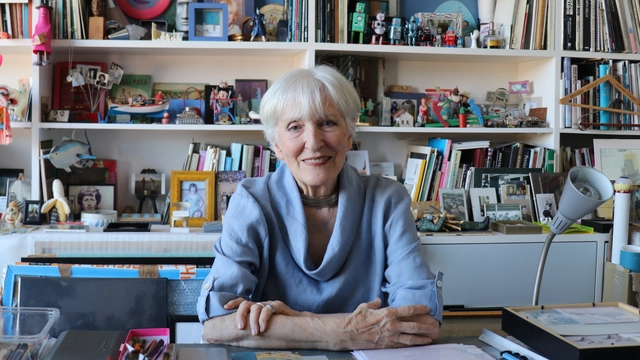
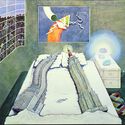
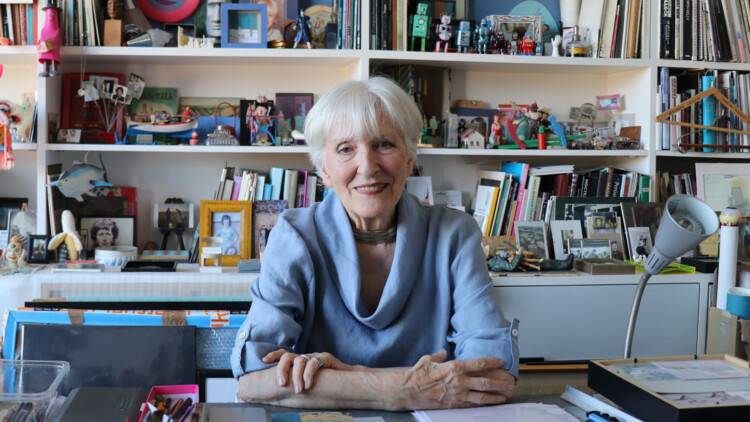
Dutch artist Madelon Vriesendorp has been named the recipient of the 2025 Soane Medal, becoming the first UK-based female artist to receive the award since its launch in 2017. A co-founder of Office for Metropolitan Architecture (OMA), Vriesendorp is widely recognized for her surrealist and humorous visual language that has shaped how modern and postmodern architecture is represented and understood. Her work, which blends playfulness with critical thought, has provided architecture with vivid, memorable imagery that continues to influence generations of architects.

Madelon Vriesendorp, Co-Founder of OMA, Receives the 2025 Soane Medal - Image 1 of 4Madelon Vriesendorp, Co-Founder of OMA, Receives the 2025 Soane Medal - Image 2 of 4Madelon Vriesendorp, Co-Founder of OMA, Receives the 2025 Soane Medal - Image 3 of 4Madelon Vriesendorp, Co-Founder of OMA, Receives the 2025 Soane Medal - Image 4 of 4Madelon Vriesendorp, Co-Founder of OMA, Receives the 2025 Soane Medal - More Images+ 4

The Evolution of Public Bathhouses: From Necessity to Experience

Subscriber Access | 

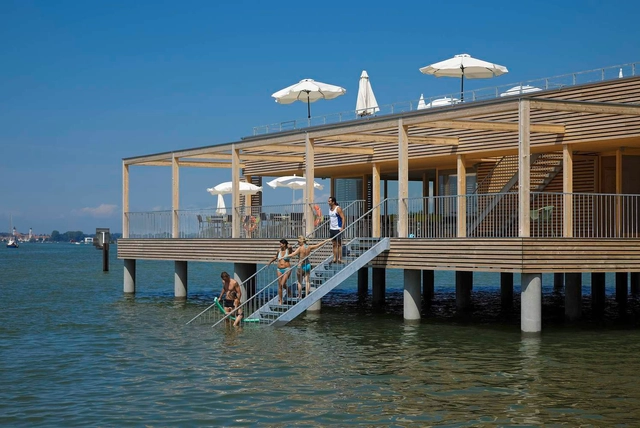
Historically, public bathing was a fundamental necessity for hygiene, giving rise to communal bathhouses in regions where private bathrooms were a rarity. In Japan, for instance, sento bathhouses emerged during the early Edo period, serving as essential facilities when most households lacked their own bathing spaces. Similarly, in other parts of the world where plumbing and water management were considered luxuries, shared public baths became vital components of urban life. Over time, these spaces evolved beyond their functional role, becoming venues for socializing, relaxation, and a temporary escape from daily routines.

However, in the modern era, private bathrooms have become ubiquitous in contemporary homes, effectively addressing the hygiene concerns that once made public bathhouses indispensable. With the rise of alternative social spaces—cafés, fitness centers, bars, and jazz lounges—the traditional communal bath no longer serves the same essential function. While some may still appreciate the social aspect of public bathing, the inconvenience of changing clothes and getting wet in front of strangers can deter many from engaging in the experience.

The Evolution of Public Bathhouses: From Necessity to Experience - Image 1 of 4The Evolution of Public Bathhouses: From Necessity to Experience - Image 2 of 4The Evolution of Public Bathhouses: From Necessity to Experience - Image 3 of 4The Evolution of Public Bathhouses: From Necessity to Experience - Image 4 of 4The Evolution of Public Bathhouses: From Necessity to Experience - More Images+ 29

Monumental Sculptor Richard Serra Passes Away at 85

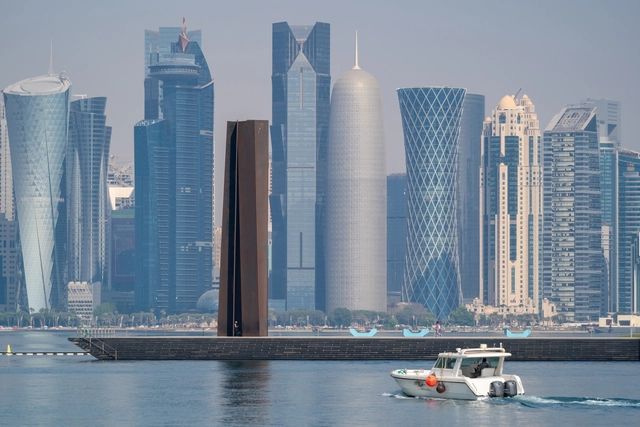
Renowned sculptor Richard Serra, known for his monumental steel structures that reshaped the landscape of contemporary art, passed away at the age of 85 at his residence in Orient, N.Y. His groundbreaking works, characterized by massive tilting corridors and spirals of steel, offered viewers a unique experience, inviting them to navigate through and around the imposing forms to fully comprehend their essence. Because of this invitation to explore space, materiality, and site, the artist has been long-recognized in the architectural community, earning him the Architectural League of New York President’s Medal in 2014, becoming the first artist to receive the honor.

Monumental Sculptor Richard Serra Passes Away at 85 - Image 1 of 4Monumental Sculptor Richard Serra Passes Away at 85 - Image 2 of 4Monumental Sculptor Richard Serra Passes Away at 85 - Image 3 of 4Monumental Sculptor Richard Serra Passes Away at 85 - Image 4 of 4Monumental Sculptor Richard Serra Passes Away at 85 - More Images+ 3

Manhattan’s Japan Society Explores Artist Kazuko Miyamoto’s Relationship with her Studio Architecture

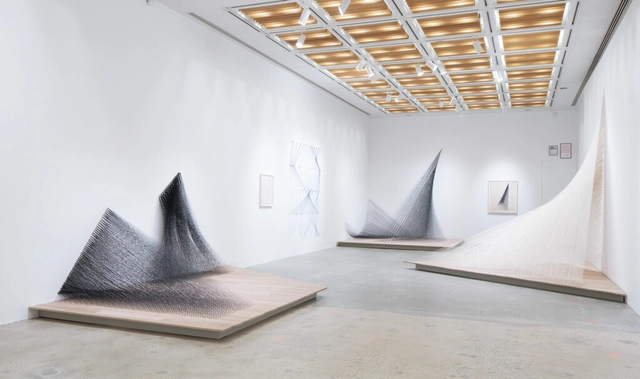
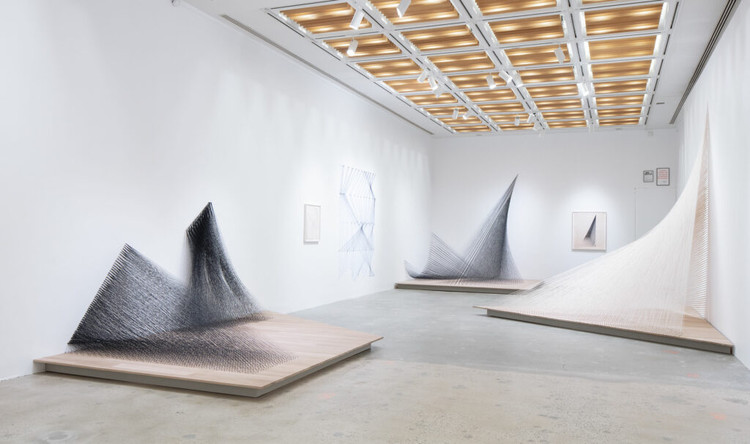
Recreating the artist studio in an exhibition has always been a challenge for curators and exhibition designers––bringing in the right amount of “mess,” intricately revealing the workings of artistry, and maintaining the visual coherence are all boxes to be checked while letting the audience behind the curtain. Kazuko Miyamoto: To perform a line, Japan Society’s survey of the artist’s five-decade career in sculpture, drawing, and performance solves this challenge in ways that are both practical and poetic.

Manhattan’s Japan Society Explores Artist Kazuko Miyamoto’s Relationship with her Studio Architecture - Image 1 of 4Manhattan’s Japan Society Explores Artist Kazuko Miyamoto’s Relationship with her Studio Architecture - Image 2 of 4Manhattan’s Japan Society Explores Artist Kazuko Miyamoto’s Relationship with her Studio Architecture - Image 3 of 4Manhattan’s Japan Society Explores Artist Kazuko Miyamoto’s Relationship with her Studio Architecture - Image 4 of 4Manhattan’s Japan Society Explores Artist Kazuko Miyamoto’s Relationship with her Studio Architecture - More Images+ 5

Building Beauty: When Artists Design for Architecture

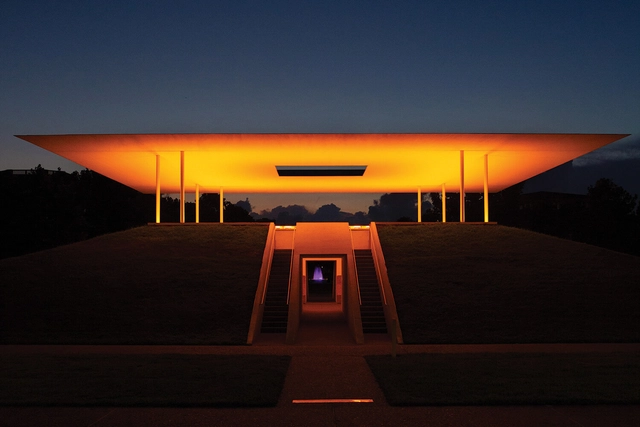
Whether or not architecture is an art, buildings and spaces shape daily life. Pushing the boundaries of architecture and the categorization of art, contemporary investigations between disciplines are rethinking tradition. As transformations grounded in human experience, these installations and structures share qualities of purpose, function and creative expression. At the same time, they reorient the limitations and possibilities of each profession.

Building Beauty: When Artists Design for Architecture - Image 1 of 4Building Beauty: When Artists Design for Architecture - Image 2 of 4Building Beauty: When Artists Design for Architecture - Image 3 of 4Building Beauty: When Artists Design for Architecture - Image 4 of 4Building Beauty: When Artists Design for Architecture - More Images+ 2

Une Ville Dessinée

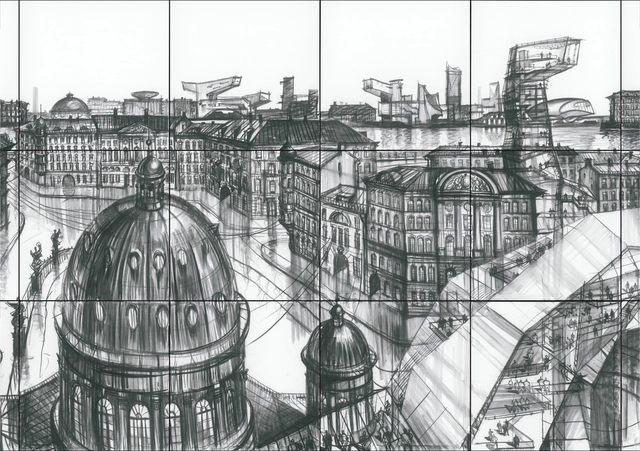
The future of the European city is the central theme for Sergei Tchoban. It is evident that the language of contemporary architecture and the size of urban gestures contrast with the structure of the historical or traditional European city. Is it possible to harmonize and regulate these two positions? Is there a quality in the spontaneity or even in the chaos that can arise?