Street art has long surpassed mere trend to become an integral part of cities' cultural identities. What was once considered vandalism is now not only accepted but encouraged. The works of once-prosecuted artists such as Banksy and Shepard Fairey are now collector's items; murals can cost anywhere from $1,000 to $20,000 or more. Through their works, artists may even have the power to save cities.
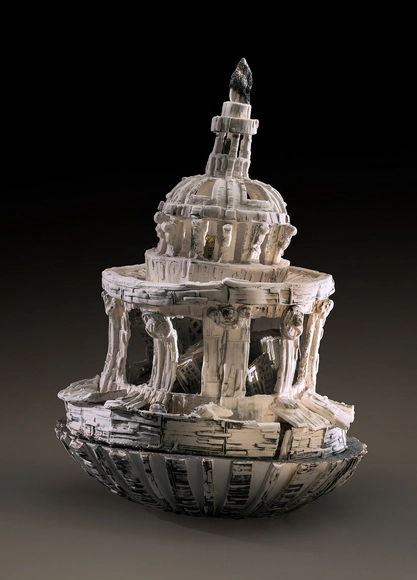
Sculptor and jewelry designer, Cydney Ross explores the architectural passage of time through unconventional ceramics and mixed media. By over-firing, freezing, and thawing her materials, she simulates the swaying, slumping, and even collapsing of structure.
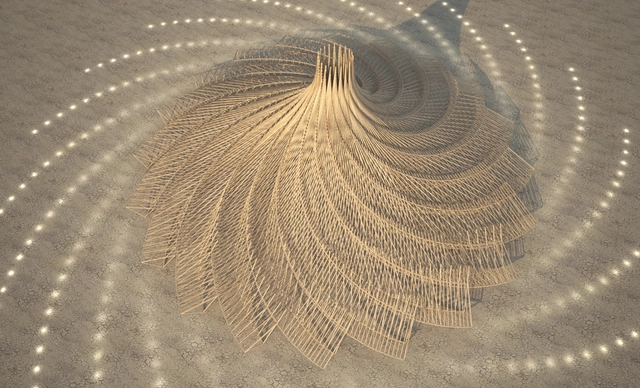
Designed using 3D parametric software, the pavilion is formed from 20 timber trusses that spiral in toward a central point the reaches toward the sky. Starting on the ground, the triangular trusses span large enough distances to create a series of spiraling paths toward the center of the structure, where a giant 3D-printed mandala will be displayed. The spaces in between the truss members will also be large enough to serve as alcoves.
The clever Italian artist, Federico Babina is at it again, and this time he's taking us around the world in 21 animated illustrations. Hear the ringing of Big Ben, sirens in New York, seagulls of Amsterdam, and Havana drums as you find yourself adding to your travel bucket list. You'll have to watch this animation more than once to catch all of the details Babina captures about an entire city culture in one illustration. Or view each illustration individually below.
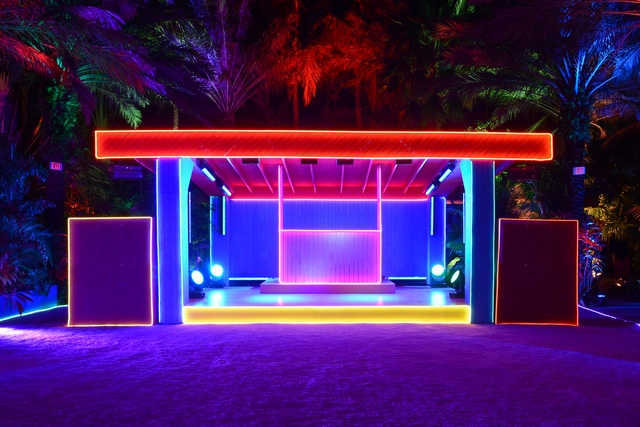
The Prada Double Club Miami / (c) Casey Kelbaugh. Image Courtesy of Fondazione Prada
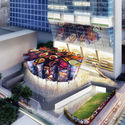
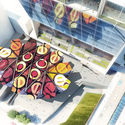
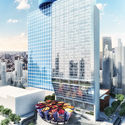
As part of Art Basel in Miami Beach, a modern and contemporary art fair that highlights galleries and the newest developments in the visual arts, Carsten Höller created an installation piece for the Fondazione Prada. The installation, “The Prada Double Club Miami” is only open for a few days as part of Art Basel and is a fully-functioning nightclub.
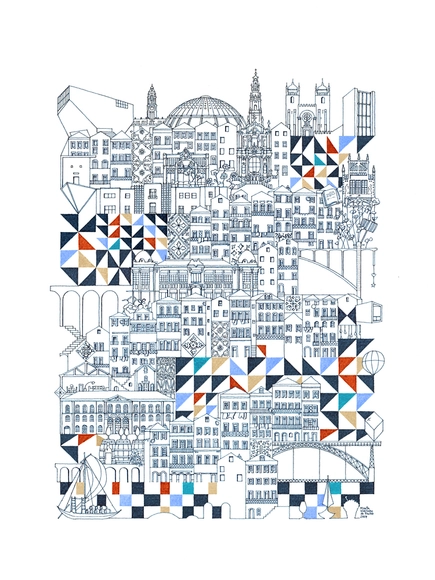
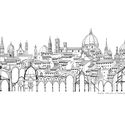
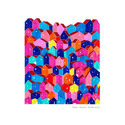
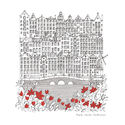
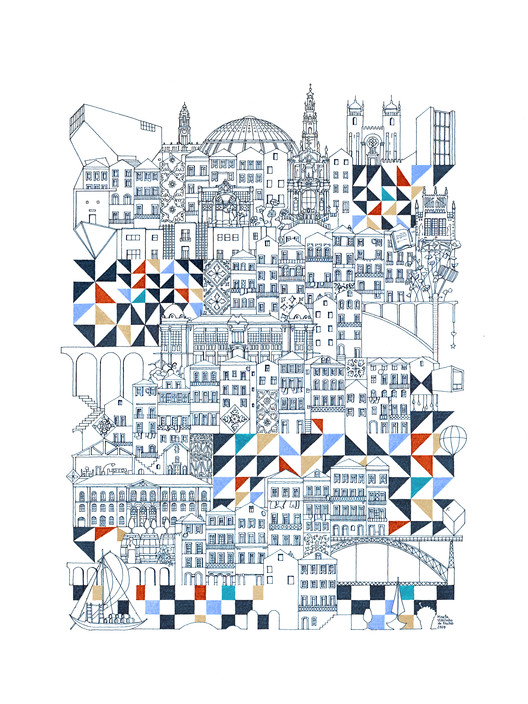
Architect and illustrator, Marta Vilarinho de Freitas has yet again enchanted us with her intricate drawings of cities in thin-line-pen on paper. The Portuguese architect has been exercising her passion in drawing through a series of drawings entitled, Cities and Memory - the Architecture and the City.
Fascinated by cities, Marta’s illustrations express her connection with architecture while still capturing the romantic and qualitative aspects of each city, its patterns, colors, atmosphere, and light.
Marta Vilarinho de Freitas combines fantasy with detailed accuracy in her compositions of stacked building facades, roof pitches, plans and sections along with elements distinct to the city depicted such as Dutch windmills, boats, books, and instruments.The process of creating these drawings is cyclical in that they continue to inform Marta of the spirit of each city as she draws each art piece.
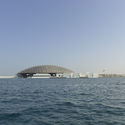
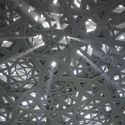
Earlier this month, Abu Dhabi’s much-awaited “universal museum,” the Louvre Abu Dhabi designed by Pritzker Prize-winner Jean Nouvel, was opened to the public. After several years of delays and problems including accusations of worker rights violations, revisions in economic strategies, and regional turmoil, the completion of the museum is a feat in itself. Critics, supporters, naysayers, artists, economists, and human rights agencies, have all closely followed its shaky progress, but now that it’s finally open, reviews of the building are steadily pouring in.
Read on to find out how critics have responded to Nouvel’s work so far.
The Polyforum Cultural Siqueiros is an outstanding example of extraordinary artistry crafted by Mexican muralist, David Alfaro Siqueiros, together with Diego Rivera and Jose Clemente Orozco. The building was constructed in 1971, taking the shape of a diamond and housing “The March of Humanity,” what is recognized as the world's largest mural. It blankets both the interior and exterior surfaces, covering a total of 8,000 square meters. In 1981, the Polyforum was declared a monument of Mexico’s National Patrimony.
It is safe to say that architects, academics, critics and even the public have been arguing about the merits of architectural style for centuries. Even during the course of my own career, the more general style categories of contemporary-vs-traditional have continued in an unabated battle. For better or worse, contemporary has generally won out as the default position for most schools and publications, probably because of the sheer visual entertainment value it offers, and the lucrative merits of its two stepchildren, branding and advertising.
I’d like to propose another position: that certain enduring principles of art, rather than any temporary style—and, remember, they are all temporary—should be our real architectural goal. This presumption means you must be agnostic when it comes to style and put aside any notion of an ideological stance regarding the right or wrong of your architectural preferences. There are those, of course, who say that to imagine that “my art” is better than yours, or even that I can define real art in the first place, is a fool’s errand.
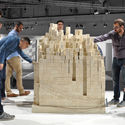
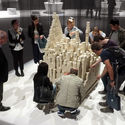
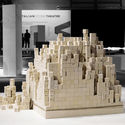
At international stone exhibition Marmomac 2017, Chinese firm OPEN Architecture has created a transient installation titled "The Eternal & The Ephemeral" that allows visitors to transform a cube of stone tiles into new, unplanned forms. The project responds directly to the theme of the event, "Soul of City," which asked designers from across the globe to collaborate with Italian stone manufacturers to create pieces built entirely from stone. OPEN's concept focused on the relationship between transience and heaviness in the material, prompting the installation to gradually "disappear" over the 4-day event.
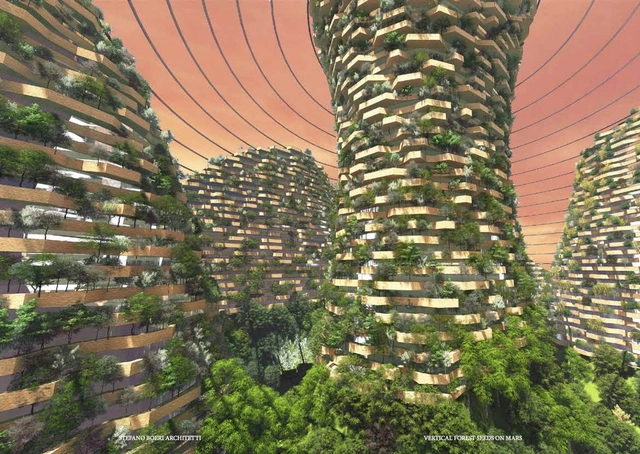
Can architecture and design reverse climate change? Architect and founding partner of Stefano Boeri Architetti (SBA), Stefano Boeri believes it can. Boeri’s Vertical Forest, a project which marries the natural and urban spheres through biodiversity and reforestation, has already come to fruition in Milan, is currently under construction in Beijing, and soon to be constructed in Shanghai. (Watch the video to learn more about Boeri’s Vertical Forest projects.)
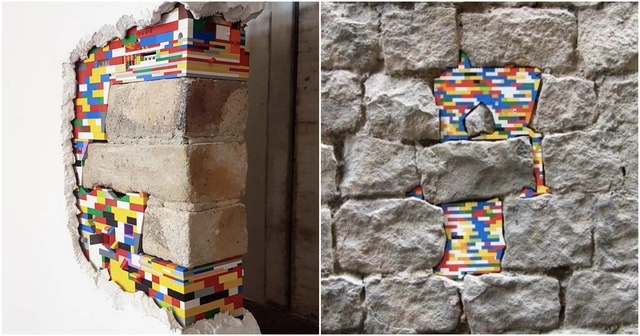
After 10 years of exploring the world and making LEGO interventions to city walls and masonry in disrepair, artist Jan Vormann invites you to contribute to the ongoing project Dispatchwork. Vormann began making these toy-block repairs in Bocchignano, Italy, and since has made colorful additions to Tel Aviv and Berlin.
Jan Vormann has visited nearly 40 cities across Europe, Central America, Asia, and the United States. Some of the installations use a handful of toy bricks while some have used up to 20 pounds.
What do a lot of recent architecture college grads have in common besides their degree? Student loans and disillusionment (see point 1 in Megan Fowler’s 11 Things You Learn at Your First “Real” Architecture Job to understand what we mean by "disillusionment"). But with the emergence of the digital age and “side-hustle economy,” millennials are learning how to monetize their passions, and now 1 in 4 Americans are making money digitally. Side-hustling has become so popular that there is even a school for it. The difference between a side-hustle and a second job is that side-hustles aren’t just about giving yourself a raise. Your side-hustle is something you truly love to do, and would probably do anyway, but now you get to share it with the world and make a little extra cash in the process. So what side-hustle is right for you? Here is a list of side-hustles which suit the skillset of architects and designers.
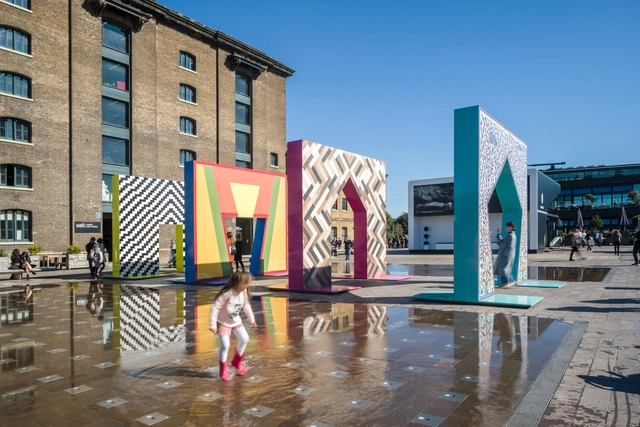
You’re going to wish you saw this Instagram worthy art installation. Gateways (@Landofceramics) at the central fountain in Granary Square, King’s Cross closed this week. It was designed to celebrate the DesignJunction event (September 21-24) an interior design show by and for the industry, set in challenging industrial sites as part of the greater London Design Festival.
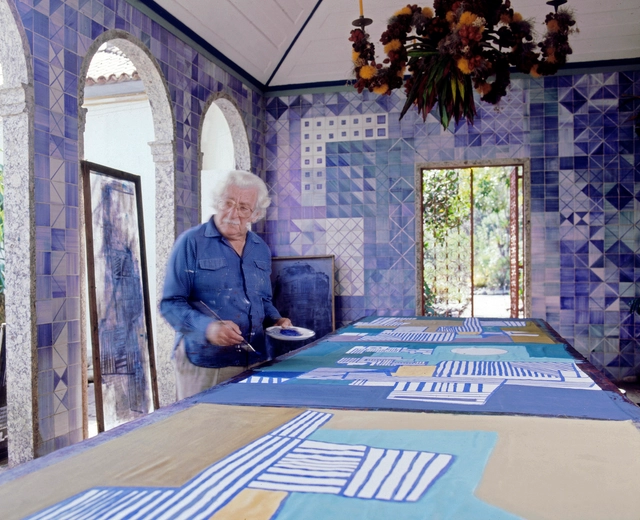
There wasn’t much in the way of art that Roberto Burle Marx couldn’t do. He was a painter, print-maker, sculptor, stage designer, jeweler, musician, tapestry-maker and one of the leading landscape architects in the 20th century. Marx’s passion for art, in all forms, strengthened his ability to design landscapes.
The week of Burning Man 2017 is halfway through, and glimpses of the event are starting to make their rounds through the social mediasphere. Under the theme of “Radical Ritual,” this year features as many impressive structures and sculptures as ever, including a central temple holding the wooden man built to commemorate the Golden Spike, the ceremonial final spike driven to join the rails of the United States’ first transcontinental railroad.
Check out our favorite structures from the event, below.
2017 Perrier Artist of the Year Eric Rieger, also known as HOTTEA, has completed a massive installation of colorful string at the largest indoor mall in North America, the Mall of America in Bloomington, Minnesota.
Consisting of 13,000 individual strands of yarn in 103 colors, the installation completely transforms the mall’s Atrium, enveloping visitors in a storm of buzzing color as soon as they pass through the north entrance. In total, a total of 721 pounds of yarn were used, covering the footprint of 55 by 45-foot skylight above.
Last month, ArchDaily had an opportunity to speak with Akshat Nauriyal, Content Director at Delhi-based non-profit St+Art India Foundation which aims to do exactly what its name suggests—to embed art in streets. The organization’s recent work in the Indian metropolises of Delhi, Mumbai, Hyderabad, and Bengaluru, has resulted in a popular reclamation of the cities’ civic spaces and a simultaneous transformation of their urban fabric. Primarily working within residential neighborhoods—they are touted with the creation of the country’s first public art district in Lodhi Colony, Delhi—the foundation has also collaborated with metro-rail corporations to enliven transit-spaces. While St+Art India’s experiments are evidently rooted in social activism and urban design, they mark a significant moment in the historic timeline of the application of street art in cities: the initiative involves what it believes to be a first-of-its-kind engagement between street artists and the government.













.jpg?1511265934&format=webp&width=640&height=580)
_%C2%A9_Louvre_Abu_Dhabi_-_Photography_Marc_Domage.jpg?1511018413 "© Marc Domage")
.jpg?1511018528 "© Roland Halbe")
.jpg?1511265934)










__Anpu_Varkey___photo_by_Akshat_Nauriyal.jpg?1501258835 "Gandhi Mural by Hendrik Beikirch and Anpu Varkey, Delhi. Image © Akshat Nauriyal")