
1. ArchDaily
  2. Arquitetura cinética

Arquitetura cinética: The Latest Architecture and News

Beyond Matter: How Far Can Material Intelligence Go?

For decades, technological evolution was driven by the exponential growth in computer processing power—a trend famously predicted by Moore’s Law. From rudimentary mechanical devices to highly sophisticated microprocessors, this trajectory fueled the miniaturization and popularization of personal computers, laptops, and smartphones. Now, with the advent of quantum computing, a new leap is on the horizon. Unlike classical bits, which represent only one value at a time—either 0 or 1—qubits can simultaneously represent a combination of both states. This means that while a traditional computer tests one possibility at a time, a quantum computer can explore many at once, dramatically accelerating the resolution of complex problems. Molecular simulations, logistical optimizations, and advances in cryptography are just a few of the areas transformed by this new frontier.

In the construction industry—a sector historically resistant to abrupt changes—the evolution of materials also has its breakthrough moments. From carved stone to reinforced concrete, from raw timber to high-performance composites, each new material has expanded the structural, aesthetic, and functional boundaries of architecture. In recent years, however, researchers have been testing a new generation of materials that transcend the traditional idea of passivity. These are intelligent materials, capable of sensing, reacting to, and even interacting with their environment and users, challenging the very concept of inert matter.
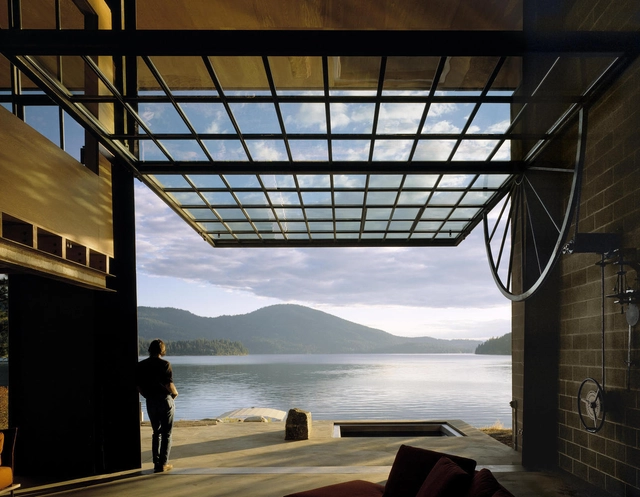
Olson Kundig and the Ingenuity of the Moving Parts in Their Architecture

Subscriber Access | 

Seattle-based Olson Kundig is an example of how context and culture can influence a firm's design approach. Founded in 1966 by Jim Olson and now consisting of hundreds of employees and thirteen principals/owners, including Tom Kundig, the firm has an extensive and diverse portfolio that spans different scales and budgets. In lectures and interviews, Kundig in particular often talks about how having grown up in a region with a strong mining and lumbering tradition has influenced the industrial and rational aesthetic of his designs, the use of durable and low-maintenance materials, and a special attention to craftsmanship. In many of the firm's designs, however, the ingenuity and emphasis on moving parts –blurring the boundaries between inside and outside– is striking. This is usually achieved by incorporating hand-held devices that allow users to activate the building directly, connecting them both to the context but also to the building itself and the dynamic mechanisms therein.

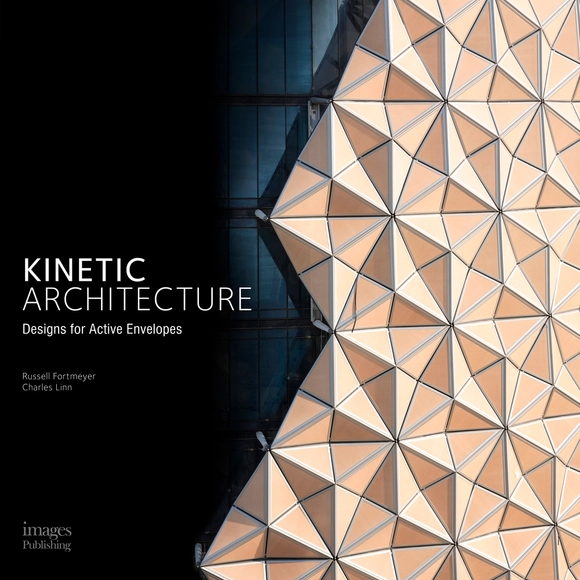
Kinetic Architecture: Designs for Active Envelopes

Subscriber Access | 

Kinetic Architecture: Designs for Active Envelopes is a book about energy. We have written it to explore the new ways architecture has developed in the last decade to respond to the flow of energy, both natural and man-made, that primarily affects building performance and the comfort of the people in them. Buildings regulate energy flow in several ways, but in this book we explore the approaches that innovative architects, engineers, and consultants have taken with building envelopes, façades, and other types of enclosures that modulate the internal environment of architecture to various ends. Architects have expressed this regulation in ways both visible and invisible, using the media of air, water, and the thermal mass of a variety of materials, and often a combination of all three.