BW International is now accepting entries for its Design a Beautiful House competition, an international call offering £25,000 (about $39,000 USD) to winner(s). The competition is open to all designers, students, artists, and others from anywhere across the globe, and requires no registration fee.
Entrants are asked to think about the definition of beauty in order to create a design that considers the ways that beauty and aesthetics can enhance the function of a home and the experiences of its users.
What do Ice Cube, the members of Pink Floyd, and Seal have in common with fashion icon Tom Ford and former president Thomas Jefferson? They all studied architecture. Perhaps a representation of the diversity of talents in architecture studios, household names like Samuel L. Jackson and Courteney Cox found their footing as students of architecture prior to reaching success in other fields.
We've put together a list of some of the most unexpected names gracing the yearbooks of architecture schools from around the world, including the likes of Queen Noor of Jordan and George Takei of Star Trek fame. Discover "Weird Al" Yankovic's true (architectural) passions after the break.
The winner of a competition for a mixed-use building scheme, London-based Kamvari Architects has unveiled the design for Zartosht, a 300,000 square-foot retail and office building in Tehran, Iran. The building's design is based largely on local cultural contexts, like the region’s reputation for renowned fabric and textile shops, and environmentalism, particularly with respect to solar energy.
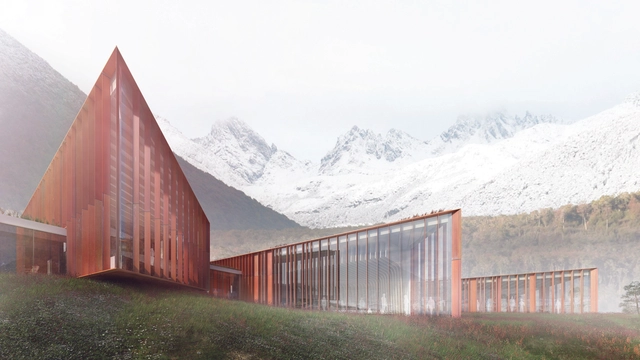
As a result of a public competition, the Chilean Regional Government has commissioned Ennead Architects to collaborate with Chilean architects Cristian Sanhueza and Cristian Ostertag on the design of the Cape Horn Sub-Antarctic Center. Planned for a site within the UNESCO Cape Horn Biosphere Reserve in Puerto Williams, a town on Navarino Island in the Chilean Sub-Antarctic Province, the center will provide a home for the Biocultural Research and Conservation Program led by Dr. Ricardo Rozzi, Professor at the University of North Texas, the Universidad de Magallanes and the Institute of Ecology and Biodiversity.
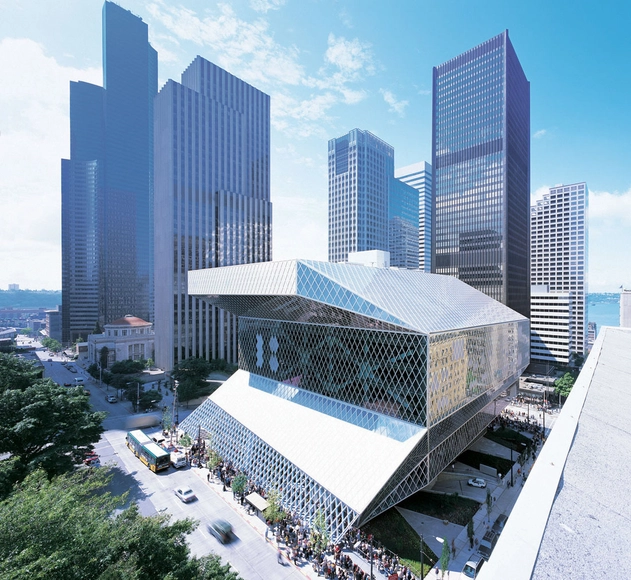
Bjarke Ingels worked on the Seattle Central Library during his time at OMA. Image Courtesy OMA
The world of architecture is small. So small in fact, that Rem Koolhaas has been credited with the creation of over forty practices worldwide, led by the likes of Zaha Hadid and Bjarke Ingels. Dubbed “Baby Rems” by Metropolis Magazine, this Koolhaas effect is hardly an isolated pattern, with manifestations far beyond the walls of OMA. The phenomenon has dominated the world of architecture, assisted by the prevalence and increasing necessity of internships for burgeoning architects.
In a recent article for Curbed, Patrick Sisson dug into the storied history of internships to uncover some unexpected connections between the world's most prolific architects. With the help of Sisson's list, we've compiled a record of the humble beginnings of the household names of architecture. Where did Frank Gehry get his start? Find out after the break.
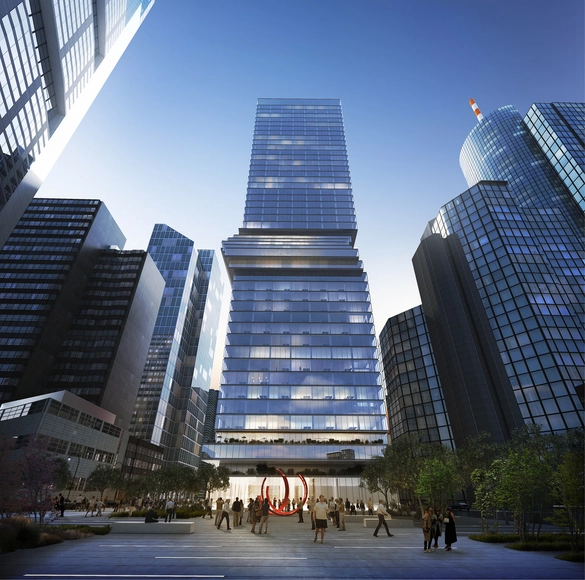
BIG has been selected through a competition to realize a 185-meter-tall, mixed-use tower in Frankfurt. With a shape that is "both rational and sculptural," the skyscraper is organized as a basic volume whose floor plates "shift" to provide the "best spaces for each specific program."
"Organized as a slender and rational stack of inhabited floors, the tower is interrupted by two sculptural moves where the program changes," says BIG.
Screenshot from "115 Years of American Homes Scrolling Parallax Infographic"
Moving specialists iMove have created 115 Years of American Homes, a Scrolling Parallax Infographic in which viewers can “drive” through a neighborhood of single-family homes that reflect the style of their respective decades. For each home, graphics detail “tell-tale architectural features, design trends, average home price, and the historical and cultural context” of each decade from the 1900s through the present. Test out the interactive timeline here, and let us know: which decade of residential architecture is your favorite?
Videos
Proposals such as Vincent Callebaut's "Hydrogenase" have always been science fiction as much as they are architecture - but with Arx Pax's MFA technology, is it time to think more carefully about how to design levitating buildings?. Image Courtesy of Vincent Callebaut Architectures
Could Hovering Buildings be the Future of Sustainability?
If Arx Pax, a cutting-edge technology firm led by Greg and Jill Henderson, has its way, levitating objects could become a common sight. The team is developing what they call Magnetic Field Architecture (MFA), a technology which controls electromagnetic energy to make objects hover, and at the several months ago, they used it to produce Hendo Hover, a hoverboard capable of carrying a person. While the fact that Arx Pax was able to produce a hoverboard is fascinating, the technology could have much more serious applications: as an architect, Greg Henderson envisions that one day MFA technology could be used in buildings to produce sustainable structures which can better survive earthquakes and other natural disasters. Is this goal realistic?
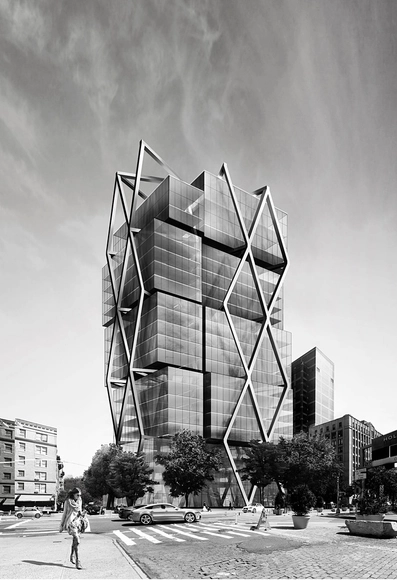
New York-based studio Dror has unveiled design concepts for three new residential buildings in New York City. The imagined buildings, spread throughout lower Manhattan, are based on the studio’s idea to “disrupt conventional building design by rethinking structure, where beauty and efficiency result from an imaginative, clever framework.”
Learn more about each of the plans, after the break.
The Getty Foundation has selected 14 modernist buildings from across the globe to receive grants under its Keeping It Modern initiative, which seeks to help conserve 20th century architecture by putting a focus on conservation planning and research.
“The use of concrete, while visually striking and radical for its time, has created a unique set of challenges for conserving some of the world’s most important modernist structures. Our new grants offer an excellent opportunity to advance research and conservation practices for this material. The accumulated knowledge that will result from the projects will be of tremendous benefit to the field," states the Getty Foundation.
ReDeBOSTON 2100; Architerra. Image Courtesy of Boston Living with Water
The winning projects of the Boston Living with Water competition have been announced. The competition “sought design solutions envisioning a beautiful, vibrant, and resilient Boston that is prepared for end-of-the-century climate conditions and rising sea levels.” Out of 50 teams, three were selected, each for separate sites—one for a building, one for a neighborhood, and one for a significant piece of city infrastructure—in addition to one honorable mention. Each of the winners will receive a $13,000 prize funded by the Massachusetts Office of Coastal Zone Management and the Barr Foundation.
The Boston Living with Water competition was organized by the City of Boston, The Boston Harbor Association, the Boston Redevelopment Authority, and the Boston Society of Architects. As Mayor Martin J. Walsh honored the winners, he noted that “competition ideas and strategies are already informing Boston’s future, including revisions to building plans and zoning codes, and influencing ‘Imagine Boston 2030.’” Winning projects will be on display at BSA Space through June 2015. Learn more about the winners, after the break.
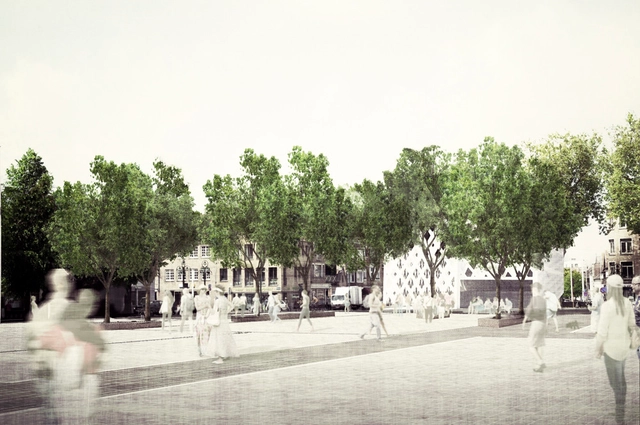
The 8,500-square-meter historic square has remained unchanged for the past 30 years, and the Council felt that an update was duly needed. In January, five out of 20 designs were shortlisted, and on June 16, the winner was chosen at a presentation before a jury of City Council representatives and external experts.
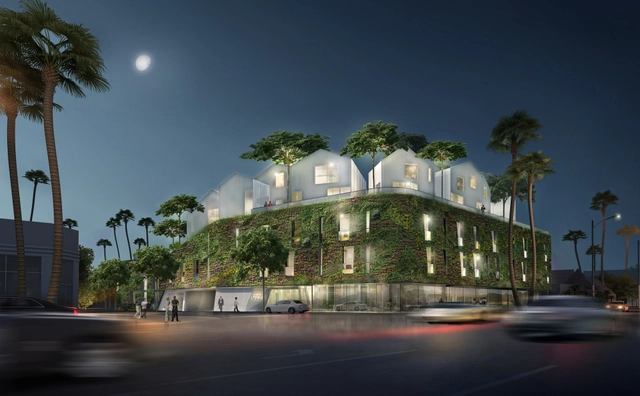
MAD Architects has unveiled what will be their first US residential project, 8600 Wilshire. Planned to be built in Beverly Hills, Los Angeles, the 18-unit "hillside village" will be perched atop commercial space and united by a water-efficient "living wall" that was inspired by the local flora.
As MAD says, the project "demonstrates founder Ma Yansong’s core design philosophy: to coalesce nature and community into a living environment among high-density cities." It is expected to break ground this October, and complete in 2016.
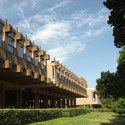
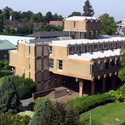
Hawkins\Brown has been chosen to design the new School of Architecture for the University of Reading in Reading, Berkshire, in the United Kingdom. The new School “will be housed in a retrofitted 1970’s concrete brutalist building originally designed by Howell, Killick, Partridge & Amis,” which is currently the University’s School of Construction Management and Engineering. Brutalist buildings, like the Prentice Women’s Hospital and the Preston Bus Station are continuously at risk of being demolished, which makes this retrofit all the more valuable. While the University seeks to modernize the building and improve efficiency, they also plan to respect the original design. Construction is set to begin in January 2017 and wrap up by December 2018. Learn more about the project here.
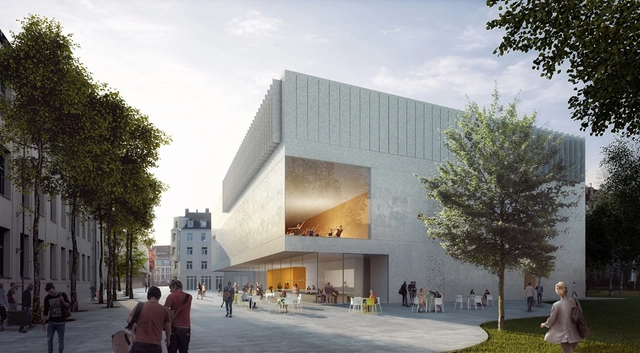
HPP Architects has won a competition to extend the campus of Cologne's University of Music and Dance. Chosen over 13 entries, the winning design will enclose a site in the Kunibertsviertel, close to Cologne’s railway station, and transform it into an "attractive" urban area. The plan, deemed by the jury to be a "clear example of a successful urban remedy," also calls for the conversion of an existing building into an animated concert and dance hall.
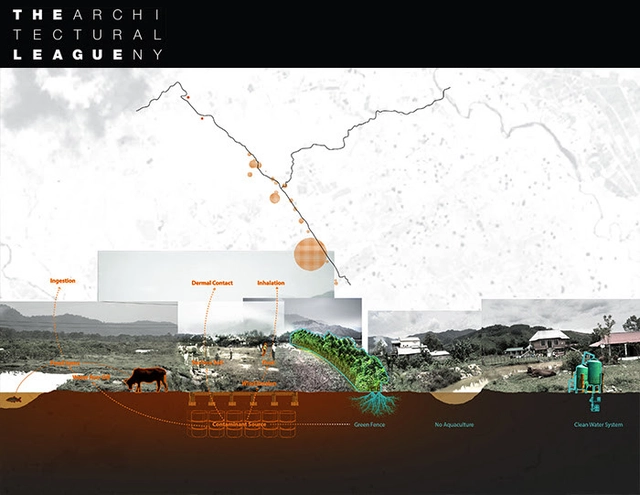
The Architectural League has named Ylan Vo the winner of this year’s Deborah J. Norden Fund travel grant for her project entitled Ecologies of War and Recovery: A Case Study in Vietnam’s A Luoi Valley.
Vo’s project explores the A Luoi Valley “as an example of the post-conflict landscape of Vietnam, with particular emphasis on understanding the ecological and social conditions surrounding toxic Agent Orange hotspots that mark the valley.” Agent Orange, also called Dioxin, is the most potent carcinogen in existence, and poses major threats to environmental health and sustainability.
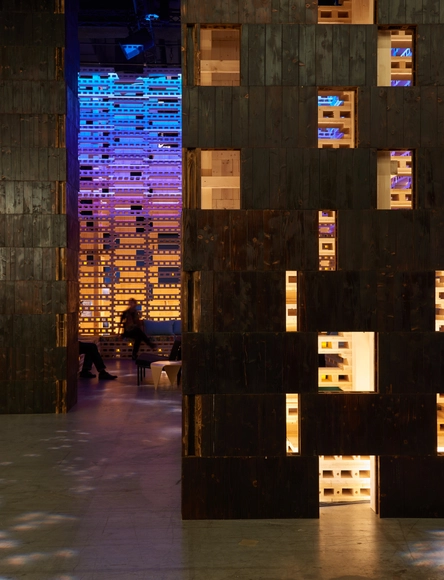
Seattle-based architects Olson Kundig have opened their "Outpost Basel" pavilion for the Collectors Lounge at Design Miami/Basel in Basel, Switzerland. Incorporating materials and cultural elements from America, Japan, Austria, and Romania, the pavilion is a “high-design space made from everyday materials,” with a design centered on the idea of contrast, much like the concept of yin-yang. Different levels of lighting, material colors, and uses of space are contrasted with balance in order to create a functional, flexible meeting and gathering space.












_-_Final_Boards_4.jpg?1434518015&format=webp&width=640&height=580)