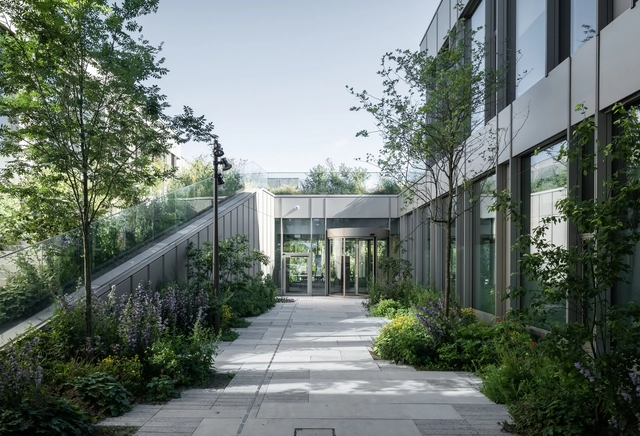
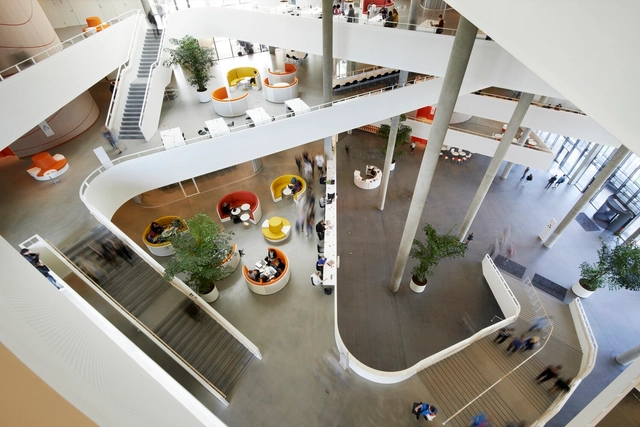
In 2025, the global animal health market reached approximately 70 billion dollars, and this figure is projected to double by 2033. Behind this figure, however, lies a quiet transformation within the built environment, with veterinary hospitals serving as a prime example. This typology, which for decades occupied the backrooms of improvised clinics and pet shop annexes, has increasingly developed its own architectural language and identity. It represents the architectural consolidation of a bond that has lasted for over 15,000 years.
Observed annually on April 7, World Health Organization's World Health Day draws attention to global health priorities while situating them within broader environmental and societal contexts. Established following the first World Health Assembly in 1948 and observed since 1950, the day has evolved into a platform for addressing the shifting conditions that shape health, from local systems of care to planetary-scale challenges. The 2026 edition, held under the theme "Together for health. Stand with science," calls for renewed engagement with scientific knowledge as a basis for collective action. The year-long campaign emphasizes collaboration in protecting the health of people, animals, plants, and the planet, foregrounding the One Health approach as a framework for understanding their interdependence.
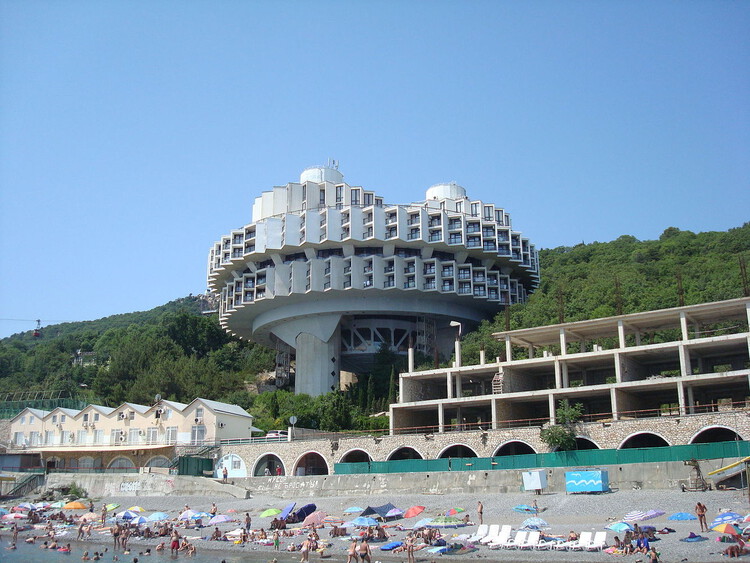
Perched above the cliffs of Crimea, the Druzhba Thermal Sanatorium appears less as a building than as a landed spacecraft. Its circular forms, suspended decks, and spiraling ramps evoke a scene from Andrei Tarkovsky's Solaris (1972), where architecture and psychology merge into a single landscape. Built between 1978 and 1985 by Igor Vasilevsky, the complex was conceived as a thermal resort for workers of the oil industry, part of the Soviet Union's extensive network of sanatoria dedicated to health and recreation.
Beyond its function as a place of recovery, Druzhba, meaning "friendship", embodied a broader political and aesthetic ambition. It sought to merge technological prowess with the restorative ideals of socialist modernity, translating collective well-being into concrete form. Rising from a steep coastal slope overlooking the Black Sea, its massive structure defies gravity, supported by a central concrete core from which radial wings extend like the blades of an enormous gear. Seen from a distance, it feels simultaneously mechanical and organic, a hybrid of infrastructure and landscape.
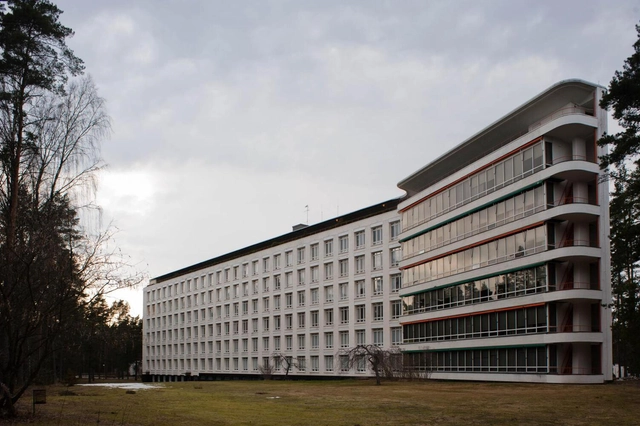
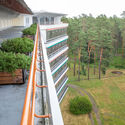
In the early 20th century, tuberculosis presented a significant public health challenge across Europe, prompting the construction of specialized facilities for patient recovery. The Paimio Sanatorium in Finland stands as a groundbreaking example of architecture's potential to promote healing. Designed by Alvar Aalto between 1929 and 1933, the sanatorium combined innovative design principles with a deep understanding of human needs, setting new benchmarks for healthcare architecture.
Alvar Aalto, a leading figure in modernist architecture, envisioned the Paimio Sanatorium as more than a functional response to a medical crisis. He crafted a space where architecture became an instrument of care, integrating natural light, ventilation, and harmonious forms to support physical and emotional well-being. This project marked a turning point in Aalto's career, showcasing his ability to blend modernist ideals with a profound sensitivity to context and human experience.
Cognitive decline is a growing public health concern that affects millions of people around the world. Amid an aging population, strategies that help prevent or mitigate cognitive deterioration become increasingly relevant to support healthy aging and maintaining independence for longer. Studies in the field of neuroscience applied to architecture (neuroarchitecture) have shown that the physical environment, both internal and external, public and private, plays a fundamental role in this aspect [1]. In this sense, architects and urban planners can direct their projects to create solutions that significantly contribute to this objective.
https://www.archdaily.com/1007274/architecture-for-preventing-cognitive-decline-contributions-from-neuroscience-to-healthy-agingAndréa de Paiva