The aim of the “Buying” competition is to develop design proposals for the shop typology, intended as a space – either material or immaterial – where goods or services are available to the public.


The aim of the “Buying” competition is to develop design proposals for the shop typology, intended as a space – either material or immaterial – where goods or services are available to the public.
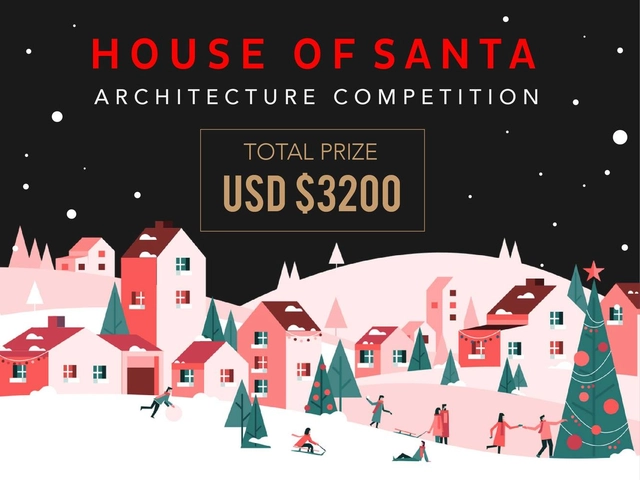
The most beloved figure for everyone around the world (kids and adults alike), Santa Claus, needs a new home in the Arctic Circle, and he is looking for a new, young architect to help him build his dream. With the world transforming at a rapid speed, Santa is looking to build a new, improved home that will make his living and working easier. His older house at the North Pole was built keeping in mind his former needs and functions.
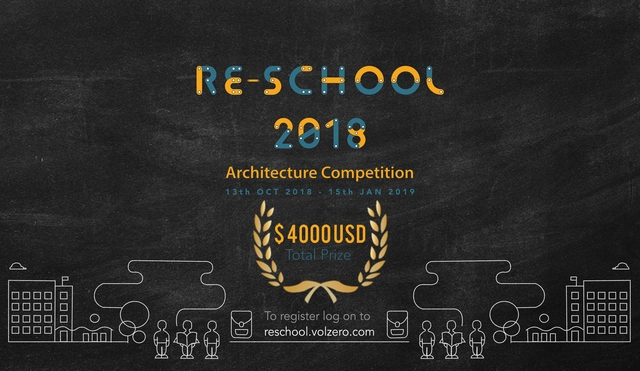
The world is growing at a break-neck speed today and with rapid urbanization, information and technology, it is demanding a constantly changing human intellect. To face these transformations, the upcoming generations need to be moulded in a way that they can cope efficiently with the variations. Education can help initiate this change by altering the mindsets and outlook of people around the world.
Over the last decades, education has evolved into a vital necessity for people belonging to all facets of the ever-changing world. An important agent of social change, education not only helps in molding young minds with values but also guides their intellectual development and boosts the society’s potential for its own progressive transformation. Education can help in the eradication of many social evils such as poverty, poor health, scarcity of food and water, pollution and other stigmas.
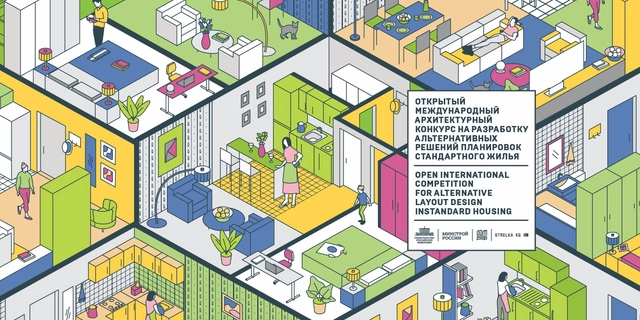
The Ministry of Construction Industry, Housing and Utilities Sector of Russia and DOM.RF, with the support of the Russian government, announces the Open International Competition for Alternative Layout Design in Standard Housing. Strelka KB have released a design brief and participants can enter here.
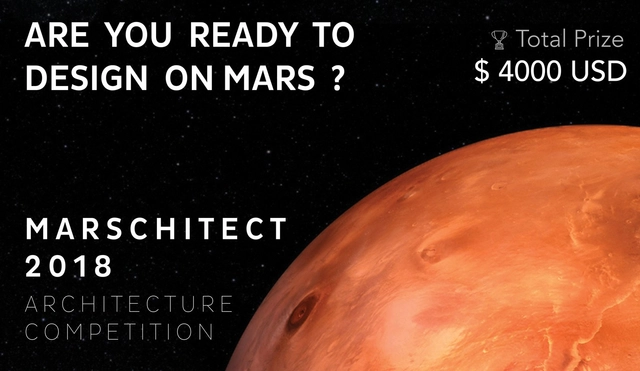
Since the start of time, we humans have been captivated by the mystical nature of other celestial bodies surrounding our Planet Earth. This fascination has been translated to works of astronomy, astrology, architecture and many other studies from making a simple telescope to humankind’s first steps on the Moon. This unending drive for exploration has today led us to understanding our neighboring solar systems and galaxies, thousands of light years away.
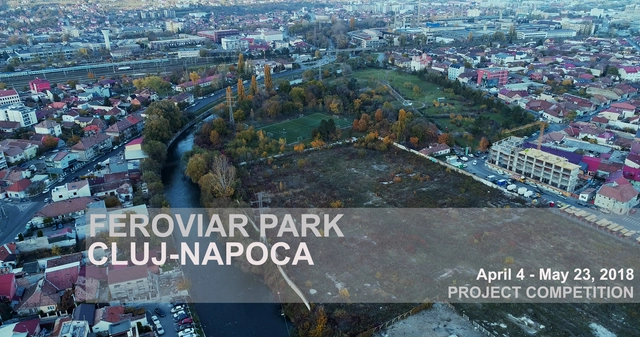
The aim of this competition is to make it possible to identify and implement an integrated urban remodelling concept that meets the complex needs of an area of significant size for the efficient functioning of the city of Cluj-Napoca.
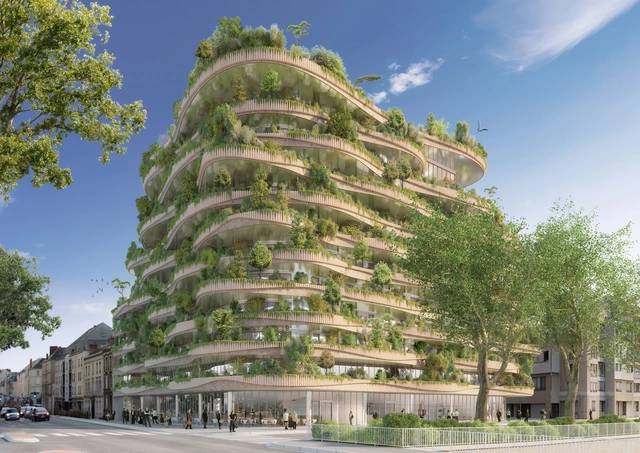
For the "Imagine Angers" international design competition, Vincent Callebaut Architectures worked in collaboration with Bouygues Immobilier group to submit a proposal for the French city at the intersection of social and technological innovation, with a focus on ecology and hospitality. Named Arboricole, meaning “tree” and “cultivation,” this live-work-play environment gives back as much to the environment as it does its users. Although WY-TO prevailed in the competition, the Callebaut scheme succeeded in winning the public vote.
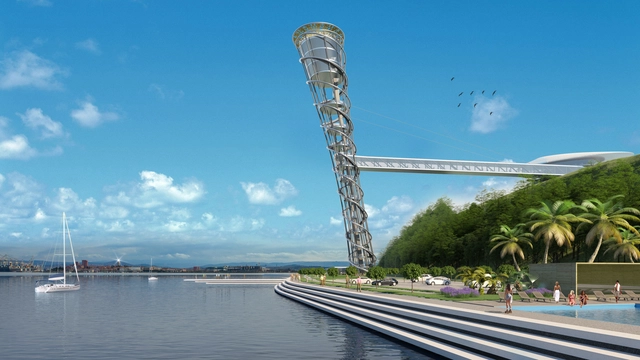
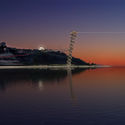
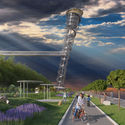
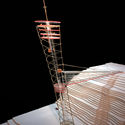
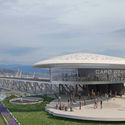
Massimiliano and Doriana Fuksas have released images of their competition-winning “Capo Grande Tower,” a tower and bridge situated on the Slovenian coastline linking Giusterna Beach to Monte San Marco. Designed in collaboration with Slovenian architect Sandi Pirš, the scheme consists of a 365-foot-high (111-meter-high) double-ellipse structure inclined slightly towards the sea, seeking to “immediately become a new symbolic element of the city.”
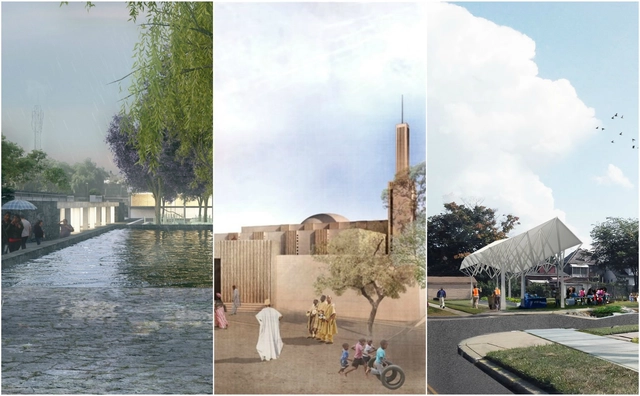
Results have been announced for the 5th Global LafargeHolcim Awards for Sustainable Construction, with three women-led teams awarded the gold, silver, and bronze positions. The design competition asked participants to speculate on future methods of balancing environmental performance, social responsibility and economic growth, “exemplifying architectural excellence and a high degree of transferability.”
The competition attracted over 5,000 submissions from 131 countries. Having been regionally assessed by juries in Europe, North America, Latin America, the Middle East/Africa and Asia Pacific, 55 successful proposals were entered for the global awards, where six winning schemes were selected.
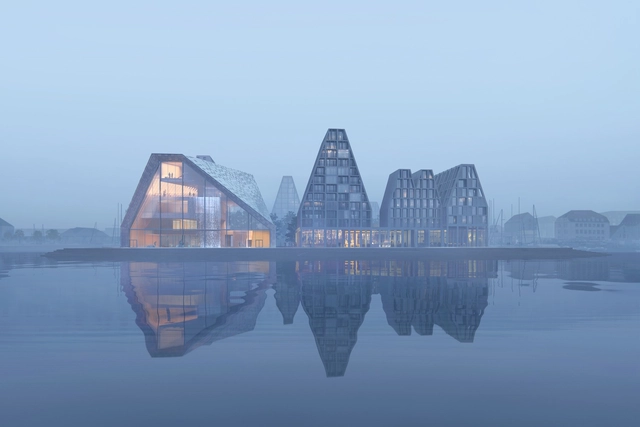
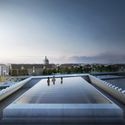
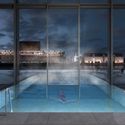
Danish firm COBE has released images of their proposed aquatic center in Copenhagen Harbor, a scheme entered for a design competition which was won by Kengo Kuma. The proposal, designed in collaboration with Bjarke Ingles Group (BIG), formed part of COBE’s competition-winning masterplan for Paper Island, which was chosen for development in 2016.
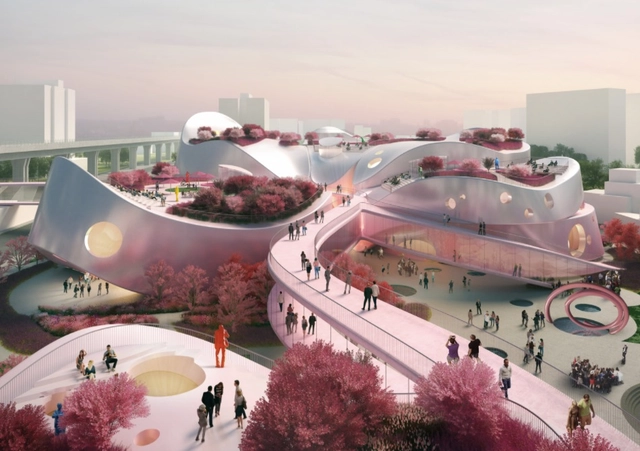
MVRDV has released details of their alternative design for the Taoyuan Museum of Art, an entry for an international competition ultimately won by Riken Yamamoto & Field Shop. The MVRDV scheme, developed in collaboration with JJP Architects and Planners, seeks to become a nature-centered cultural destination, transforming the area into a “cherry room for the city.”
Throughout the design process, MVRDV drew inspiration from the natural world, recognizing the potential for public spaces in the rapidly-expanding Taoyuan City to blur the boundaries between the built and natural environment.
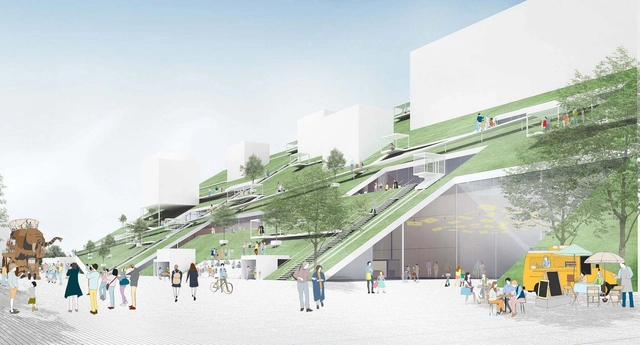
Riken Yamamoto & Field Shop has released images of the proposed Taoyuan Museum of Art in Taiwan, having won an international competition for the scheme’s design in 2018. Acting as a symbolic gateway to the heart of the city, the architect’s vision was for a hub where every visit leads to new discoveries and experiences.
Named “The Hill,” the competition-winning scheme is defined by a sloping green roof, hosting artwork, pavilions, trees, and an outdoor theater. Beneath the roof, a structure named “The Cube” contains permanent exhibitions and collections, and establishes a link between the museum and Blue Pond Park beyond.

London-based Rogers Stirk Harbour + Partners has released the first images of their 1.4-million-square-foot (130,000-square-meter) commercial tower for Toronto, Canada. Having won an international competition for the design of “The HUB” in 2017, the RSHP scheme has progressed with the potential to become a dominant fixture on the Toronto skyline.

Radical Innovation, an annual competition that calls for the best and brightest innovative concept ideas in the hospitality sphere, announces the opening of its 2018 edition. Both professionals and students alike are encouraged to submit their concepts online at radicalinnovationaward.com through April 1st.
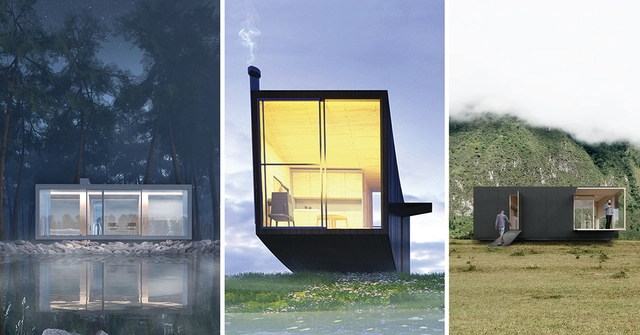
European modular container and building producer Ryterna modul has announced the winners of their fourth International competition: Architectural Challenge 2018 Tiny House. The competition asked for the design of a home for two people no larger than 25 square meters that integrated a kitchen, bathroom, living room, and sleeping area into a cohesive environment. With 150 projects from 88 countries, the three winning solutions and one honorable mention turn micro dwelling into a luxury.
See all the winning entries below.

A tribute to Africa’s culture in a remote place of the earth.
Hundred-year-old cultures give birth to communities, being transmitted through rhymes of those who are narrating it and interpreting the past through wisdom. One’s accomplishments result from rituals and metamorphosis, bonding the human being to its own roots through dance, history, music, colors, flavors, materials and landscapes. Space and matter relate themselves to the power of rituals, drawing together the lines of an architecture encharged of passing and preserving history.
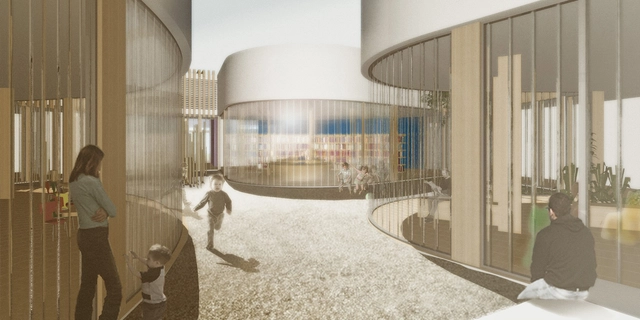
The Italian government has allocated 350 million euro for the construction of 52 new schools. In order to gather ideas for these future schools, the Italian Ministry of Education, University and Research (MIUR) hosted the Scuole Innovative Design Competition. Architect and engineer participants were critiqued on: architectural response to teaching needs, urban site integration, accessibility, flexibility, safety, materials, ease of maintenance, economic and environmental sustainability.

The world today has become aware of the reckless utilization of natural resources and is now making conscious efforts to move towards a sustainable future. In this endeavor, it has become imperative to rethink our approach towards building materials to ease the pressure on the conventional ones.
The Shipping Container is one such potential building material that boasts of good structural quality, can be recycled easily and is universally available. With over two million unused containers docked on ports around the world, the UnBox 2017 aims to explore the prospective functionality of these as efficient structural components that aid in the creation of ingenious ideas and in re-imagining sustainability.
UnBox 2017 intends to illustrate the inventive functionality of the material to the masses by using the containers to craft spaces in the public realm. The competition wants to enhance the future of public spaces with material innovation that fosters disruptive architecture and sustainability.