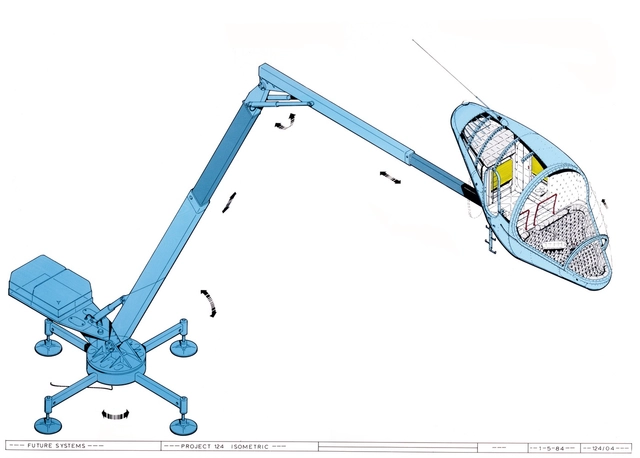
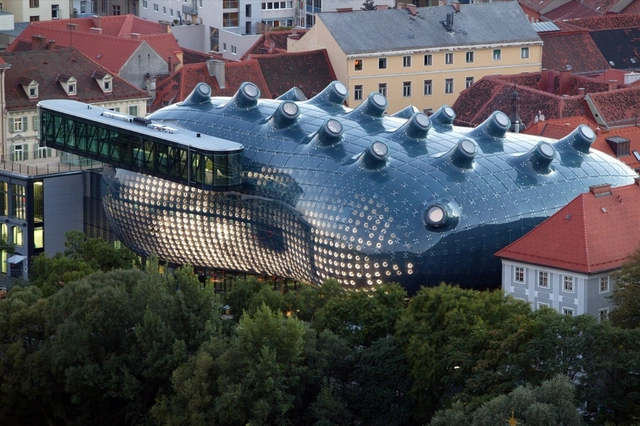
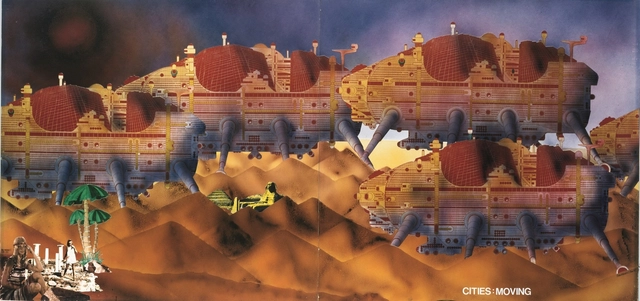
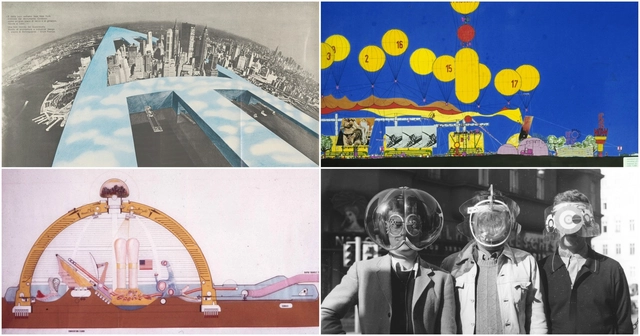
After its opening was curtailed this past winter by the coronavirus pandemic, the hotly anticipated Archigram Cities exhibition is now officially up-and-running throughout November 2020. Presented by the Hong Kong-based visual culture museum M+ and organized in collaboration with the Department of Architecture at the University of Hong Kong and Shanghai’s Power Station of Art, Archigram Cities has taken form as a hybrid virtual/in-person slate of happenings—talks, screenings, presentations, and more—that plumb and celebrate the vast legacy of British avant-garde architectural collective Archigram.
Until recently, the origins of the tiny-house movement were of little interest to the scientific community; however, if we take a look at the history of architecture and its connection to the evolution of human lifestyles, we can detect pieces and patterns that paint a clearer picture of the foundations of this movement that has exploded in the last decade as people leave behind the excesses of old and opt for a much more minimalist and flexible way of life.
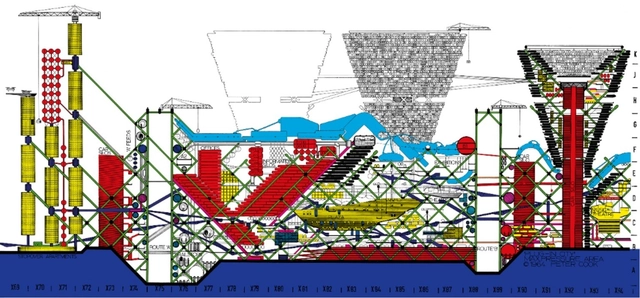
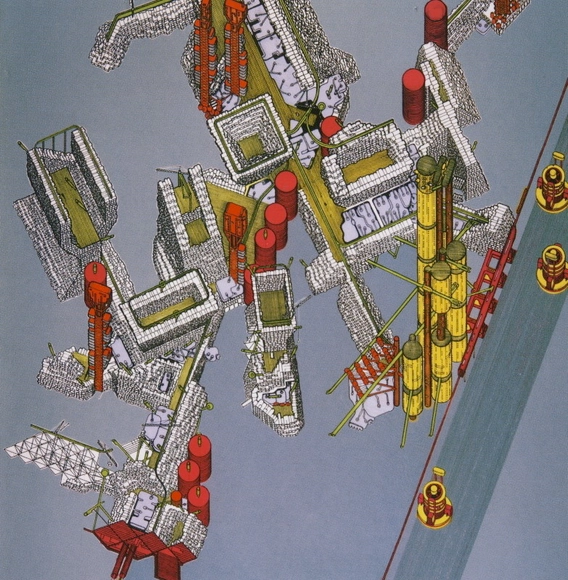
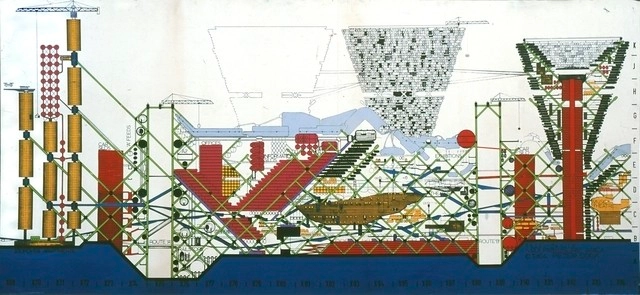
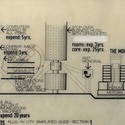
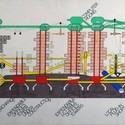
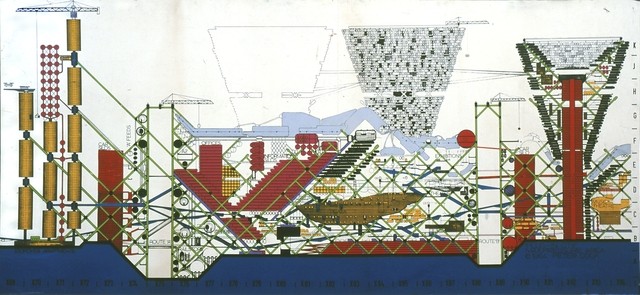
As one of the founding members of Archigram, the avant-garde neo-futurist architecture group of the 1960s, the British architect, professor, and writer Sir Peter Cook (born 22 October 1936) has been a pivotal figure within the global architectural world for over half a century; one of his most significant works from his time with Archigram, The Plug-In City, still invokes debates on technology and society, challenging standards of architectural discourse today.
Superstudio and Archigram were the pioneers of the dystopia they had popularized in 1960, when they experienced a crisis that tore world economies, positioning Italy in a historic moment of boom and bust that harbored dreams and despair.
The sale has not been without controversy, with opposition from the Arts Council’s reviewing committee on the export of works of art and objects of cultural interest. The committee had sought a delay in the sale until a buyer was found who would keep the collection in the UK.
The first moon landing, widespread anti-war protests, Woodstock and the hippies, rural communes and environmentalism, the Berlin Wall, the women’s liberation movement and so much more—the tumultuous decades of the Sixties and Seventies occupy an unforgettable place in history. With injustices openly questioned and radical ideas that set out to unseat existing conventions and practices in various spheres of life, things weren’t any different in the architectural world.
The grand visions dreamt up by the modernists were soon challenged by utopian experiments from the “anti-architecture” or “radical design” groups of the 1960–70s. Reestablishing architecture as an instrument of political, social, and cultural critique, they drafted bold manifestoes and designs, experimented with collage, music, performance art, furniture, graphic design, zines, installations, events, and exhibitions. While certain individuals from this era like Cedric Price, Hans Hollein, and Yona Friedman remain important to the realm of the radical and the unbuilt, the revolutionary spirit of these decades also saw the birth of various young collectives. For eccentricity at its very best, read on for a (by no means exhaustive) list of some groups who dared to question, poke, expand, rebel against, disrupt and redefine architecture in the 60s and 70s.
https://www.archdaily.com/880253/9-of-the-most-bizarre-and-forward-thinking-radical-architecture-groups-of-the-60s-and-70sZoya Gul Hasan
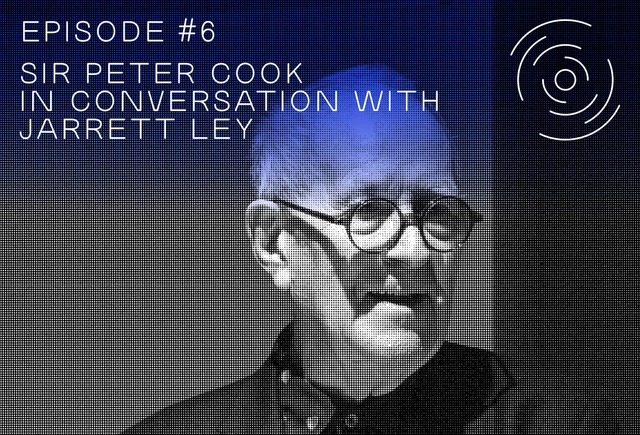
In the sixth episode of GSAPP Conversations, Jarrett Ley (a current GSAPP student) speaks with Sir Peter Cook. They discuss architecture as a tool for shaping radical thought, the relationship of the current political climate in Britain, Europe, and the United States on architectural education and practice, and how the most interesting contemporary architectural projects appear to stem from "unknown architects in smaller countries."
https://www.archdaily.com/870552/peter-cook-concerned-by-contemporary-drawing-culture-gsapp-conversationsAD Editorial Team
The Bartlett School of Architecture, UCL, is celebrating the opening of its new building at 22 Gordon Street with an exhibition of work by visionary architect Sir Peter Cook. Running from 23 February to 10 March 2017, the exhibition marks Sir Peter’s 80th year with a celebration of 80 of his inspired and pioneering projects.
In the following interview, which originally appeared in Zawia#01:Utopia (published December 2013), Sir Peter Cook, one of the brilliant minds behind Archigram, sits down with the editors of Zawia to discuss his thoughts on utopia - including why he felt the work of Archigram wasn’t particularly utopian (or even revolutionary) at all.
ZAWIA: It is perhaps difficult to discuss our next volume's theme - “utopia" - without first starting with archigram and the visions that came out of that period. How do you view the utopian visions of archigram during that specific moment of history in relation to the current realities of our cities and the recent political and social waves of change ?
PETER COOK: Actually... at the time I was probably naive enough to not regard it as Utopian.
Videos
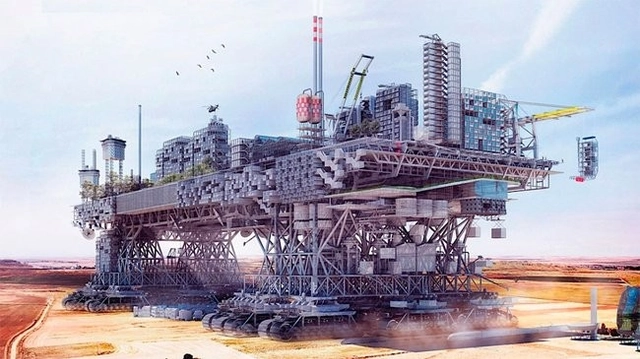
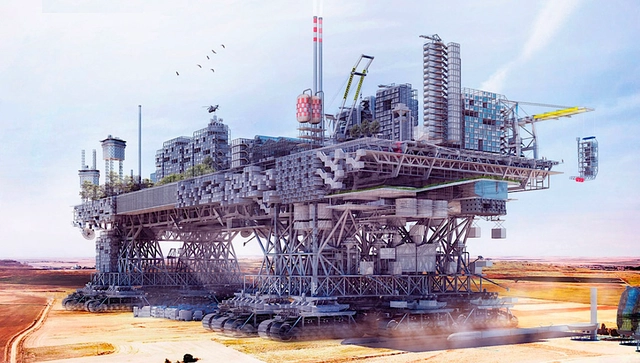
Manuel Dominguez's Very Large Structure. Image Courtesy of Poliedro
This Article by Avinash Rajagopal originally appeared in Metropolis Magazine as "Five Compelling Works of Architecture Fiction". Rajagopal argues in favor of the often dismissed genre of 'architecture fiction', giving five recent examples of the best the field has to offer.
As far as we know, the writer Bruce Sterling coined the term “architecture fiction,” in 2006. He was referring, of course, to speculative projects in which architects use ideas for the built environment to express themselves in a way that’s analogous to how storytellers use words. It’s a longstanding architectural tradition. Sterling cites the polemic work of the 1960s British group Archigram; the canon includes Lebbeus Woods’s drawings from the two decades that followed and Greg Lynn’s digital imaginings (one of which accompanied a short story by Sterling, in Metropolis’s 2003 Fiction Issue).
In the last few years, we have seen a groundswell in the genre. The usual reason given to explain the profusion of these fictitious works is that the recession made it hard for young architects to find “real” work, but there are probably other factors at play. Ethical concerns are back in the zeitgeist for a contradictory generation that’s equally into Occupy Wall Street, iPhones, and hipster shops selling single-source coffee. Their utopias and dystopias are more easily imagined with 3DS Max and Photoshop, and far more quickly disseminated online. All of this has made for some pretty rich storytelling.
Commenters on blogs still rail about the “uselessness” of architecture fiction. To answer them would be akin to mounting a defense of the short story—one surely could, but it would be a self-defeating exercise. The very nature of fiction is to be less bothered with usefulness than with possibility. In that spirit, here are five recent projects that I found compelling, in both imagery and the stories they attempt to tell.
In a world where people live more mobile lifestyles than they have for centuries, cities are facing a problem they rarely planned for: their citizens move away. When jobs and resources start to decline, modern cities, such as Detroit, suffer difficult and often wasteful processes of urban contraction. In contrast to this, Manuel Dominguez's "Very Large Structure," the result of his thesis project at ETSA Madrid, proposes a nomadic city that can move on caterpillar tracks to locations where work and resources are abundant.
Of course this is not the first time that the idea of a nomadic city has been proposed. Ron Herron's Walking City is one of the more recognizable Archigram designs from the 1960s, and has been influential to architectural theory ever since. However, the design for the "Very Large Structure" expands on the Walking City by including strong proposals for energy generation on board the city.
Read on to see more on this provocative project - including a full set of presentation boards in the image gallery.
The Plug-In City by Peter Cook, 1964. Image via Archigram Archives
This AD Round Up is dedicated to unbuilt classics, a selection of projects and ideas that, although never built, contributed greatly to the canon of twentieth century architecture. In 1920, Buckminister Fuller designed the Dymaxion House, which displayed forward-thinking innovations in sustainability and prefabrication. In 1924, Le Corbusier’s radical plan for Ville Radieuse (The Radiant City) had an extensive influence upon modern urban planning and led to the development of new high-density housing typologies. In the same year Friedrick Kiesler introduced his "Endless House", the basis for his subsequent manifesto of Correalism. Eight years later in 1932, Philip Johnson and Henry-Russell Hitchcock curated the “Modern Architecture: International exhibition” at the MoMA, introducing the emerging International Style and laying the principles for Modern architecture. And finally, one of Archigram’s most famous utopian visions, the Plug-In City, proposed by Peter Cook in 1964, offered a fascinating new approach to urbanism and reversed traditional perceptions of infrastructure’s role in the city.
AD Classics presents you with great buildings of the past, providing inspiration and motivation for architects to design for the future. But why must inspiration only come from poured concrete and erected walls? For this edition of AD Classics, we share a work, the Plug-In City, by the avant-garde group Archigram. Though never built, their projects and ideas provoked debates, combining architecture, technology and society; when Plug-In City was proposed in 1964, it offered a fascinating new approach to urbanism, reversing traditional perceptions of infrastructure’s role in the city.
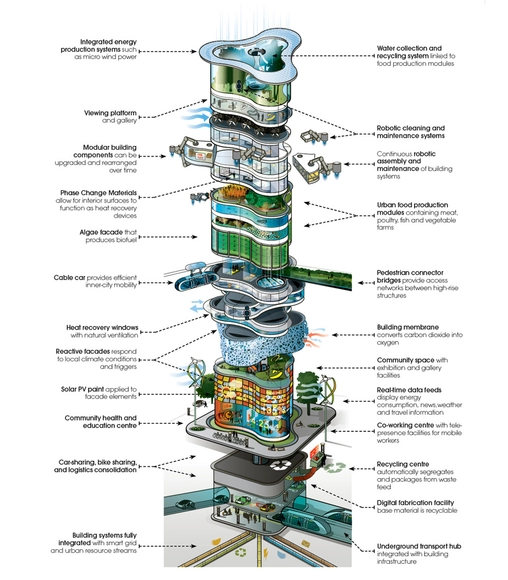
It is estimated that by 2050, 75 percent of the worlds - then 9 billion strong - population will live in cities. Urban Sprawl is already problematic and planners are faced with new challenges as they aim to build towards the sky rather than the horizon. In addition, cities are increasingly faced with climate change, resource scarcity, rising energy costs, and the possibility of future natural or man-made disasters. In response to these issues, Arup has proposed their vision of an urban building and city of the future.
In their proposal, titled “It’s Alive!”, they imagine an urban ecosystem of connected ‘living’ buildings, that not only create space, but also craft the environment. According to Arup, buildings of the future will not only produce energy and food, but will also provide its occupants with clean air and water.