1. ArchDaily
  2. Archea

Archea: The Latest Architecture and News

Tirana Architecture City Guide: Negotiating Identity Between Socialism and Urban Reinvention

Subscriber Access | 

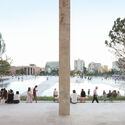
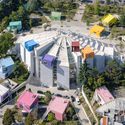
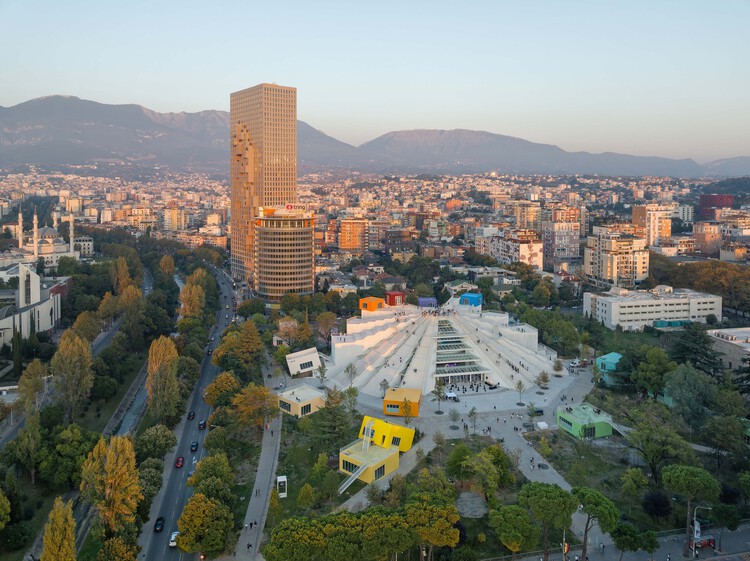
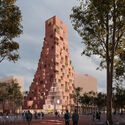
Located at the intersection of Adriatic landscapes and Balkan geopolitics, Tirana has undergone one of the most accelerated urban transformations in Europe over the last three decades. Once defined by rigid socialist planning and political isolation, the city has progressively reoriented itself through a combination of informal growth, international investment, and strategic urban interventions that seek to redefine its public image and spatial structure.

Since the early 2000s, a series of urban policies, most notably those initiated during the mayoral tenure of Edi Rama (now Albania prime minister), have promoted the use of color, public space, and architectural experimentation as tools for civic reactivation. Rather than relying solely on masterplans, Tirana's development has operated through interventions, where individual buildings and public spaces act as catalysts within a fragmented urban fabric.
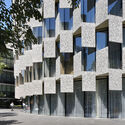
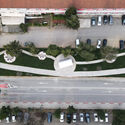
Tirana Architecture City Guide: Negotiating Identity Between Socialism and Urban Reinvention - Image 1 of 4Tirana Architecture City Guide: Negotiating Identity Between Socialism and Urban Reinvention - Image 2 of 4Tirana Architecture City Guide: Negotiating Identity Between Socialism and Urban Reinvention - Image 3 of 4Tirana Architecture City Guide: Negotiating Identity Between Socialism and Urban Reinvention - Image 4 of 4Tirana Architecture City Guide: Negotiating Identity Between Socialism and Urban Reinvention - More Images+ 15

Imported Futures: Global Architecture Shaping Albania’s Urban Transformation

Subscriber Access | 

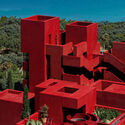
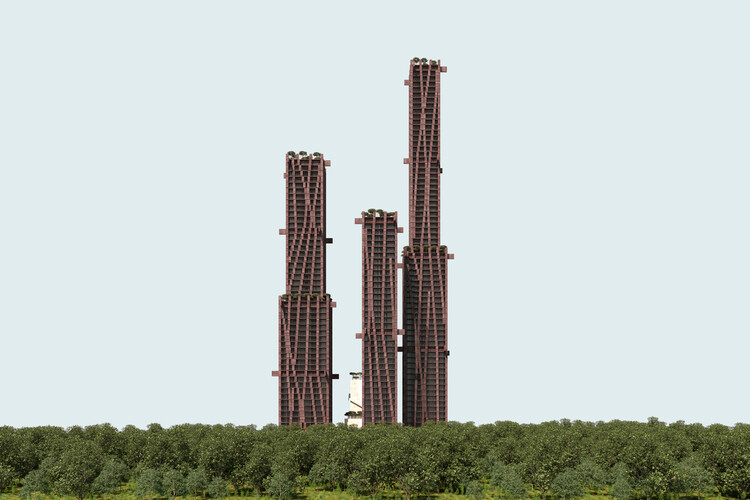
In recent years, Albania has undergone a rapid and visible transformation, emerging as one of the most active urban environments in Southeast Europe. This growth is not only reflected in the expansion of its built fabric but also in the scale and ambition of new architectural interventions that seek to redefine the country's image. Across its territory, a series of large developments, cultural institutions, and infrastructural projects are being introduced as part of a broader effort to reposition Albania and its capital, Tirana, within regional and international networks.

A significant number of these interventions are being designed by internationally recognized architectural offices, whose presence has become a defining characteristic of the city's current phase of development. Rather than relying primarily on incremental or locally embedded processes, Tirana's transformation is increasingly shaped through externally authored visions that introduce new formal languages, typologies, and urban strategies. These projects often operate as singular objects or large-scale fragments, contributing to a landscape where the city is assembled through distinct and highly visible gestures.

Imported Futures: Global Architecture Shaping Albania’s Urban Transformation - Image 1 of 4Imported Futures: Global Architecture Shaping Albania’s Urban Transformation - Image 2 of 4Imported Futures: Global Architecture Shaping Albania’s Urban Transformation - Image 3 of 4Imported Futures: Global Architecture Shaping Albania’s Urban Transformation - Image 4 of 4Imported Futures: Global Architecture Shaping Albania’s Urban Transformation - More Images+ 26

Architecture of Wine: 15 Contemporary Wineries Around the World

Subscriber Access | 

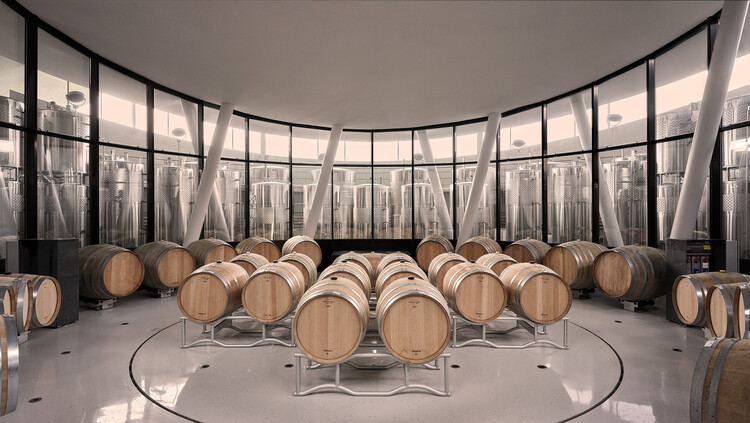
Wine production has long been tied to place, climate, and culture, and in recent decades, architecture has become a central part of this relationship. Wineries are no longer understood only as functional facilities for fermentation, storage, and distribution, but also as spaces where landscape, materiality, and visitor experience intersect. From subterranean cellars hidden beneath fields to sculptural landmarks rising in rural territories, these buildings shape the identity of winemaking regions while offering visitors a carefully choreographed encounter with the process of production.

At the intersection of agriculture, tourism, and culture, wineries present architects with unique opportunities to merge technical requirements with a spatial narrative. They must respond to environmental conditions, manage temperature and humidity with precision, and integrate with delicate ecosystems, while also providing spaces for tasting, gathering, and celebration. As a result, the typology has given rise to a wide range of architectural solutions. Some are rooted in tradition and local craft, others are exploring advanced technologies and contemporary forms.

Architecture of Wine: 15 Contemporary Wineries Around the World - Image 1 of 4Architecture of Wine: 15 Contemporary Wineries Around the World - Image 2 of 4Architecture of Wine: 15 Contemporary Wineries Around the World - Image 3 of 4Architecture of Wine: 15 Contemporary Wineries Around the World - Image 4 of 4Architecture of Wine: 15 Contemporary Wineries Around the World - More Images+ 45

"Past, Present, Future": Leading Dutch and Italian Designers on Being an Architect Yesterday, Today, and Beyond

Architecture is always evolving. The practice and business of architecture are undoubtedly evolving alongside the more obvious technological advances, but what we often forget is that there are no new ideas. When it comes to design, what we see manifested in our daily lives is the result of evolution. And at the root of that design evolution is inspiration.

A new initiative from Gianpiero Venturini and his firm Itinerant Office titled Past, Present, Future aims to open a research path based on the analysis of successful practices in the 21st Century while ultimately providing a new form of inspiration for the next generations of architects and designers. The documentary series begins with a select group of 11 international architects, including Jacob van Rijs, co-founder of MVRDV, Mario Cucinella, and Simone Sfriso, co-founder of TAMassociati. Each architect is featured in three video interviews in which they reveal the methodology behind their designs, the themes and approaches within their architectural practice, and the predictions they have for architecture in the near and distant future.