1. ArchDaily
  2. Applications and Lifecycle

Applications and Lifecycle: The Latest Architecture and News

How to Measure the Life Cycle of a Construction Material?

Subscriber Access | 

As a major driver of natural resource consumption, energy use, and greenhouse gas emissions, the construction industry has a significant impact on the environment, consuming 32% of global energy and contributing to 34% of global CO₂ emissions. Building materials play a crucial role in shaping the built environment. Through principles of circular economy, renewable and self-sufficient solutions, and technological innovations, analyzing the environmental performance of each material highlights the opportunity to review and assess the different stages of its life cycle.

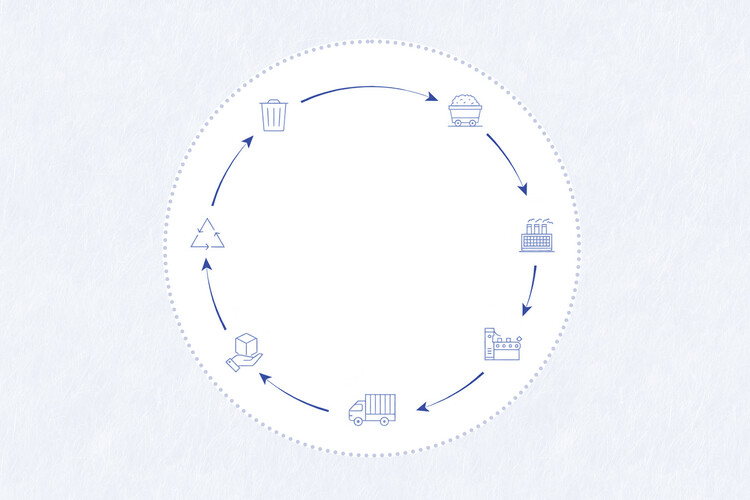
By establishing a common framework for measuring and managing the environmental impact of building materials, Life Cycle Assessment (LCA) emerges as a key approach. This methodology provides a comprehensive evaluation of the environmental impacts associated with products, processes, or activities throughout their entire life cycle. From raw material extraction, manufacturing, and transportation to construction, use, and end-of-life treatment, the analysis considers the environmental burdens linked to each stage. In the context of building materials, LCA offers a holistic and systematic approach to assessing environmental performance and identifying opportunities for design optimization, among other improvements. In this way, it quantifies impacts such as carbon emissions, energy consumption, water use, air pollution, waste generation, and ecosystem depletion.
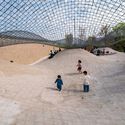
How to Measure the Life Cycle of a Construction Material? - Image 1 of 4How to Measure the Life Cycle of a Construction Material? - Image 2 of 4How to Measure the Life Cycle of a Construction Material? - Image 3 of 4How to Measure the Life Cycle of a Construction Material? - Image 4 of 4How to Measure the Life Cycle of a Construction Material? - More Images+ 12

Designing the Future, Again: What the 55-Year Return of the World Expo to Osaka Reveals

Subscriber Access | 

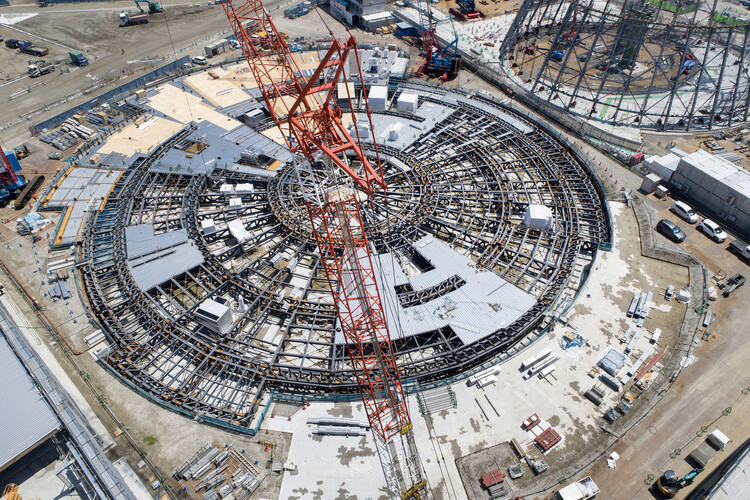
The 2025 Osaka Expo has captured widespread attention—not only for its architectural ambition and spectacle, but also for breaking records and generating controversy. Its most iconic feature, a monumental timber ring designed by Sou Fujimoto, has already made headlines as a Guinness World Record-breaking wooden structure. Built on the reclaimed island of Yumeshima, the site has attracted praise and critique in equal measure. Beyond its awe-inspiring 2-kilometer circumference—parts of which extend dramatically over the water—the structure has also drawn concerns, including questions about health & safety, extreme heat, and swarms of insects that may affect the visitor experience.

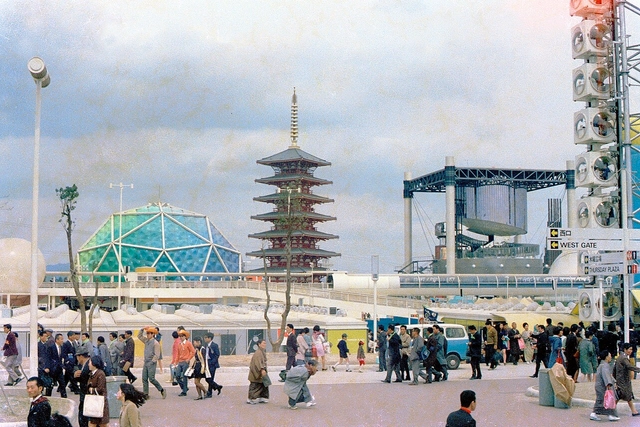
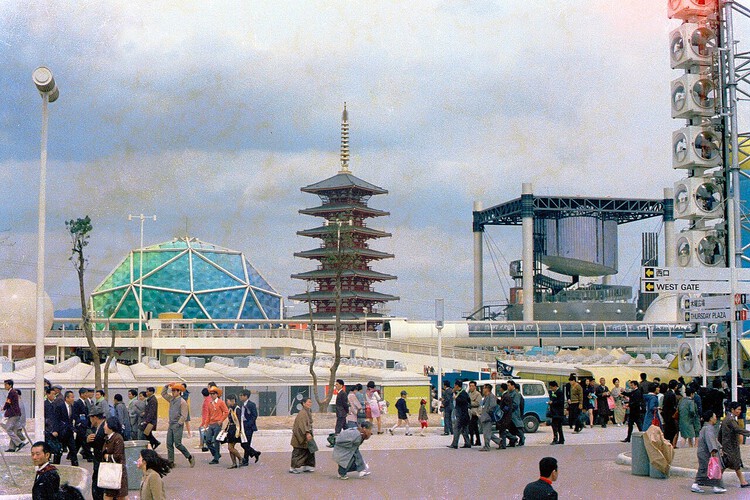
This year also marks a significant anniversary: the 55th year since the 1970 Osaka Expo, held under drastically different socio-economic conditions. Comparing these two expos—both hosted in the same city—offers a rare opportunity to reflect on how the rhetoric, curatorial themes, and architectural ambitions of world expos have evolved over time. From "Progress and Harmony for Mankind" in 1970 to "Designing Future Society for Our Lives" in 2025, the shift in thematic focus reveals changing global priorities. Meanwhile, the scale and nature of architectural involvement have also transformed, from the futuristic visions of Japanese Metabolism to a more internationally dispersed group of designers concerned with sustainability, technology, and civic engagement.

Designing the Future, Again: What the 55-Year Return of the World Expo to Osaka Reveals - Image 1 of 4Designing the Future, Again: What the 55-Year Return of the World Expo to Osaka Reveals - Image 2 of 4Designing the Future, Again: What the 55-Year Return of the World Expo to Osaka Reveals - Image 3 of 4Designing the Future, Again: What the 55-Year Return of the World Expo to Osaka Reveals - Image 4 of 4Designing the Future, Again: What the 55-Year Return of the World Expo to Osaka Reveals - More Images+ 21

Built to Last—or Change? The Case for Dry Construction in Humid Cities

Subscriber Access | 

In certain parts of the world, construction is still dominated by wet systems—concrete, masonry, and cementitious materials that are poured, cured, and fixed in place. While this has long been considered the norm in some south-east Asia countries, such as Singapore, Thailand, Malaysia, and China, in most of these regions, they typically share a common trend where labor is relatively inexpensive. This serves as one of the reasons to make concrete more easily available, as one of the typical downside of concrete is its intensive labour cost - this further differentiates concrete as a cheaper and more efficient material system to be building out of.

However, not enough considerations in the region are given to the sustainability aspect when using these wet construction materials,often overlooking the significant drawbacks of its material lifecycle and the difficulty to recycle it without downcycling - making it one of the more unsustainable materials available to be built out of.

Built to Last—or Change? The Case for Dry Construction in Humid Cities - Image 1 of 4Built to Last—or Change? The Case for Dry Construction in Humid Cities - Image 2 of 4Built to Last—or Change? The Case for Dry Construction in Humid Cities - Image 3 of 4Built to Last—or Change? The Case for Dry Construction in Humid Cities - Image 4 of 4Built to Last—or Change? The Case for Dry Construction in Humid Cities - More Images+ 10

Unwrapped Interiors: A Case for Material Authenticity and Clarity

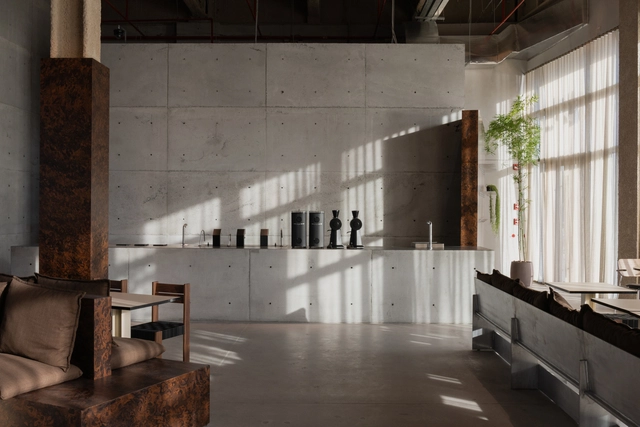
When designing a space—whether at the scale of interiors, architecture, or infrastructure—materiality is a central concern. Beyond aesthetics, materials determine how a project functions, ages, and endures. Some architects—such as Wang Shu and Kengo Kuma—have built their practices on a deep sensitivity to the potential and limits of materials. But even in the most pragmatic sense, the question arises: What lasts? What doesn't? And how do materials change over time? Naturally, materials shape atmosphere and appearance—qualities that often matter most to clients. Yet increasingly, the discourse around materiality has shifted from structural substance to surface treatment. When did we start focusing more on "decorating" our spaces by layering one material over another, rather than relying on the inherent beauty and performance of the building fabric itself?

Unwrapped Interiors: A Case for Material Authenticity and Clarity - Image 1 of 4Unwrapped Interiors: A Case for Material Authenticity and Clarity - Image 2 of 4Unwrapped Interiors: A Case for Material Authenticity and Clarity - Image 3 of 4Unwrapped Interiors: A Case for Material Authenticity and Clarity - Image 4 of 4Unwrapped Interiors: A Case for Material Authenticity and Clarity - More Images+ 10