1. ArchDaily
  2. Ancient Wonders of the World

Ancient Wonders of the World: The Latest Architecture and News

Anatomy of a Maya City: The Urban Structure of Copán in Honduras

Subscriber Access | 

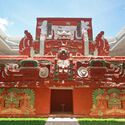
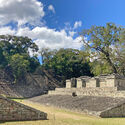
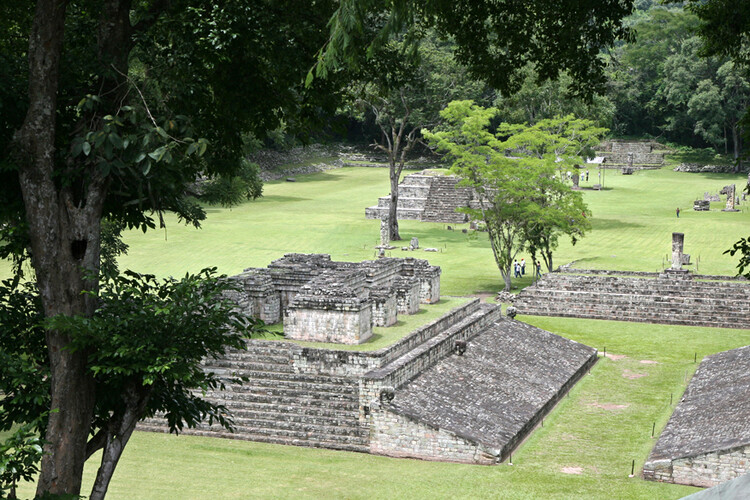
Deep in western Honduras, within a valley near the Guatemalan border, lies the ancient Maya city of Copán. Flourishing during the Classic period between the fifth and ninth centuries CE, the city developed as a regional epicenter through trade networks, dynastic politics, and monumental architecture. Today, the site is designated a UNESCO World Heritage Site due to its extensive architectural remains, including stepped pyramids, sculpted stelae, and ceremonial core. Over a century of systematic archaeological research has documented its urban morphology, revealing distinct residential districts, civic spaces, and systems of movement and visibility.

This analysis examines the spatial organization of Copán through the framework of urban theorist Kevin Lynch and "The Image of the City". By applying Lynch's five structural elements — edges, districts, paths, nodes, and landmarks — it is possible to analyze how Copán functioned not only as a ritual center but as a legible urban landscape designed to reinforce political hierarchy and regulate collective movement. Historical data for this analysis was taken from books and articles linked throughout the text, and was possible thanks to the collaboration of historian Arnulfo Ramirez de la Costa, professor and coordinator of the History program in the Department of History at the National Autonomous University of Honduras (UNAH) in Tegucigalpa.


Anatomy of a Maya City: The Urban Structure of Copán in Honduras - Image 1 of 4Anatomy of a Maya City: The Urban Structure of Copán in Honduras - Image 2 of 4Anatomy of a Maya City: The Urban Structure of Copán in Honduras - Image 3 of 4Anatomy of a Maya City: The Urban Structure of Copán in Honduras - Image 4 of 4Anatomy of a Maya City: The Urban Structure of Copán in Honduras - More Images+ 8

Unpacking the History of Artificial Islands: The True Cost on the Built Environment

Subscriber Access | 

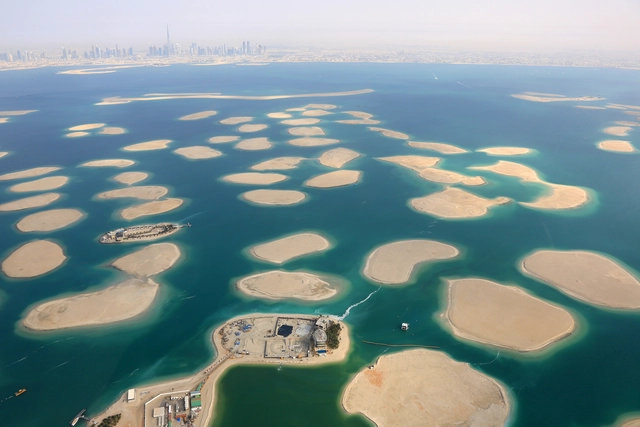
Contrary to common belief, artificial islands have a lengthy historical background in many regions worldwide. This heritage dates back to the reclaimed islands in Ancient Egypt, the hundreds of Stilt crannogs found in Scottish and Irish lakes and waterways, and the ceremonial islands constructed during the Aztec Empire. By definition, an artificial island is an island that has been constructed by humans rather than formed through natural processes. Artificial islands can be built for many different reasons, and these reasons are only increasing as the world faces the looming issue of space scarcity.

In the past, these islands were intended for ceremonial or agricultural purposes, often verging on solutions for urban space. More recently, the islands have been built to mitigate overcrowding, reclaim land, provide new urban expansions, and meet infrastructure and industrial needs. Artificial islands also have certain strategic advantages and economic gains and can lead to geopolitical benefits. However, these types of projects come at a significant cost to our ecosystem, harming the environment in severe and vast ways.

Unpacking the History of Artificial Islands: The True Cost on the Built Environment - Image 1 of 4Unpacking the History of Artificial Islands: The True Cost on the Built Environment - Image 2 of 4Unpacking the History of Artificial Islands: The True Cost on the Built Environment - Image 3 of 4Unpacking the History of Artificial Islands: The True Cost on the Built Environment - Image 4 of 4Unpacking the History of Artificial Islands: The True Cost on the Built Environment - More Images+ 3

Cairo Architecture City Guide: Exploring the Unique Architectural Blend of Historical and Contemporary in Egypt's Bustling Capital

Subscriber Access | 

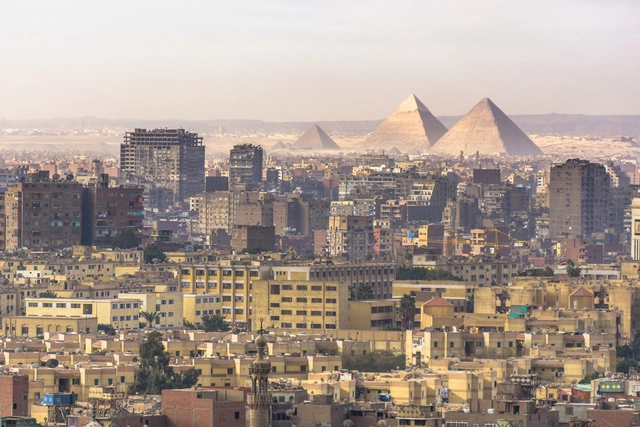
Cairo, Egypt's vibrant capital, is a unique synthesis of both historical and contemporary architecture. One of the most populated cities in Africa, this busy urban agglomeration has a long, rich history and is home to nearly 20 million people. Apart from the infamous Great Pyramids of Giza and the Sphinx, which have attracted tourists for ages, the city has been a melting pot of cultures, histories, and built environments alike.

The city of Cairo has witnessed many different eras, each characterized by unique architectural styles. After the Ancient Egyptians, the Islamic Period saw the birth of iconic buildings like the Mosque of Ibn Tulun and the Mosque of Sultan Hassan. These were followed by the Mamluk Period, during which structures such as the Al Rifai Mosque and the Mosque Madrassa of Sultan Barquq were constructed, boasting exquisite stone carvings, towering minarets, and intricate decorative motifs. The Ottoman era brought its own landmarks, including the Mosque of Muhammad Ali and the Citadel of AlQalaa. In the late 19th and 20th centuries, Cairo experienced an influx of European architectural styles due to colonial influences. This resulted in the construction of notable structures such as the Cairo Opera House and the Cairo Tower.

Cairo Architecture City Guide: Exploring the Unique Architectural Blend of Historical and Contemporary in Egypt's Bustling Capital  - Image 1 of 4Cairo Architecture City Guide: Exploring the Unique Architectural Blend of Historical and Contemporary in Egypt's Bustling Capital  - Image 2 of 4Cairo Architecture City Guide: Exploring the Unique Architectural Blend of Historical and Contemporary in Egypt's Bustling Capital  - Image 3 of 4Cairo Architecture City Guide: Exploring the Unique Architectural Blend of Historical and Contemporary in Egypt's Bustling Capital  - Image 4 of 4Cairo Architecture City Guide: Exploring the Unique Architectural Blend of Historical and Contemporary in Egypt's Bustling Capital  - More Images+ 21

10 Contemporary Buildings Inspired by the Egyptian Pyramid Typology

Subscriber Access | 

As one of the wonders of the world, the Egyptian pyramids are steeped in rich history and shrouded in mystery. Using their unparalleled resources to create structures on a scale that had never been seen before, the ancients used the pyramid shape to construct structurally resilient and visually powerful icons, surviving the ravages of time. Presenting a new definition in terms of monumentality, these architectural marvels remain a timeless and influential form for design concepts today.

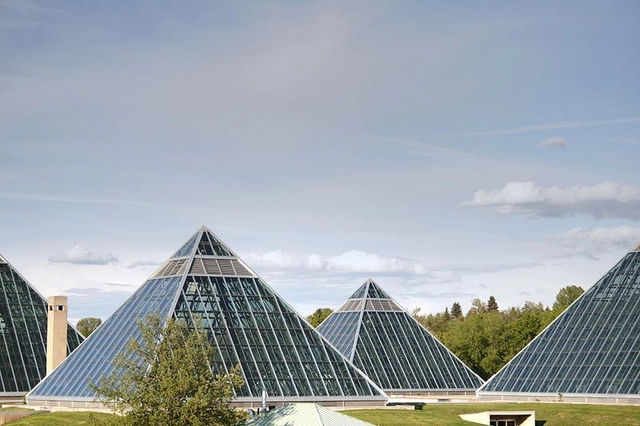
Although its origins are historical in nature, this iconic structure is resurfacing in many architectural projects around the world, modern pyramid architecture for a range of different functions and applications. From sustainable building, museums, malls and residential structures, the pyramid typology is visually enthralling and can be constructed in a range of different materials and environments.

10 Contemporary Buildings Inspired by the Egyptian Pyramid Typology - Image 1 of 410 Contemporary Buildings Inspired by the Egyptian Pyramid Typology - Image 2 of 410 Contemporary Buildings Inspired by the Egyptian Pyramid Typology - Image 3 of 410 Contemporary Buildings Inspired by the Egyptian Pyramid Typology - Image 4 of 410 Contemporary Buildings Inspired by the Egyptian Pyramid Typology - More Images+ 6

Grand Egyptian Museum Gives Historic Artifacts a Modern Context

Subscriber Access | 

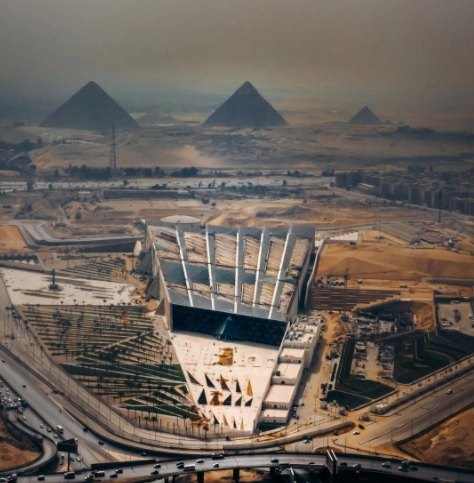
Designed by Irish architecture firm Heneghan Peng, the long-awaited Grand Egyptian Museum devoted entirely to Egyptology is set to open this summer, sitting on the edge of the Giza Plateau, 2 km away from the Pyramids. Considered as the largest museum in the world dedicated to one civilization, the cultural complex will accommodate about 100,000 ancient artifacts, and will include 24,000m² of permanent exhibition space, a children’s museum, conference facilities, educational areas, a conservation center, and extensive gardens inside and around the museum's plan.

Grand Egyptian Museum Gives Historic Artifacts a Modern Context - Image 1 of 4Grand Egyptian Museum Gives Historic Artifacts a Modern Context - Image 2 of 4Grand Egyptian Museum Gives Historic Artifacts a Modern Context - Image 3 of 4Grand Egyptian Museum Gives Historic Artifacts a Modern Context - Image 4 of 4Grand Egyptian Museum Gives Historic Artifacts a Modern Context - More Images+ 16

The Spectacular Stories Behind 7 Ancient Lost Landmarks

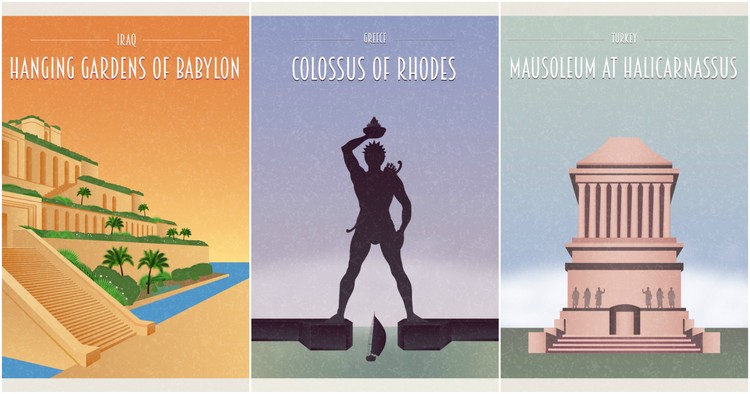
Architecture has been historically deployed as a tool to construct and concretize legacies. Whereas only a few built edifices have left a large enough impact on the world, or have been around long enough, to enter into the canon of architectural legend, the seven wonders of the ancient world have achieved both. With only one—the Great Pyramid of Giza—still standing, the others have all taken a unique position in the architectural imagination, with representations over the years of structures such as the Colossus of Rhodes and the Lighthouse of Alexandria changing according to the whims of artists of the time. Nevertheless, the spectacular stories behind each of these lost landmarks is worth revisiting – which is exactly what travel company Expedia has done in this series of illustrations.

The Spectacular Stories Behind 7 Ancient Lost Landmarks - Image 1 of 4The Spectacular Stories Behind 7 Ancient Lost Landmarks - Image 2 of 4The Spectacular Stories Behind 7 Ancient Lost Landmarks - Image 3 of 4The Spectacular Stories Behind 7 Ancient Lost Landmarks - Image 4 of 4The Spectacular Stories Behind 7 Ancient Lost Landmarks - More Images+ 4