1. ArchDaily
  2. Ancestry

Ancestry: The Latest Architecture and News

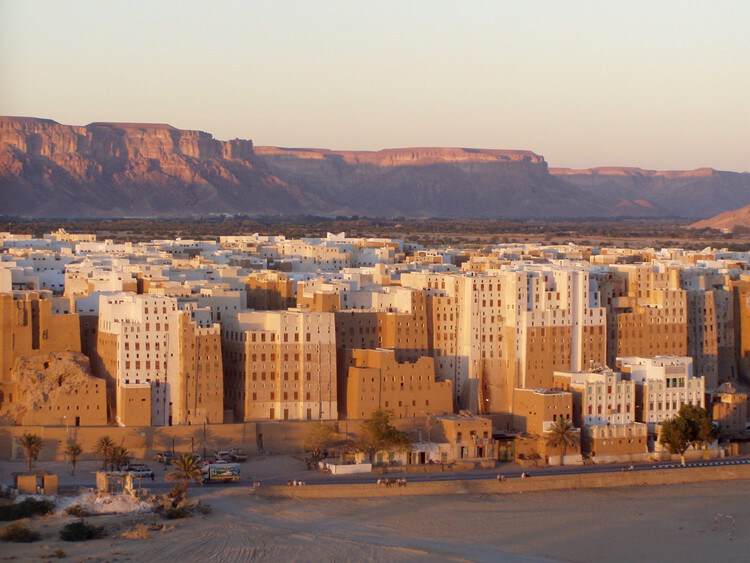
The Earthen Towers of Shibam: A Vertical City in the Yemeni Desert

Subscriber Access | 

Symbols of technological development and urban density, tall buildings as we know them today emerged in the late nineteenth century, particularly in the United States, as a response to the rapid expansion of urban commerce and the need to grow cities without occupying additional land. The term skyscraper, for instance, was coined in the 1880s and originally referred to buildings with around 10 to 20 stories—an impressive height for the time.

However, the idea of building vertically is much older than the steel-and-glass skyscrapers of modern cities might suggest. Long before the Industrial Revolution, some societies were already experimenting with forms of vertical urbanization as a response to limited space, territorial defense, or environmental adaptation.

The Earthen Towers of Shibam: A Vertical City in the Yemeni Desert - Image 1 of 4The Earthen Towers of Shibam: A Vertical City in the Yemeni Desert - Image 2 of 4The Earthen Towers of Shibam: A Vertical City in the Yemeni Desert - Image 3 of 4The Earthen Towers of Shibam: A Vertical City in the Yemeni Desert - Image 4 of 4The Earthen Towers of Shibam: A Vertical City in the Yemeni Desert - More Images+ 7

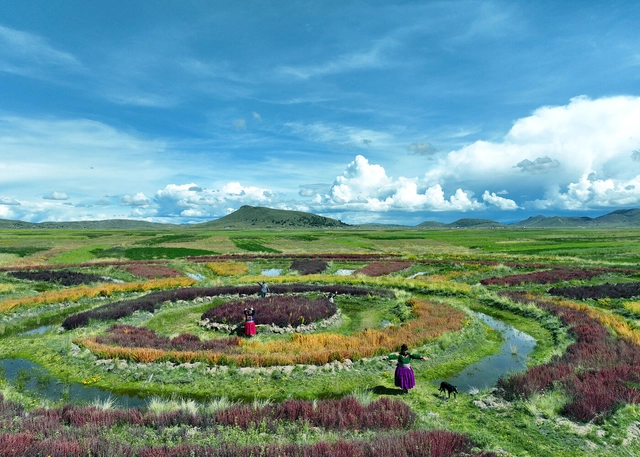
An Ancestral Legacy with Modern Concerns: The Story Behind the Waru Waru Agricultural Fields in Peru

Offering a path toward resilience and food security in the alluvial plains of Lake Titicaca, the Waru Waru agricultural fields are spread across the Peruvian highlands and constitute an ancient agricultural system. Connecting an ancestral legacy with modern concerns about water and food security, climate resilience, and sustainable land management, these agricultural systems open the debate about efficient water management and the importance of agricultural biodiversity. At the same time, they are part of the sense of identity and pride of the local Aymara community, consolidating cultural knowledge that is passed down and preserved across generations.

An Ancestral Legacy with Modern Concerns: The Story Behind the Waru Waru Agricultural Fields in Peru - Image 1 of 4An Ancestral Legacy with Modern Concerns: The Story Behind the Waru Waru Agricultural Fields in Peru - Image 2 of 4An Ancestral Legacy with Modern Concerns: The Story Behind the Waru Waru Agricultural Fields in Peru - Image 3 of 4An Ancestral Legacy with Modern Concerns: The Story Behind the Waru Waru Agricultural Fields in Peru - Image 4 of 4An Ancestral Legacy with Modern Concerns: The Story Behind the Waru Waru Agricultural Fields in Peru - More Images+ 1

Ailton Krenak: “Instead of Operating in the Landscape, We Should Blend in With It”

Subscriber Access | 

Ailton Krenak is a renowned environmentalist, philosopher, writer, and poet who holds honorary doctorates from the Federal University of Minas Gerais and the Federal University of Juiz de Fora. As an Indigenous leader, he played a pivotal role in advocating for Indigenous Rights, which were eventually enshrined in the 1988 Constitution of Brazil. His profound ideas have been disseminated through lectures, educational courses, and books, including notable works such as Ideas to Postpone the End of the World, Life is not Useful, and Ancestral Future.

Krenak has a unique talent for transforming his life experiences into profound concepts, which he conveys through oral and poetic language. His worldview blurs the boundaries between landscapes, human beings, animals, rivers, and mountains. He strongly advocates for a reassessment of our lifestyle, emphasizing the importance of 'breaking up the ground to allow the channeled waters to resurface.' On September 5th, he participated in a discussion in São Paulo during the Archtrends Summit 2023, organized by Portobello. During this event, he shared his insights on topics such as cities, forests, and the future of our planet.