1. ArchDaily
  2. Análise de Ciclo de Vida

Análise de Ciclo de Vida: The Latest Architecture and News

How to Measure the Life Cycle of a Construction Material?

Subscriber Access | 

As a major driver of natural resource consumption, energy use, and greenhouse gas emissions, the construction industry has a significant impact on the environment, consuming 32% of global energy and contributing to 34% of global CO₂ emissions. Building materials play a crucial role in shaping the built environment. Through principles of circular economy, renewable and self-sufficient solutions, and technological innovations, analyzing the environmental performance of each material highlights the opportunity to review and assess the different stages of its life cycle.

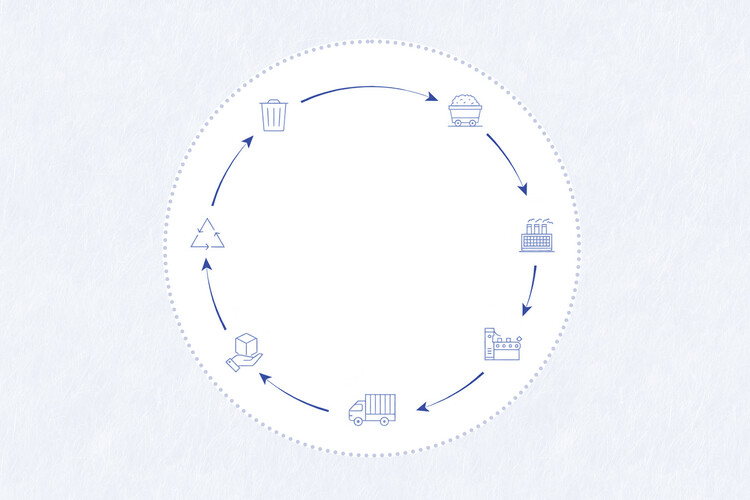
By establishing a common framework for measuring and managing the environmental impact of building materials, Life Cycle Assessment (LCA) emerges as a key approach. This methodology provides a comprehensive evaluation of the environmental impacts associated with products, processes, or activities throughout their entire life cycle. From raw material extraction, manufacturing, and transportation to construction, use, and end-of-life treatment, the analysis considers the environmental burdens linked to each stage. In the context of building materials, LCA offers a holistic and systematic approach to assessing environmental performance and identifying opportunities for design optimization, among other improvements. In this way, it quantifies impacts such as carbon emissions, energy consumption, water use, air pollution, waste generation, and ecosystem depletion.
How to Measure the Life Cycle of a Construction Material? - Image 1 of 4How to Measure the Life Cycle of a Construction Material? - Image 2 of 4How to Measure the Life Cycle of a Construction Material? - Image 3 of 4How to Measure the Life Cycle of a Construction Material? - Image 4 of 4How to Measure the Life Cycle of a Construction Material? - More Images+ 12

Understanding Whole Building Life Cycle Assessment for a Better Architecture

 | Sponsored Content

To initiate change of any kind, one must first be aware of the problem at hand. In the construction industry –which is responsible for 39% of global greenhouse gas emissions and countless other environmental impacts– mastering and understanding the numbers related to its processes is extremely important. But assessing the impact of a product or a material is much more complex than one might think. It includes the exhaustive collection of data about its inputs (for example, the raw materials, energy, and water used) and outputs (such as emissions and waste) associated with each stage of the life cycle. This allows for the quantification of the embodied carbon and other environmental impacts, the identification of where performance can be improved, and provides real numbers for a comprehensive and unified comparison between materials and products.

The Whole Building Life Cycle Assessment (wbLCA) method studies the totality of products present in a building, providing valuable information for decision-making related to the design, construction, operation, maintenance, and eventual demolition or reuse of a building. In other words, it refers to the totality of the LCA (Life Cycle Assessment) for all of the building's components. Recently, the National Research Council of Canada, in collaboration with the Athena Sustainable Materials Institute, released the national guidelines for wbLCA, which reflect what is practiced in North America. The aim is to harmonize the practice and to aid interpretation and compliance with relevant standards, with the guidelines being updated periodically as it evolves, enabling the calculation of reliable baselines or benchmarks, supporting LCA-based compliance schemes and assisting in the development and use of wbLCA software.