1. ArchDaily
  2. AMBi Studio

AMBi Studio: The Latest Architecture and News

Spatial Equity in Urban Infrastructures: Public Restrooms Addressing Women’s Needs

The design of public bathrooms and changing facilities has historically catered to a generalized notion of user needs, often oversimplifying the complexities of gender-specific requirements and falling short of supporting the unique needs of women. These needs extend beyond biological differences—such as the necessity for more stall privacy and differences in height and body posture—to include cultural factors that influence restroom use and expectations over time.

For instance, women's contemporary clothing often lacks adequate pocket space, resulting in the need to carry a handbag, even for simple essentials like phones and wallets. Despite efforts in recent architectural designs to address these disparities, the layered nuances of biological, cultural, and gender identity factors present a multifaceted challenge that defies a one-size-fits-all solution.

Spatial Equity in Urban Infrastructures: Public Restrooms Addressing Women’s Needs - Image 1 of 4Spatial Equity in Urban Infrastructures: Public Restrooms Addressing Women’s Needs - Image 2 of 4Spatial Equity in Urban Infrastructures: Public Restrooms Addressing Women’s Needs - Image 3 of 4Spatial Equity in Urban Infrastructures: Public Restrooms Addressing Women’s Needs - Image 4 of 4Spatial Equity in Urban Infrastructures: Public Restrooms Addressing Women’s Needs - More Images+ 23

AMBi Studio’s Award-Winning Yu-Hsiu Museum of Arts Photographed by Lucas K Doolan

Subscriber Access | 
AMBi Studio’s Award-Winning Yu-Hsiu Museum of Arts Photographed by Lucas K Doolan  - Image 40 of 4
© Lucas K. Doolan

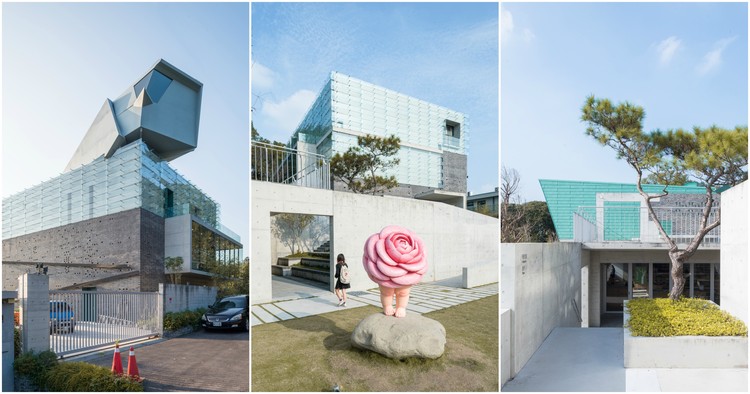
Located in the Tsaotun Township of Nantou County in Taiwan, the Yu-Hsiu Museum of Arts was completed in October of 2015, after 4 years of design development. The request received by AMBi Studio’s design team, led by architect and founder Wei-Li Liao, was for a building that was "subtle," "delicate" and "clean." The building’s focus is therefore on creating a harmonious relationship between the manmade and naturally formed architectural elements, paying respect to the surrounding Jiu-Jiu Peaks. This relationship is demonstrated in the combination of the building’s artificially constructed corridors and the existing vegetation in the area, and the museum’s doubled-façade construction which creates an "intermediary" space between outside and inside.

This successful design led the building to win first prize at the 2016 Taiwan Architecture Awards, causing the selection committee to praise Liao for his "continual effort... to explore the experience of perception... and poetic spatiality." Taiwan-based photographer Lucas K Doolan visited the site to capture the building’s interaction with nature in detail, exploring the museum’s carefully considered materiality.

AMBi Studio’s Award-Winning Yu-Hsiu Museum of Arts Photographed by Lucas K Doolan  - Image 1 of 4AMBi Studio’s Award-Winning Yu-Hsiu Museum of Arts Photographed by Lucas K Doolan  - Image 2 of 4AMBi Studio’s Award-Winning Yu-Hsiu Museum of Arts Photographed by Lucas K Doolan  - Image 3 of 4AMBi Studio’s Award-Winning Yu-Hsiu Museum of Arts Photographed by Lucas K Doolan  - Image 4 of 4AMBi Studio’s Award-Winning Yu-Hsiu Museum of Arts Photographed by Lucas K Doolan  - More Images+ 49

The 2015 Religious Architecture Awards Celebrate Changing Trends in Worship

Subscriber Access | 

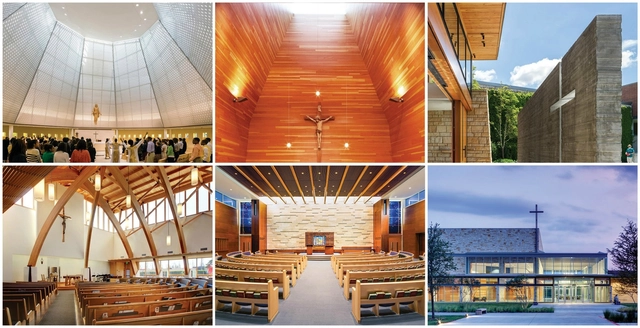
Religious buildings make up many of the highlights of architectural history, and the Religious Architecture Awards from Faith & Form magazine and the Interfaith Forum for Religion, Art, and Architecture celebrate the latest entries in this category. As trends in religious practices and the buildings that house them have changed, this year’s awards celebrate a wide variety of structures, including a growing number of renovation and restoration projects, as well as the first-ever award for a building in the “megachurch” category. From a total of 44 entries, 16 projects received awards in one of five categories: New Facilities, Renovation, Restoration, Adaptive Reuse/Repurpose, and Liturgical/Interior Design.

Read on to see all the winners of the Religious Architecture Awards.

The 2015 Religious Architecture Awards Celebrate Changing Trends in Worship - Image 1 of 4The 2015 Religious Architecture Awards Celebrate Changing Trends in Worship - Image 2 of 4The 2015 Religious Architecture Awards Celebrate Changing Trends in Worship - Image 3 of 4The 2015 Religious Architecture Awards Celebrate Changing Trends in Worship - Image 4 of 4The 2015 Religious Architecture Awards Celebrate Changing Trends in Worship - More Images+ 36