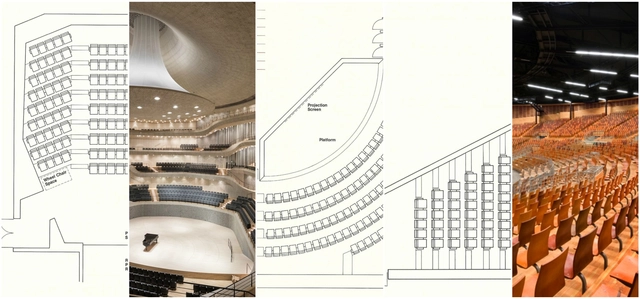
Audience sightlines, accessibility and acoustics all make theater seating a hugely precise art. As part of their set of online resources for architects and designers, the team at Theatre Solutions Inc (TSI) have put together a catalog of 21 examples of theater seating layouts. Each layout is well detailed, with information on the number of seats, the floor seating area and row spacing. These layouts fall under three general forms; to supplement this information, alongside TSI's diagrams we've included the pros and cons of each type, as well as examples of projects which use each format. Read on for more.
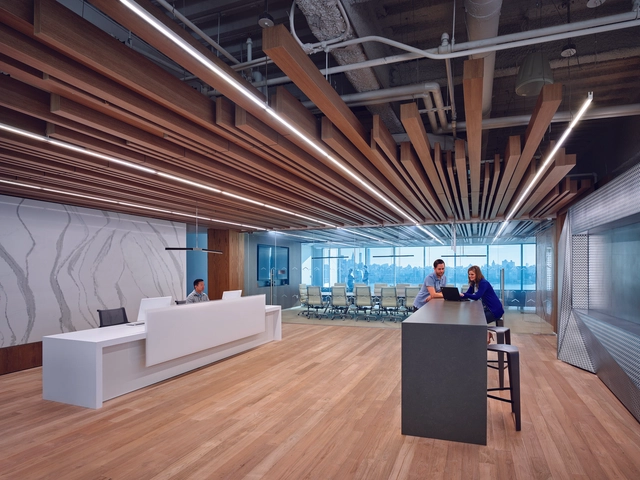
Open ceilings offer an opportunity for creative design and technical integration. They play a key role in forming interior spaces and add value by adding comfort through acoustics, finishes and other integrated solutions to the overall design intent.
Picture this. You're in a restaurant and you can hear the conversation of the person in the table next to you better than the person you're sitting with. Then, everyone begins to speak louder, making the environment chaotic. Absorption, reflection, reverberation, frequency, decibels, etc. Although acoustics is a complex science that can render buildings almost uninhabitable when not properly thought out, architects do not always possess the theoretical resources nor have the necessary concern to develop acoustically comfortable spaces.
When we think about a perfect match between acoustics and good design it may not be as easy as it seems. A number of technical decisions in order to make an interior space acoustically efficient -and to achieve its programmatic purpose correctly- can make some of the architect's design intentions fade and be replaced by standard and prefabricated panels.
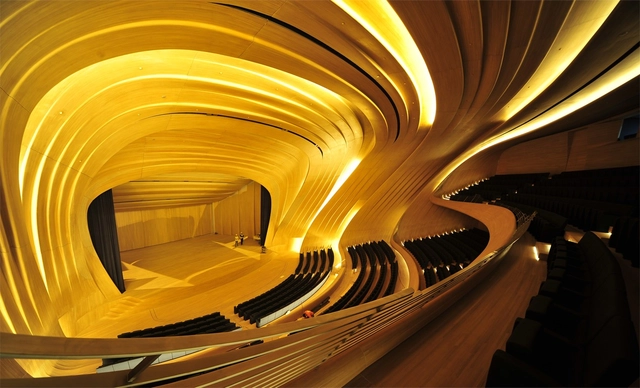
In this article, we present a selection of architecture projects that are able to create a memorable visual impact as well as an impeccable interior solution for acoustics. These are our favorite 14 music venues that fascinate inside and out.
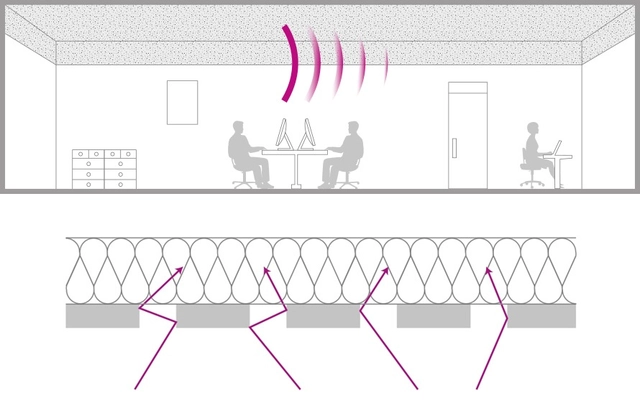
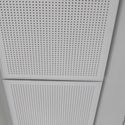
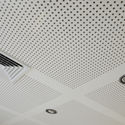
There are many ways to solve the acoustic comfort of the interior spaces we design, using materials and solutions of different prices and appearances. Perforated cardboard gypsum boards are an economical and efficient option to incorporate into projects, absorbing the sound and reducing the noise level generated by the reverberation through different patterns and shapes.
Applied mainly in schools, offices, shopping centers, restaurants, lobbies, and hospitals, gypsum boards are easy to install and can deliver high-quality aesthetic results in ceilings and coatings.
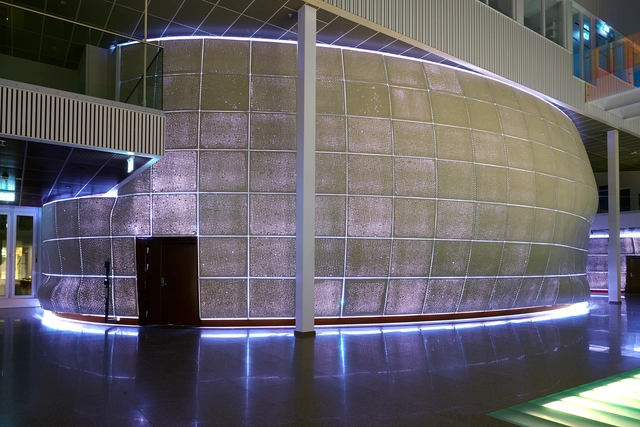
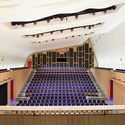
An installation at the Karolinska Institutet in Sweden is made entirely of translucent concrete panels. Composed of concrete and bubble wrap, the site blends both high and low technology processes. This high-tech lecture hall is an amorphous space with unique acoustic qualities.
The panels were created by compressing High-Performance Concrete between two layers of Bubble-Wrap. With 262,500 cavities and 1,000,000 membrane-perforations, the material creates a diffused echo-free ambiance.
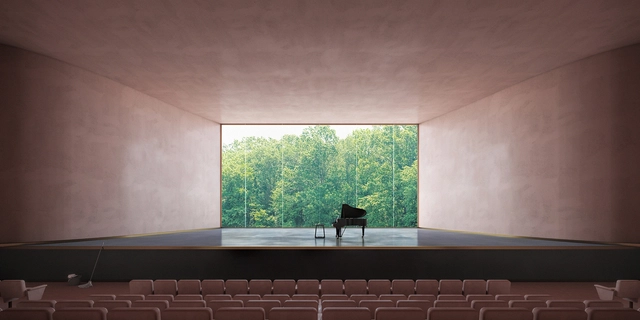
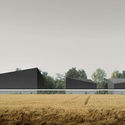
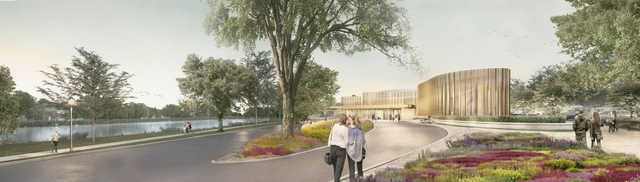
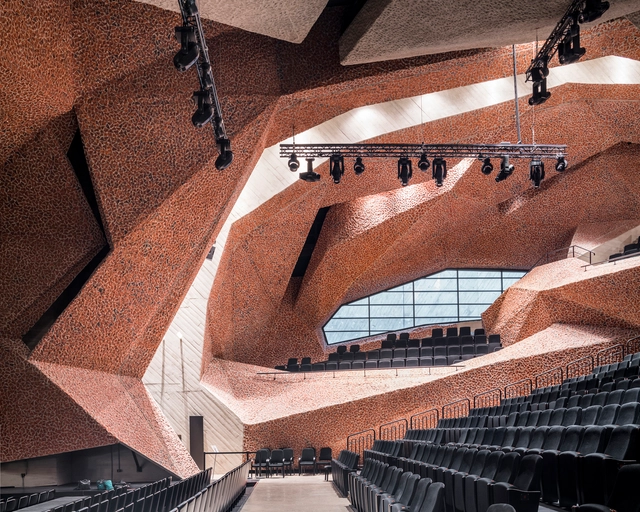
Located in a small village in Poland, this proposed music center honors the birthplace of famous Polish composer and pianist, Frédéric Chopin. Designed by ELEMENT as a part of an international competition, the Chopin Music Center captures the picturesque landscape of endless forests through "leisure and relaxation."
The Center integrates with the park through window views of Frédéric Chopin's birth house and the surrounding landscape. The proposed international music center utilizes a combination of natural materials and glazing to create a seamless connection with its site. The existing park can be reached by pathways and bridges near the building, prompting visitors to experience the outdoor area.
With the aim of promoting more efficient ways to isolate and protect building envelopes, the Chilean team Rootman has developed Thermoroot; a biodegradable and 100% natural insulation made from roots without genetic modifications or chemical additives. These roots make up what the company is calling a Radicular Mattress which, in addition to thermally and acoustically insulating the walls, floors, and ceilings of buildings, it is fire resistant.
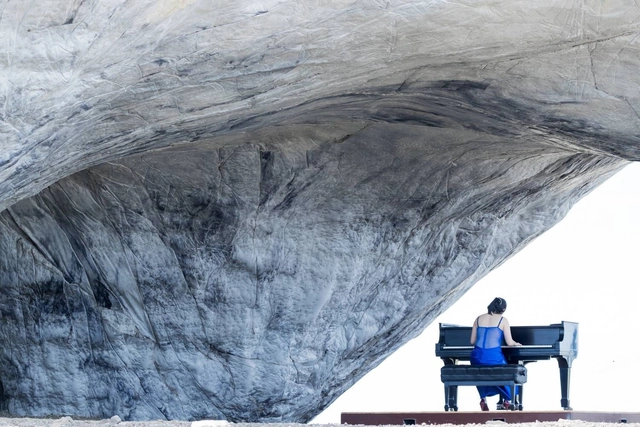
Jenny Chen performing under Domo at the Tippet Rise Art Center, 2016. Design by Ensamble Studio (Anton Garcia-Abril and Debora Mesa). Photograph by Iwan Baan.
With Argeo Ascani, Anne Guthrie, Zev Greenfield, Margaret Anne Schedel, Elaine Sisman, Emily Thompson, and Peter Zuspan
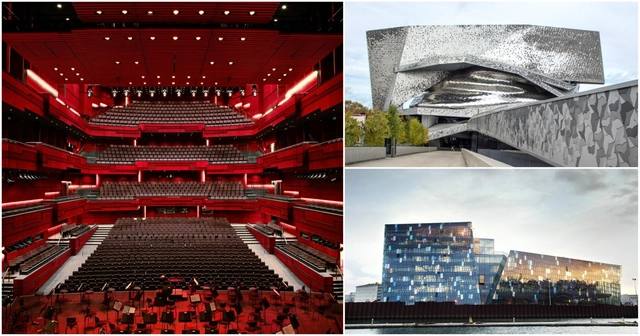
In their video series for the November 2017 World Architecture Festival, PLANE—SITE delves into contemporary concert hall design. The five films highlight major themes in today’s musical architecture through an interactive, multimedia panel. Using Harpa Concert Hall in Reykjavik, Wroclaw’s National Forum of Music, and the Philharmonie de Paris as examples, the videos show how contemporary concert halls are more technological and multi-functional than ever before, demonstrating how architecture redefines the modern-day musical performance experience.
The series acted as a starting point for a conversation between the WAF audience and panelists, moderated by PLANE—SITE’s Andres Ramirez. Panelists included Michel Cova of dUCKS scéno, Tateo Nakajima of Arup, and Jacob Kurek of Henning Larsen.
North America’s largest classical repertory theatre company, the Stratford Festival revealed Hariri Pontarini Architects’ design for their new Tom Patterson Theatre at a town hall meeting last month. According to Antoni Cimolino, the Stratford Festival’s Artistic Director, the company desires a new facility that compares to distinguished theatres worldwide.
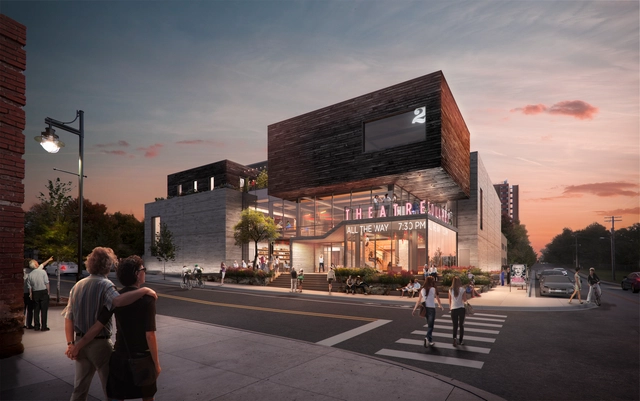
On November 3, TheatreSquared Executive Director Martin Miller and Artistic Director Robert Ford unveiled the completed plans for the company’s new permanent home, a 50,000 square-foot building in Fayetteville, Arkansas designed by London-based theater planners Charcoalblue and New York–based Marvel Architects. The new building will include two theaters, a rehearsal space, staff offices, design workshops, a community space, a 24-hour cafe/bar, three levels of outdoor public space, and a separate building housing eight guest artist apartments.
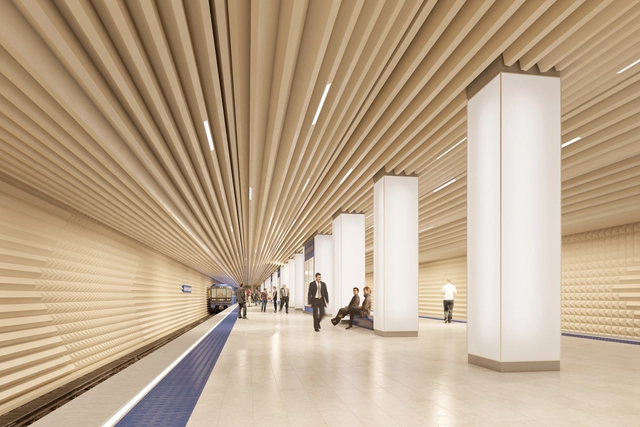
With their Moscow Metro proposal, Variant Studio attempted to design "the world's quietest metro platform". Image Courtesy of Variant Studio
"During the Middle Ages, smell was the unspoken plague of cities," writes New York Times architecture critic Michael Kimmelman. "Today it is sound." In his latest article, entitled "Dear Architects: Sound Matters," Kimmelman breaks down an often-overlooked element of architectural design, explaining how space shapes sound, and how sound shapes our experience of a space - and imploring architects to put more thought into the sonic environments created by their designs.
In architecture we talk about space and form. We talk about experience and meaning. All of these qualities are inextricably the sensory experience of light, touch, smell and sound. Sound expert Julian Treasure asks architects to consider designing for our ears, citing that the quality of the acoustics of a space affect us physiologically, socially, psychologically and behaviorally.




.jpg?1569015882 "© Studiothomas")
.jpg?1569015969 "© Halkin Mason Photography LLC")





.jpg?1557252548 "© Ema Peter")