1. ArchDaily
  2. 3D Scanning

3D Scanning: The Latest Architecture and News

Architecture in the Age of Platforms: What Role Does Software Play in Practice Today?

Subscriber Access | 

How many software tools and platforms are involved today in developing a contemporary project? From designing a single-family house to a public library, relying on just one or two programs is no longer common. Instead, multiple tools combine, overlap, and interact throughout various stages, including analysis, design, rendering, coordination, and construction. This widespread use of software in the virtual world reflects not only the technical complexity of today's practice but also a more subtle yet equally significant shift: software has become less a specific tool and more an environment that accompanies and even challenges the process.

AI and Architecture Software at AIA25: From Code to Concrete in the Digital Future

Subscriber Access | 

The future of architecture isn't just being drawn—it's being coded. Since mathematician John W. Tukey coined the term "software" in 1958 in The American Mathematical Monthly, its influence has steadily expanded, from revolutionizing science and engineering to quietly transforming architecture. What was first embraced as an innovation for structural calculations and drafting has since revealed a much broader potential, becoming a creative driver in architectural narrative and practice.

While that transformation has already taken root—software now embedded in the way we design and think—it continues to evolve. At the recent AIA Conference on Architecture & Design in Boston, current innovations made it clear that we're entering a new chapter: one where software and artificial intelligence aren't just enhancing workflows but actively shaping sustainability, regulation, and decision-making. Architects and software developers now treat code with the same logic as a material—shaped not by modeling or carving, but through parameters, cycles, constant evolution, and feedback. At the same time, architects are working with AI as a co-pilot in the design process, collaborating with it to support decision-making and enhance the design.

Vernacular Building and AI: Can Data Alone Bridge the Gap?

As artificial intelligence (AI) becomes increasingly embedded in society, it's essential to pause and reflect on the foundations that sustain it—and the dimensions to which it extends. At the heart of AI's learning are datasets, whose structure and content shape how these systems interpret and respond to the world. This reliance creates a deep interdependence—one that not only informs AI's capabilities but also defines its potential blind spots. In light of this, we must ask: What forms of understanding might this process exclude, especially those not easily captured in digital form?

Vernacular Building and AI: Can Data Alone Bridge the Gap? - Image 1 of 4Vernacular Building and AI: Can Data Alone Bridge the Gap? - Image 2 of 4Vernacular Building and AI: Can Data Alone Bridge the Gap? - Image 3 of 4Vernacular Building and AI: Can Data Alone Bridge the Gap? - Image 4 of 4Vernacular Building and AI: Can Data Alone Bridge the Gap? - More Images+ 15

Tideland Studio Applies Architectural Technologies to Create a Sensorial Understanding of Environmental Changes

While it is undeniable that the surrounding environment is changing due to human activity, the effects can be difficult to perceive directly, as they are often illustrated with unrelatable pictures of far-away places or overused graphics and statistics. Danish office Tideland Studio aims to change this. Through their work, they aim to bring forth a new type of sensible understanding of the changes happening around us. They work across disciplines, melding research, art, and architecture while employing the newest survey and fabrication technologies to give presence to the abstract phenomena that shape our planet. Because of their practical approach to research and the new perspectives that they open toward extreme environments affected by climate change, ArchDaily has selected Tideland Studio as one of the 2023 New Practices. The annual survey highlights emerging offices that use innovation and forward-looking processes to rethink the ways in which we practice architecture.

Tideland Studio Applies Architectural Technologies to Create a Sensorial Understanding of Environmental Changes - Image 1 of 4Tideland Studio Applies Architectural Technologies to Create a Sensorial Understanding of Environmental Changes - Image 2 of 4Tideland Studio Applies Architectural Technologies to Create a Sensorial Understanding of Environmental Changes - Image 3 of 4Tideland Studio Applies Architectural Technologies to Create a Sensorial Understanding of Environmental Changes - Image 4 of 4Tideland Studio Applies Architectural Technologies to Create a Sensorial Understanding of Environmental Changes - More Images+ 8

Expanding the Architectural Prospects of Timber in Its Natural Form

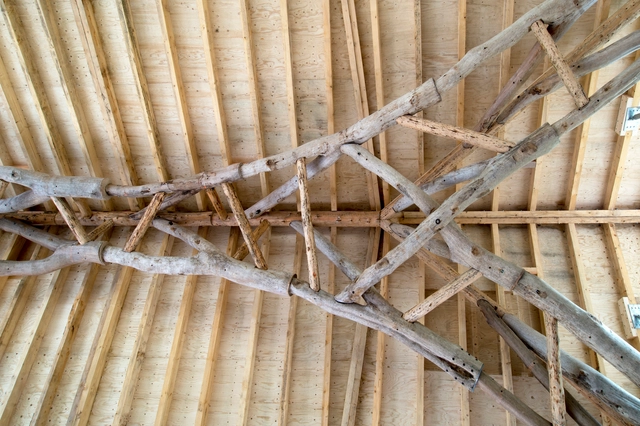
Timber has been a popular source of construction material for thousands of years. Through sawing, milling, and other engineered wood conversion processes, various wood forms have been created and applied in products, furniture, and architecture. However, these processes can sometimes alter the basic lines of wood structure. The stems can be split, grain patterns changed, and some woods, such as oak and cedar, are easily reduced while others can become intractable. This led to the exploration of whole timber forms in ancient structures, such as log cabins, which layered timber in different cross-sections to form home profiles. Through design, the use of trunks or branches of trees in their entirety can accentuate their innate mechanical properties for structural sustainability. Although these practices are fairly absent in contemporary building techniques, new technological innovations expand the prospects of timber construction in architecture.

Expanding the Architectural Prospects of Timber in Its Natural Form - Image 1 of 4Expanding the Architectural Prospects of Timber in Its Natural Form - Image 2 of 4Expanding the Architectural Prospects of Timber in Its Natural Form - Image 3 of 4Expanding the Architectural Prospects of Timber in Its Natural Form - Image 4 of 4Expanding the Architectural Prospects of Timber in Its Natural Form - More Images+ 6

Digitally Designed & Built Projects: Using Technology to Explore New Ways of Construction

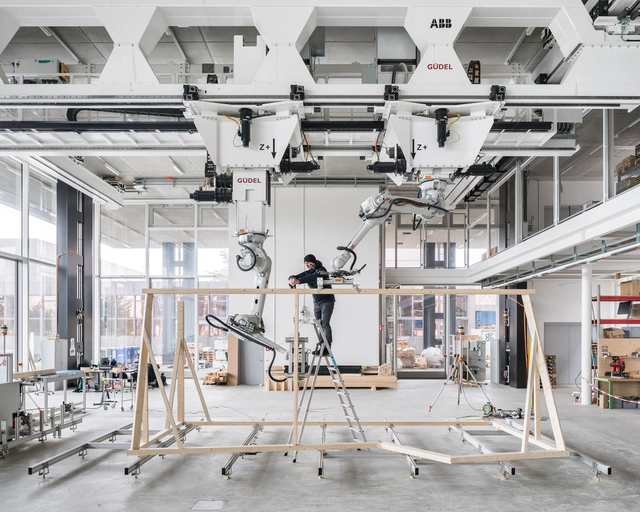
By now,  it is clear that technology has taken over almost every aspect of our lives. It has changed the way we communicate, how we connect, how we work and study, and has even modified our buying and eating habits.  Architecture and construction were not the exceptions, and technology is also now present in the way it is being thought, designed, and built.

Digitally Designed & Built Projects: Using Technology to Explore New Ways of Construction - Image 1 of 4Digitally Designed & Built Projects: Using Technology to Explore New Ways of Construction - Image 2 of 4Digitally Designed & Built Projects: Using Technology to Explore New Ways of Construction - Image 3 of 4Digitally Designed & Built Projects: Using Technology to Explore New Ways of Construction - Image 4 of 4Digitally Designed & Built Projects: Using Technology to Explore New Ways of Construction - More Images+ 16

New Technologies Might Save Venice’s Cultural Heritage from the Floods

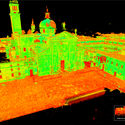
Factum Foundation, a nonprofit dedicated to the use of digital technology for cultural heritage conservation, in collaboration with the Fondazione Giorgio Cini, Ecole Polytechnique Fédérale de Lausanne (EPFL) and Iconem have recorded the Island of San Giorgio Maggiore, in Venice, Italy, in its entirety. For more than 10 days, the team using photogrammetry and LiDAR technologies scanned the 10-hectare island. The project entitled ARCHiVe, linked with EPFL's Venice Time Machine aims to "efficiently and effectively aid in the preservation of Venice's fragile cultural heritage".

New Technologies Might Save Venice’s Cultural Heritage from the Floods - Image 1 of 4New Technologies Might Save Venice’s Cultural Heritage from the Floods - Image 2 of 4New Technologies Might Save Venice’s Cultural Heritage from the Floods - Image 3 of 4New Technologies Might Save Venice’s Cultural Heritage from the Floods - Image 4 of 4New Technologies Might Save Venice’s Cultural Heritage from the Floods - More Images+ 24

Reparametrize Studio Envisions the Future of Post-War Smart City

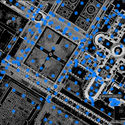
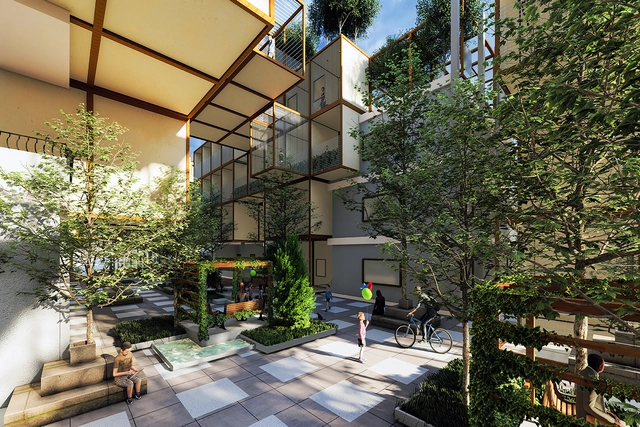
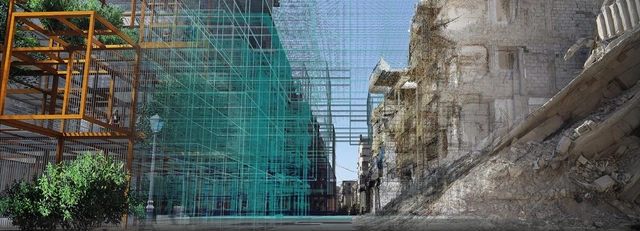
Reparametrize Studio has followed up their ongoing research “Re-Coding Post-War Syria”, with a project that focuses on analyzing the damaged fabric of post-war cities through 3D scanning technologies. Taking a Street in Zamalka Town in Damascus, Syria as a case study, the investigation can distinguish the areas in need of reconstruction from the areas in useful conditions.

Reparametrize Studio Envisions the Future of Post-War Smart City - Image 1 of 4Reparametrize Studio Envisions the Future of Post-War Smart City - Image 2 of 4Reparametrize Studio Envisions the Future of Post-War Smart City - Image 3 of 4Reparametrize Studio Envisions the Future of Post-War Smart City - Image 4 of 4Reparametrize Studio Envisions the Future of Post-War Smart City - More Images+ 9

Reparametrize Studio and Digital Architects Re-Code Post War Syria

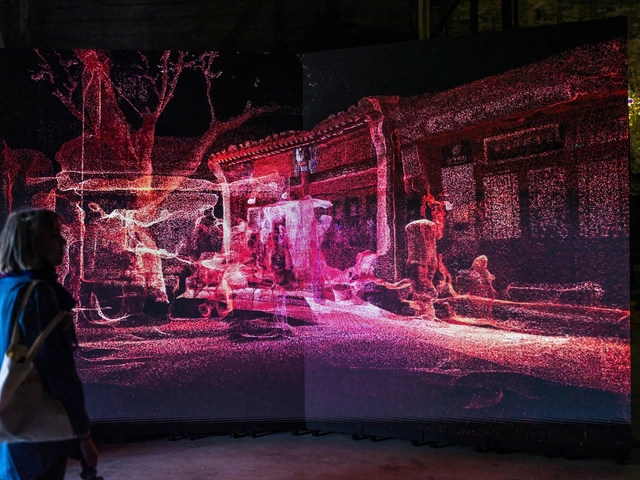
Reparametrize Studio and Digital Architects have created an exhibition combining photography and 360-degree projection mapping, to showcase destroyed cities, part of the 2019/2020 Bi-City Shenzhen Biennale of Urbanism/Architecture. As Ziwar Al Nouri, Founder of Reparametrize Studio stated, the project underlines the different possibilities “when numbers meet Architecture and Culture and help us improve human life and the future of our city”.

Reparametrize Studio and Digital Architects Re-Code Post War Syria - Image 1 of 4Reparametrize Studio and Digital Architects Re-Code Post War Syria - Image 2 of 4Reparametrize Studio and Digital Architects Re-Code Post War Syria - Image 3 of 4Reparametrize Studio and Digital Architects Re-Code Post War Syria - Image 4 of 4Reparametrize Studio and Digital Architects Re-Code Post War Syria - More Images+ 6

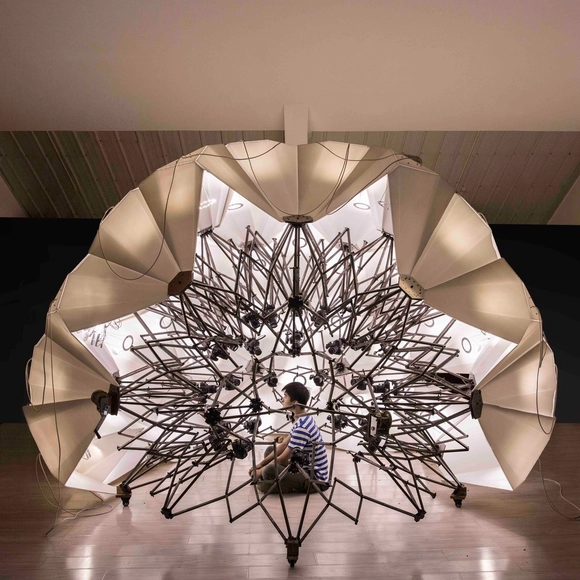
3D Copypod / People's Architecture Office

9 Unusual and Interesting Small Churches and Chapels, As Selected by Sketchfab

Subscriber Access | 

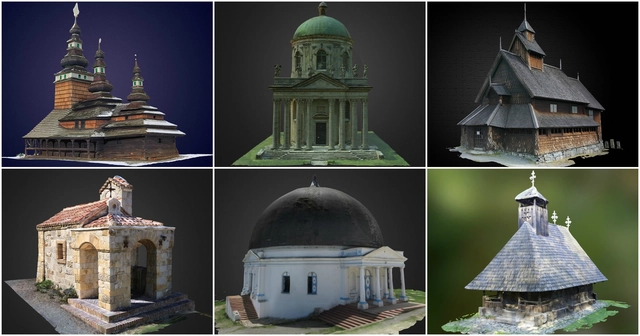
Once again, thanks to our collaboration with Sketchfab, here we have a selection of 9 virtual experiences through churches and chapels from Europe, Africa and the Americas. Each small building has its own special story, either geographical, political or structural—from one building that has experienced its own mini tour of Europe, to another which contains some rather unusual building materials. The diverse sites each seem to hold secrets, all of which can now be explored through 3D scanning technology. The fascinating variation in structural forms is also apparent, showcasing how even humble architecture has the potential to create a rich list of virtual spaces.

For a more immersive experience, all of these models can be viewed on a virtual reality headset such as Google Cardboard.