1. ArchDaily
  2. 100 years of Bauhaus

100 years of Bauhaus: The Latest Architecture and News

What Does It Mean to Build Bauhaus “On Brand”?

What Does It Mean to Build Bauhaus “On Brand”? - Image 1 of 4
The Bauhaus Museum Weimar, designed by architect Heike Hanada, holds a vast collection of works dating from the school’s first period (ca. 1919–23). Courtesy Thomas Müller/Klassik Stiftung Weimar

in 2019, the Bauhaus turned 100 and a crop of museum buildings sprang up for the celebration.

In 2019, two museums bearing the name Bauhaus appeared on the German culture circuit. Angling to capitalize on the design school’s centennial, the Bauhaus Museum Weimar was first out of the gate, opening in early April; a few clicks behind, the Bauhaus Museum Dessau followed suit in early September. A third project, the much-delayed extension to Walter Gropius’s 1979 Bauhaus- Archiv/Museum für Gestaltung in Berlin, did not manage to keep pace and isn’t expected to open for a couple more years yet.
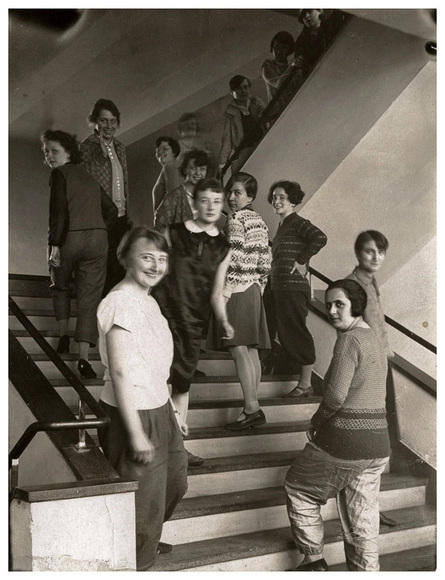

New Book Tells the Forgotten Histories of Bauhaus Women

Subscriber Access | 

This article was originally published on Metropolismag.com.

The Bauhaus was founded on the promise of gender equality, but women Bauhauslers had to fight for recognition. A new book recounts the achievements and talents of 45 Bauhaus women.

After the end of World War I, a spirit of optimism and a euphoric mood prevailed in Germany. Thanks to a new republican government and women’s suffrage, the war-torn nation was experiencing a radical new beginning.

As part of that convention-breaking wave, in 1919 German architect Walter Gropius assumed leadership of what would become the legendary Bauhaus. Initially, he declared that there would be “absolute equality” among male and female students.

This Film Tells the True Story of the Women of the Bauhaus

In 1919, the creation of the Bauhaus school in Germany marked an important moment in the history of architecture, one that would ignite innumerable debates about architecture and design for years to come. This school, which later became more of a movement than an institution, faced an array of political resistance throughout its existence, eventually closing its doors in 1933 during the Nazi regime. However, the knowledge instilled by the Bauhaus transcended time and space to travel across the globe and make its mark on cities worldwide.