Marc Goodwin is an architectural photographer, writer, and teacher. He was born in London and currently divides his time between Europe, the Americas, the Middle East, and Asia. His work has been published in seven architecture books, with one more on the way, and countless times in the architectural press. His doctoral thesis - Architecture’s Discursive Space, Photography - investigates the components of conventional architectural photography and opposes them to a system of atmospheres. Since the completion of his doctorate, he has been travelling the globe non-stop, taking commissions and producing the Architecture Studios Atlas.
Instagram / @archmospheres
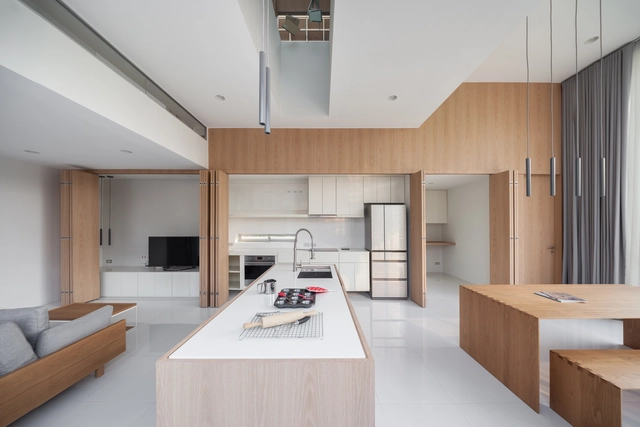
While the kitchen is a ubiquitous part of almost every home—and, in many cases, is considered symbolic of domestic living entirely—it can also take up precious space, produce visual clutter, and detract from the minimalist aesthetic of an otherwise sleek, modern home. For some homeowners, the solution is simply to keep the kitchen clean and organized at all times. But for some innovative contemporary architects and their clients, the solution is to design a compact, concealable kitchen that can quickly and easily be shuttered out of view. Below, we discuss several examples of hidden kitchens, as well as some common techniques and strategies for designing them.
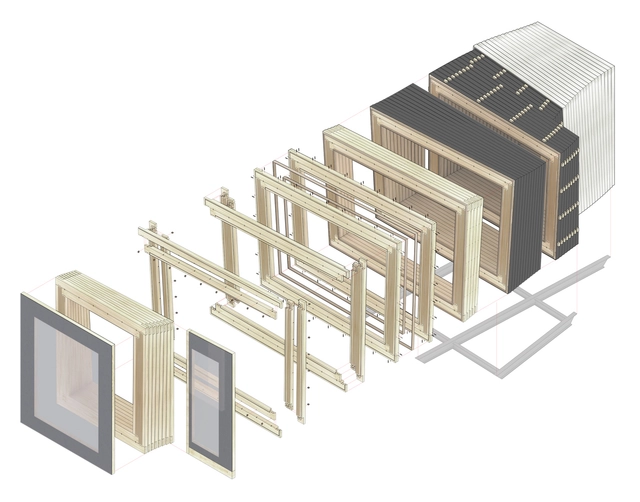
IBA Timber Prototype House / ICD University of Stuttgart. Image Courtesy of ICD University of Stuttgart
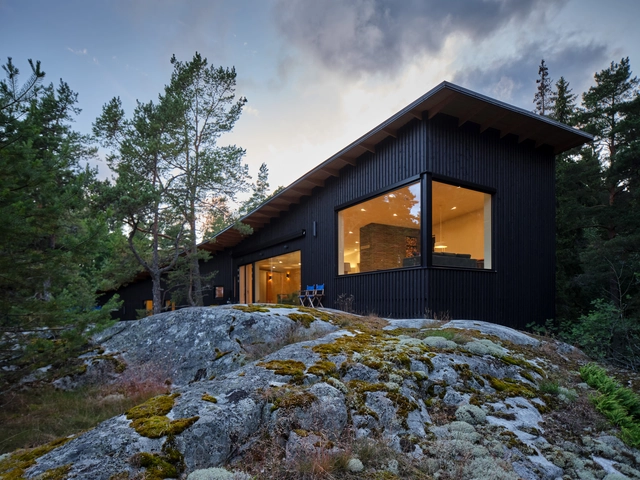
While the traditional image of the cabin is one of a rustic wooden home located far away from any trace of society, architects have been experimenting with these conventions alongside newer material and technological considerations to push the boundaries of the ‘cabin’ today. Whether it is by reimagining the aesthetics of the cabin, utilizing advanced fabrication techniques to modernize the rustic, or even reconfiguring the log cabin for the city setting, architects and designers have utterly transformed traditional cabin architecture for a more contemporary existence. Below, we consider 10 innovative cabins that achieve this transformation through experiments with different materials and construction technologies. While each explore different strategies and functions, many share similarities in their use of prefabrication systems, their dedication to sustainability, and their close attention to and optimization of specific material properties.
Considering the time, energy, and environmental impact of a construction process, architecture must explore different methodologies that work with the existing built environment. For example: how to give life to a forgotten building? Adaptive reuse gives new opportunities to abandoned buildings, following the idea that good architecture must be durable, innovative and recyclable.
Architects should not design just for the present, but should also think of how to adapt buildings for the future. In view of the world’s current situation regarding the climate crisis and available natural resources, adaptive reuse explores strategies for sustainability and design innovation, working to reduce energy consumption, minimal carbon impact and positive social impact.
As climate change continues to reach unprecedented levels, many are pointing towards enhancing circularity in the construction sector. Essentially, the circular economy aims to eliminate waste and the continual use of resources by repeatedly reusing, repairing or recycling materials. The cyclical approach is able to meet demand and minimize CO2 emissions by extending a product’s lifespan, which is especially important when dealing with limited resources. Unlike the traditional linear extractive method –where everything goes through an extremely contaminating process of 'take-make-waste'–, circularity keeps materials in use for as long as possible to extract maximum value. This, in turn, reduces pollution, regenerates natural systems and contributes to a healthier built environment, hence building economic, natural, and social capital.
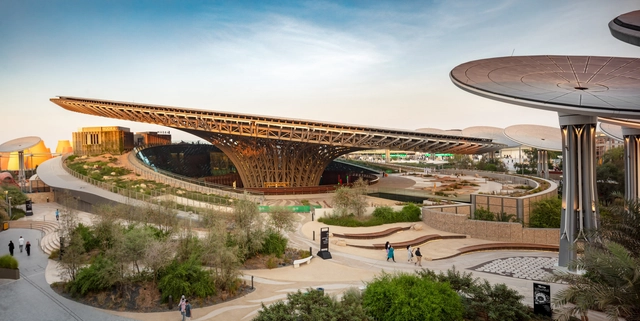
Ahead of the official opening of the Expo City Dubai site on October 1st, the organizers have announced that visitors will have the chance to discover two of the Expo's thematic pavilions: Alif and Terrastarting September 1st, marking its inauguration. The pre-launch will also feature access to Garden in the Sky, a 360-degrees platform that offers panoramic views of the site.
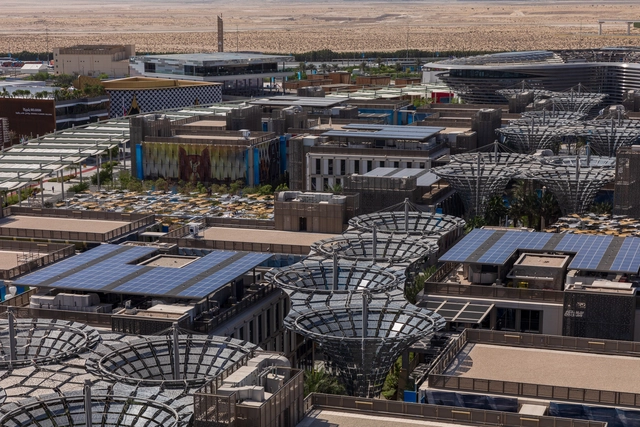
During the past two years spent photographing Expo 2020 Dubai, I was often asked by friends what exactly it was. To align with its closure on the 31st of March, I would like to address that question from two angles. Most readers will be aware that the expo is part of a tradition dating back to the 19th century - a Showcase for companies and countries, a tourist attraction, a testing ground for technical innovation. But it is also a collection of paradigm studies on opportunity, sustainability, and mobility, as well as a lucrative building project creating a new neighbourhood in the Emirates and a future means of dwelling. Perhaps this last frame of reference is the most interesting for it is what most distinguishes this expo from others.
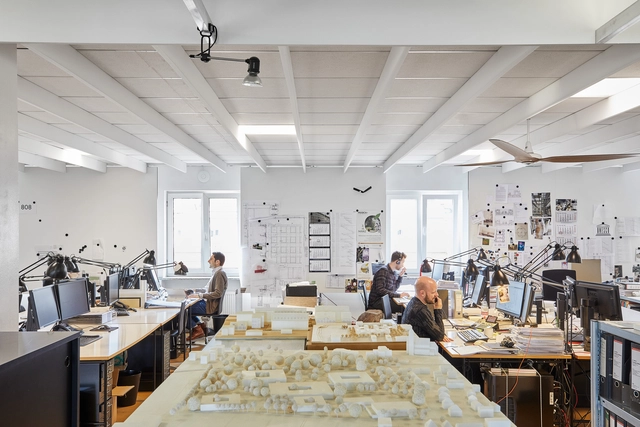
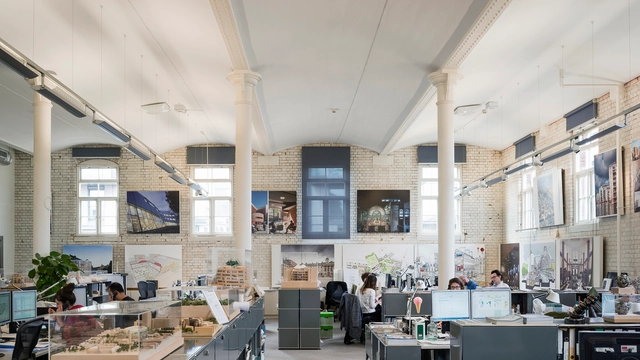
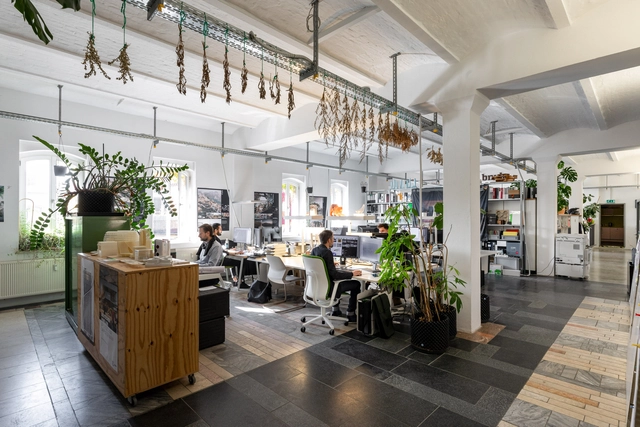
Moving forward with his "ultra-marathon of photoshoots", architectural photographer Marc Goodwin is putting together an Atlas of Architectural Atmospheres by Arcmospheres, a project that seeks to document diverse architecture and design studios from around the world. Since 2016, the architectural photographer has been traveling "far and wide to capture the atmospheres of architecture studios in order to produce an online and print resource for the architecture community", and after a two-year hiatus due to the pandemic, Goodwin resumed his project with an exploration of Berlin's architecture offices, capturing the work environment of renowned firms such as Hesse, LAVA, JWA, and FAR frohn&rojas, to name a few.
Minimalism has shaped architecture for over a century. Embracing new materials and rejecting ornament, the modernist movement grounded minimalist architecture through rational use and function. Throughout the 20th century, architects returned to minimalism as they worked with glass, steel and reinforced concrete. Over time, minimalist and modernist designs became more closely tied to cost, construction and aesthetic.
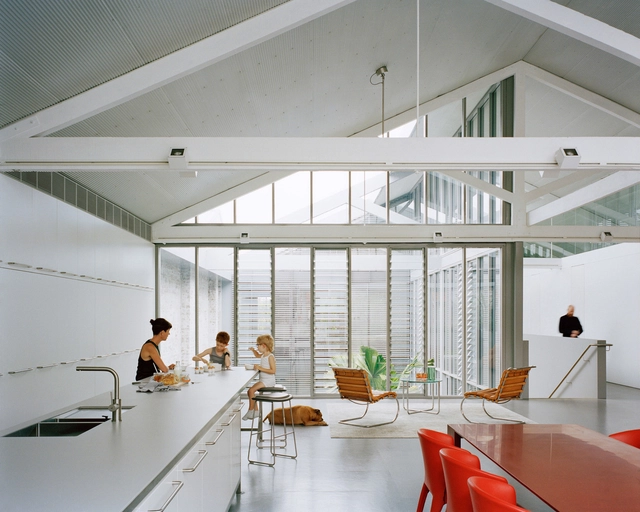
Whether it's by sharing a meal at a restaurant or preparing a home-cooked meal together, food does in fact, bring people together. With that in mind, architects placed kitchens at the heart of homes, giving residents a space to cook, dine, and spend quality time with their families and friends. However, not all homes can fit spacious kitchens, some are too small and others don't have the proper spatial configuration for it. In this interior focus, we will explore how architects and designers opted for different kitchen layouts based on different spatial and user needs.
There is so much more to know about architects and their projects when you begin to learn the stories behind their work. When you know where and how they draw their inspiration from and how an idea becomes a reality that you can touch, feel and experience, you get a better idea of why the project ended up the way it did.
Together with photographer Marc Goodwin, as part of his project Atlas of Architectural Atmospheres this time in the city of Berlin, we had the opportunity to meet with German architect Christoph Hesse, of Christoph Hesse Architects, based in Korbach and Berlin, and we spoke about all these things that make up his idea of architecture and his work. Meeting a creator on their own workspace is also an added value; we went through different projects while looking at the physical models and the narrative of his work became a beautiful story about a place, a countryside town in Germany, its people, and their lives, and a sustainable future in nature.
After reading and compiling all the messages received, both from construction professionals, as well as students and those interested in architecture, it is time to present the main points of view. Thank you very much for your opinions!
Documenting diverse architecture and design studios, Goodwin captured 13 different office spaces in Berlin, including Hesse, LAVA, JWA, Tchoban Voss, Richter Musikowski, Barkow Leibinger, FAR frohn&rojas, studio Karhard, Jasper, Kleihues + Kleihues, Graft, Bundschuh Architekten and Sauerbruch Hutton.