Duccio Malagamba

BROWSE ALL FROM THIS PHOTOGRAPHER HERE

Milan Architecture City Guide: 43 Projects from Historic Landmarks to Contemporary Designs

Subscriber Access | 

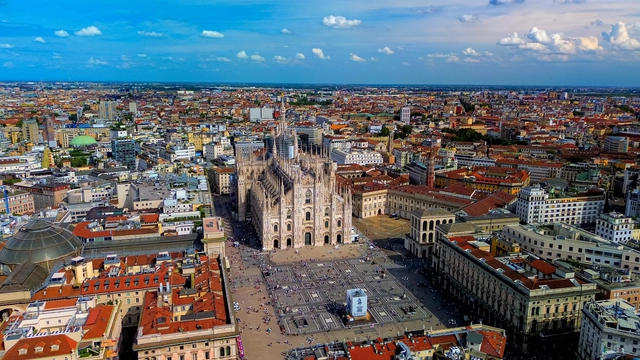
Milan, a global hub of fashion and finance, increasingly asserts itself as a leading center for architecture and design. Its status as Italy's second-largest city underpins its vibrant cultural scene, attracting both established and emerging creative talent. Additionally, Milan is home to esteemed educational institutions recognized for their focus on heritage preservation and conservation. Its cultural and design significance is increasingly pronounced, as a growing number of creators are relocating to establish their presence in this vibrant creative hub.

Among Milan's most iconic landmarks are the flamboyant Gothic Duomo di Milano, the historically and artistically significant Santa Maria delle Grazie, and the ornate Galleria Vittorio Emanuele II, along with numerous Renaissance and Baroque sites. The city also boasts some of the most innovative modern and contemporary architecture, showcasing a unique dialogue between tradition and modernity. This synergy is exemplified by the contributions of architects like Aldo Rossi, Gio Ponti, Stefano Boeri, Mario Cucinella, Zaha Hadid, Grafton Architects, Herzog & de Meuron, and Foster and Partners.

The following guide highlights key historical landmarks alongside exemplary contemporary architecture curated by ArchDaily. This guide serves as an indispensable resource for those planning to explore Milan during the 2026 Design Week, presenting a blend of essential sites designed by renowned local and international architects.

Milan Architecture City Guide: 43 Projects from Historic Landmarks to Contemporary Designs - More Images+ 52

Farewell to Masters: Remembering the Architects We Lost in 2025

Every year brings new ideas, projects, and shifts in architectural culture, but it also marks the loss of voices that have shaped the discipline across decades. Architecture moves forward, but it also advances through absence. When figures who helped articulate its language and its ambitions disappear, they leave behind more than completed works or influential texts. Their absence becomes a threshold, a moment in which the discipline pauses to understand what remains, what evolves, and what continues to guide us. These moments of loss remind us that architecture is a long, collective construction, carried not only by those shaping the present but also by those whose visions continue to orient how we think about cities and landscapes.

The architects and thinkers we lost in 2025 came from remarkably different worlds, yet the questions that shaped their work often intersected. Some approached the city through identity, symbolism, and historical continuity, seeking to ground the built environment in cultural memory. Others interpreted it through engineering precision, ecological systems, or radical experimentation, expanding what architecture could be and how it could be experienced. Their work spans contexts as diverse as postwar Britain, rapidly urbanizing China, Central European avant-gardes, and the evolving cultural institutions of Berlin and New York. Together, they form a spectrum of responses that defined, and continue to define, architectural culture over the last half-century, revealing the multiplicity of ways in which architecture can engage with society, technology, and the environment.

Farewell to Masters: Remembering the Architects We Lost in 2025 - More Images+ 33

From Rapidity to Specificity: Multiple Dimensions of Shenzhen's Architectural Development

Subscriber Access | 

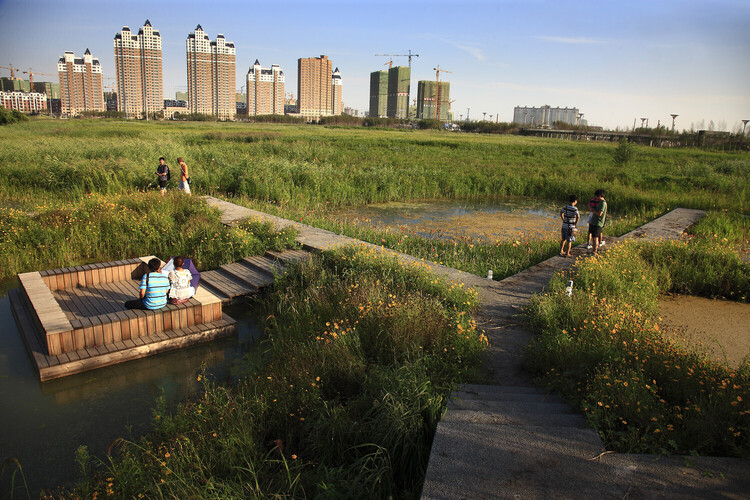
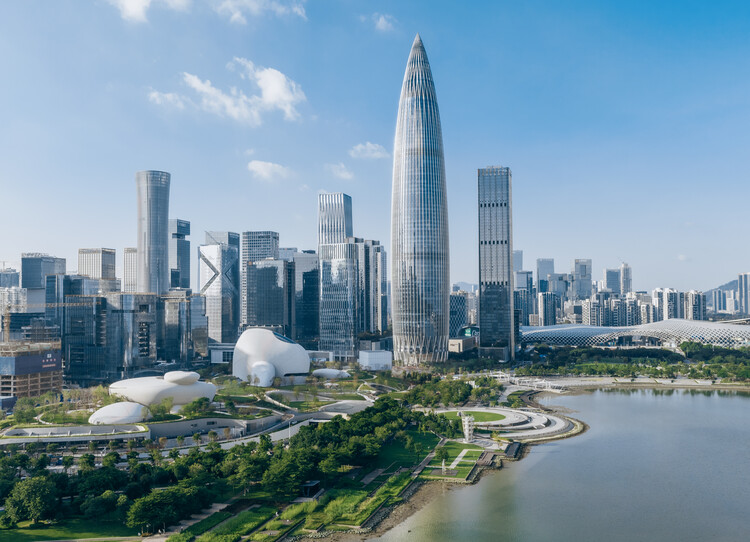
Shenzhen is China's first Special Economic Zone(SEZ), serving as a window for China's Reform and Opening-up and an emerging immigrant city. It has evolved into an influential, modern, and international metropolis, creating the world-renowned "Shenzhen Speed" and earning the reputation of the "City of Design." Architectural design stands as the most intuitive expression of Shenzhen's spirit of integration and innovation. Over the past decade (2015-2025), the development of urban architecture in Shenzhen has closely integrated with its open and inclusive urban character, ecological advantages of being nestled between mountains and the sea, and the local spirit of blending traditional culture with innovative technology, showcasing Shenzhen's unique charm and robust vitality across multiple dimensions.

From Rapidity to Specificity: Multiple Dimensions of Shenzhen's Architectural Development  - More Images+ 51

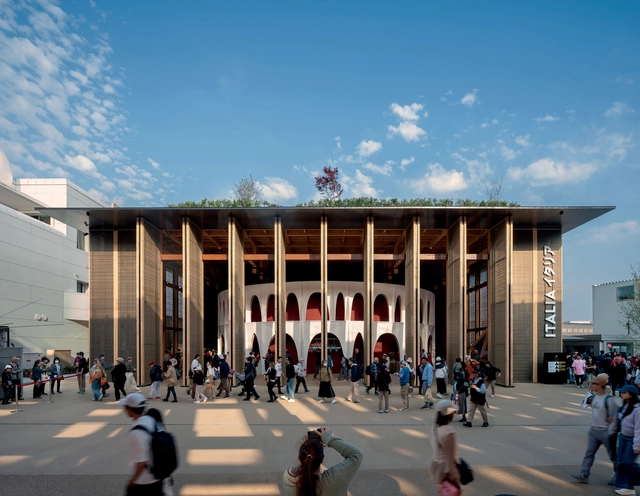
The Italian Pavilion Expo 2025 Osaka / Mario Cucinella Architects + Yoshiki Matsuda Architects

The Italian Pavilion Expo 2025 Osaka / Mario Cucinella Architects + Yoshiki Matsuda Architects - More Images+ 10

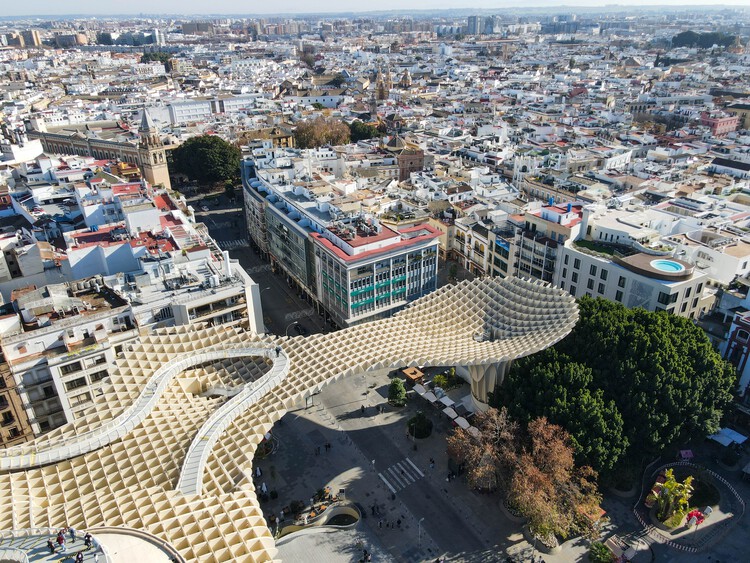
Seville Architecture City Guide: 21 Projects Tracing the Layers of an Andalusian City

Subscriber Access | 

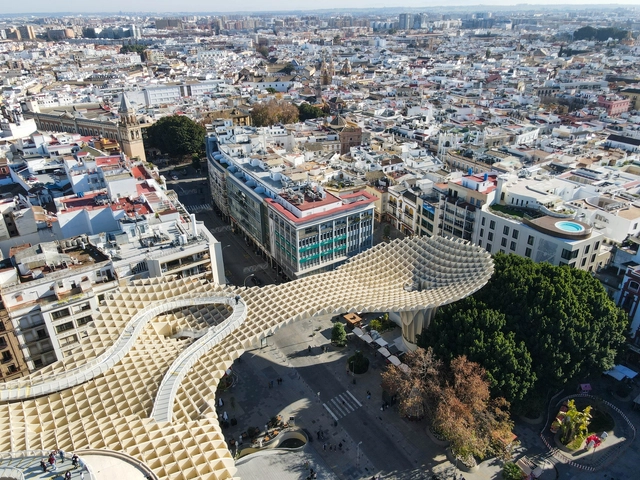
Located in southern Spain, Seville unfolds as a layered city shaped by centuries of cultural intersections. As the former capital of Al-Andalus and a central port during the Spanish Empire's expansion, its built environment reflects a deep historical complexity. From Roman foundations to Islamic geometries, from Renaissance palaces to contemporary interventions, Seville presents a unique spatial narrative in which architecture directly reflects its political, religious, and social transformations.

The city's architectural heritage is inseparable from its climate and geography. Narrow shaded streets, inner courtyards, and water as spatial elements reveal a deep knowledge of environmental adaptation that still informs how public and private spaces are articulated today. While monumental landmarks such as the Alcázar, the Giralda, or the Cathedral preserve and reinterpret historic legacies, modern projects have begun introducing new materials, programs, and spatial typologies, challenging conventional forms and proposing alternative ways to inhabit the city.

Seville Architecture City Guide: 21 Projects Tracing the Layers of an Andalusian City - More Images+ 19

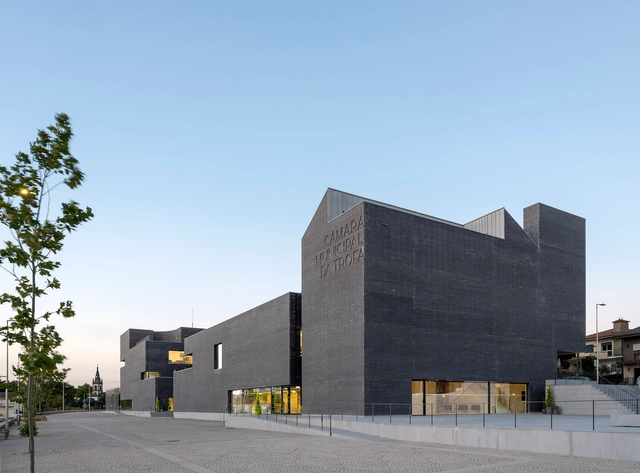
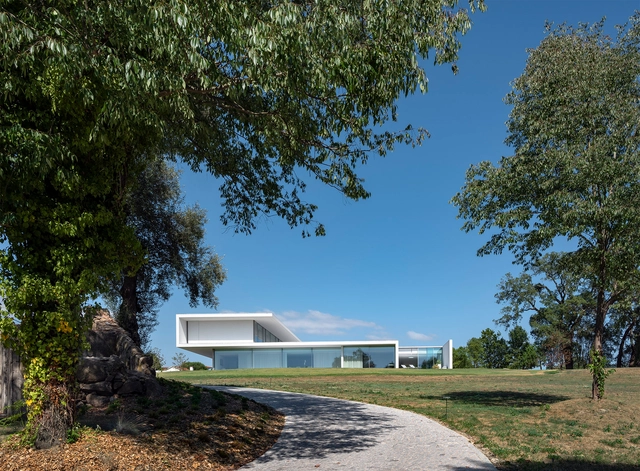
Trofa Town Hall / NOARQ

Trofa Town Hall / NOARQ - More Images+ 51

  • Architects: NOARQ
  • Area Area of this architecture project Area:  6232
  • Year Completion year of this architecture project Year:  2023
  • Manufacturers Brands with products used in this architecture project
    Manufacturers:  Sto

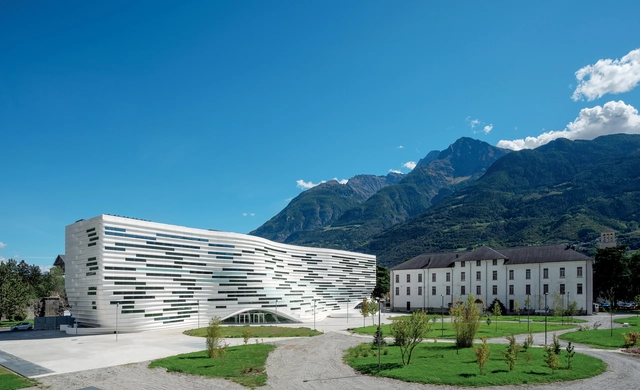
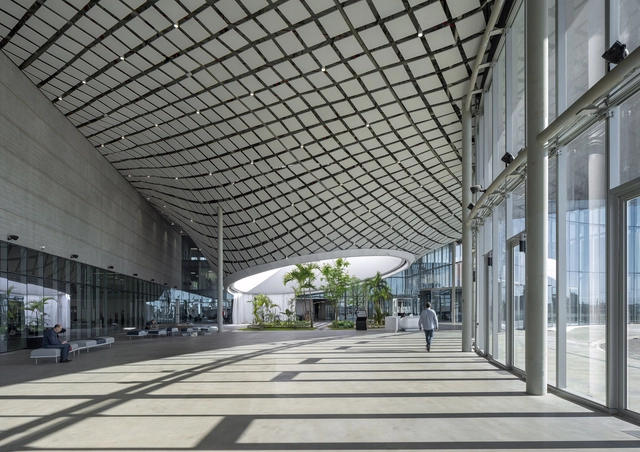
Valle d’Aosta University Campus / Mario Cucinella Architects

Valle d’Aosta University Campus / Mario Cucinella Architects - More Images+ 14

  • Area Area of this architecture project Area:  52000
  • Year Completion year of this architecture project Year:  2023
  • Manufacturers Brands with products used in this architecture project
    Manufacturers:  Saint-Gobain, Aresline, Betacryl, Forbo

NICE Headquarters Brazil / Mario Cucinella Architects

NICE Headquarters Brazil / Mario Cucinella Architects - More Images+ 19

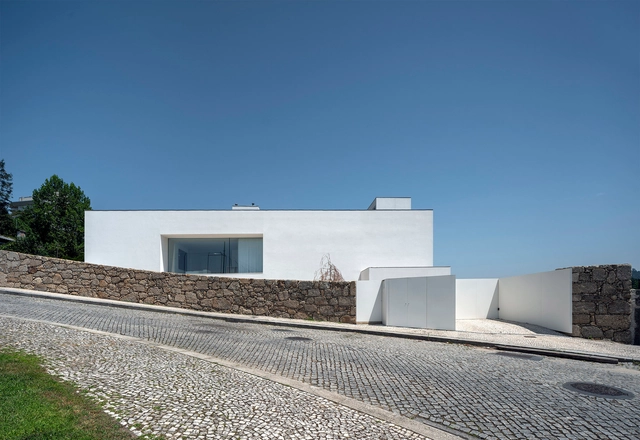
TI House / NOARQ

TI House / NOARQ - More Images+ 30

Santo Tirso, Portugal
  • Architects: NOARQ
  • Area Area of this architecture project Area:  10193 ft²
  • Year Completion year of this architecture project Year:  2022

“Our Projects Are like Detective Stories”: In Conversation with Eva Prats and Ricardo Flores

Eva Prats and Ricardo Flores started their Barcelona-based practice, Flores & Prats Arquitectes in 1998 after both worked at the office of Enric Miralles. They overlapped for about one year there, from 1993 to 1994. After her nine-year stint with Miralles, Eva won the EUROPAN III International Housing Competition with a friend. The success that led to a real commission and was going to be built, served as the springboard for starting their independent practice. Shortly thereafter they won another competition. Ricardo joined Eva after working for five years with Miralles. By then they were a couple for three years and decided to start working together. Today they practice out of the same sprawling apartment where Eva’s original studio rented a room along with several other young architects and designers. Even though the office now occupies the entire space—the architects told me they typically employ ten, no more than twelve people—they keep traces and memories of the former “dwellers” alive. Curiously, Eva and Ricardo implement the same strategy in their architectural projects as well.

“Our Projects Are like Detective Stories”: In Conversation with Eva Prats and Ricardo Flores - More Images+ 8

Cultural Centers: 50 Examples in Plan and Section

Subscriber Access | 

How many times have you been faced with the challenge of designing a cultural center? While this may seem like quite a feat, many architects have had to design a program that blends a community center with culture.

Among the projects published on our site, we have found numerous examples that highlight different responses, from flexible configurations to sites that prioritize central gathering areas for citizens and activities. See our series of 50 community centers and their plans and sections below.

Cultural Centers: 50 Examples in Plan and Section - More Images+ 143

Concrete Wonders: 40 Impressive Details Using the Cement-Based Building Material

Subscriber Access | 

Due to its ability to mold and create different shapes, concrete is one of architecture's most popular materials. While one of its most common uses is as a humble foundation, its plasticity means that it is also used in almost all types of construction, from housing to museums, presenting a variety of details of work that deserves special attention.

Check out this collection of 40 projects that highlight the use of concrete. Impressive! 

MTMG House / NOARQ

MTMG House / NOARQ - More Images+ 21

Santo Tirso, Portugal
  • Architects: NOARQ
  • Area Area of this architecture project Area:  882
  • Year Completion year of this architecture project Year:  2022

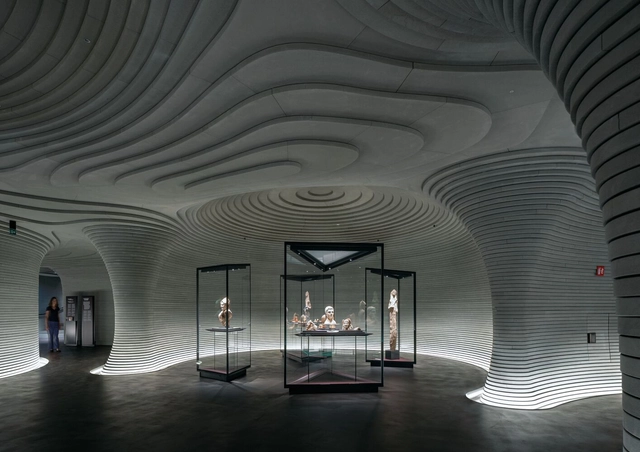
Fondazione Luigi Rovati / Mario Cucinella Architects

Fondazione Luigi Rovati / Mario Cucinella Architects - More Images+ 30

Milan, Italy
  • Area Area of this architecture project Area:  4000
  • Year Completion year of this architecture project Year:  2022
  • Manufacturers Brands with products used in this architecture project
    Manufacturers:  Goppion

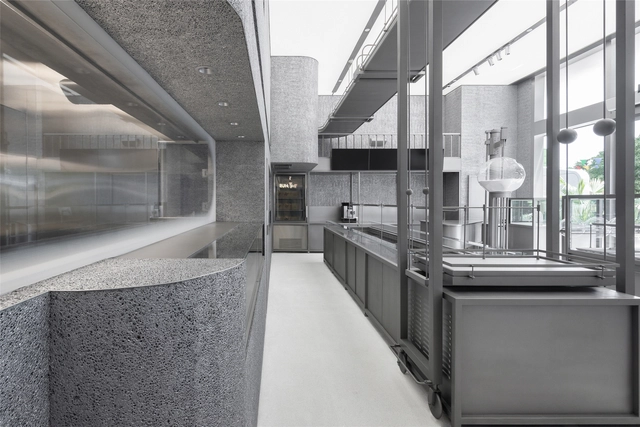
Sound Absorption and Aesthetics: What is Stabilized Aluminum Foam?

Stabilized Aluminum Foam is a unique looking material that combines the aesthetics of aluminum (its texture, shades and brightness) with a spongy, porous appearance. It is produced by injecting air into a cast aluminum alloy with stabilizing agents, which after curing, creates a porous and lightweight, yet highly resistant and rigid cellular structure. Because of its mechanical and thermal properties, it is particularly useful in applications in various industries, such as automotive, aerospace and marine, especially for energy absorption, thermal insulation, and sound dampening.

BelView Tower / COOP HIMMELB(L)AU

BelView Tower / COOP HIMMELB(L)AU - More Images+ 19

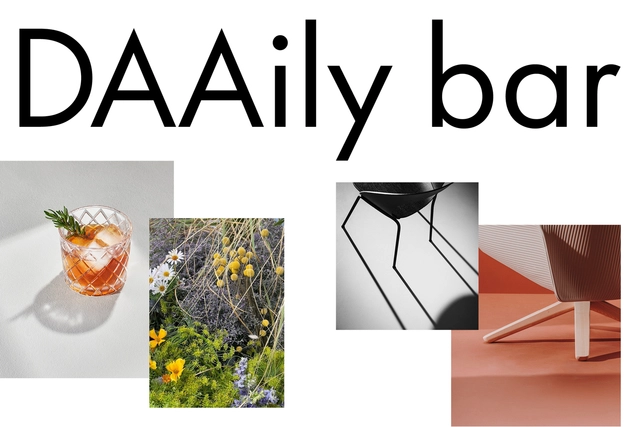
Explore the DAAily Bar's Space at the 2022 Milan Design Week

As the design world prepares for one of the most anticipated events of the year, Designboom, Architonic, and ArchDaily which make up DAAily platforms have put together for the visitors of Milan Design Week 2022, a unique, storytelling-programmed space, designed by architects and designers for architects and designers. This year, DAAily platforms are taking the opportunity to take to the stage together from 7 to 10 June at the Swiss Corner at Piazza Cavour / Via Palestro 2, hosting curated talk series and gathering spots, along with immersive art installations.

Explore the DAAily Bar's Space at the 2022 Milan Design Week  - More Images+ 12

San Raffaele Hospital / Mario Cucinella Architects

San Raffaele Hospital / Mario Cucinella Architects - More Images+ 31

Milan, Italy