-
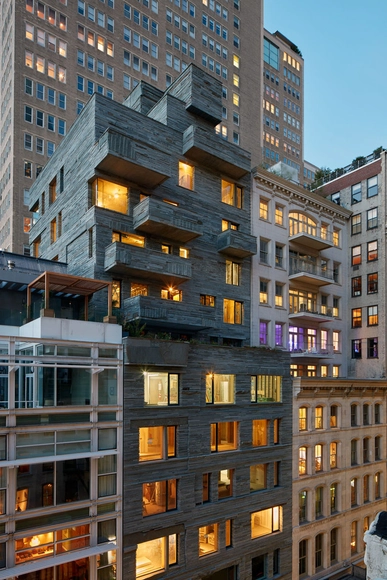
Architects: David Baker Architects
- Year: 2016
-
Manufacturers: Bok Modern, Solarlux, Armstrong Ceilings, CertainTeed, James Hardie, +2


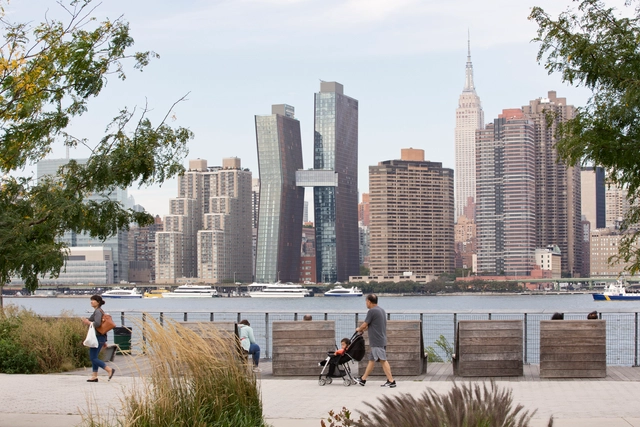
This article was originally published by Autodesk's Redshift publication as "SHoP's Chris Sharples on Urban Architecture, Digital Fabrication, and the Public Realm."
Twin brothers Chris and Bill Sharples are two of the founding partners of SHoP Architects, a New York-based firm established 20 years ago to bring together diverse expertise in designing buildings and environments that improve the quality of public life.
The firm’s style is difficult to define, but a connective thread throughout SHoP’s portfolio is a design philosophy rooted in constraints. From digital models to next-generation fabrication and delivery techniques, technology is at the center of the firm’s movement toward an iterative approach that, as Chris Sharples says, “is beginning to blur the line between architecture and manufacturing.”



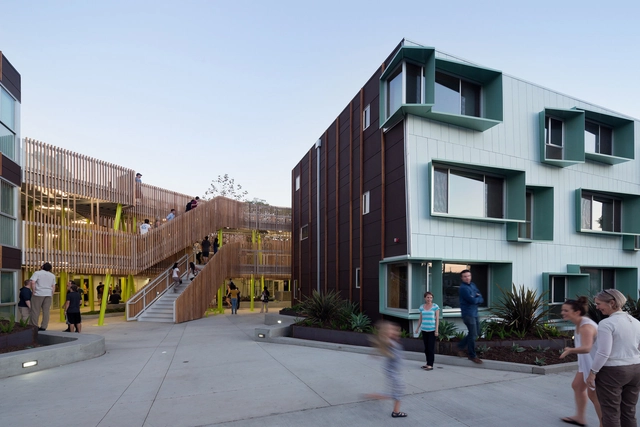
When we think of public housing architecture in the United States, we often think of boxes: big, brick buildings without much aesthetic character. But the implications of standardized, florescent-lit high-rises can be far more than aesthetic for the people who live there. Geographer Rashad Shabazz, for one, recalls in his book Spatializing Blackness how the housing project in Chicago where he grew up—replete with chain link fencing, video surveillance, and metal detectors—felt more like a prison than a home. Accounts of isolation, confinement, and poor maintenance are echoed by public housing residents nationwide.
But American public housing doesn’t have to be desolate. A new set of design standards from the New York City Public Design Commission (PDC)—in collaboration with The Fine Arts Federation of New York and the American Institute of Architects New York Chapter—hopes to turn over a new leaf in affordable housing architecture.
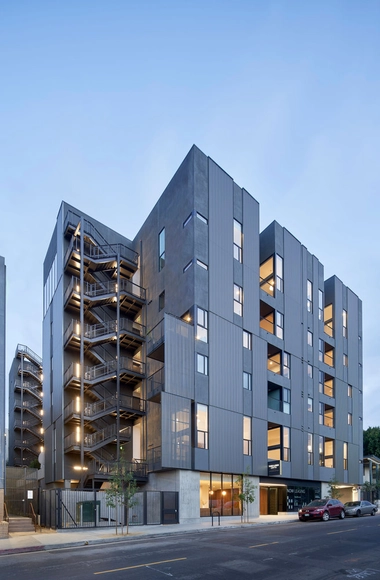

The American Institute of Architects (AIA) and the Committee on the Environment (COTE) have announced the winners of the COTE Top Ten Awards, the highest honor for buildings that exemplify great design and sustainable performance. The award, now in its 22nd year, celebrates 10 projects that meet COTE’s rigorous standards for 10 criteria in several areas of design including economic, social, and ecological value. The winners will be honored in June at the AIA Conference in New York City.
Read about the 2018 winners after the break.
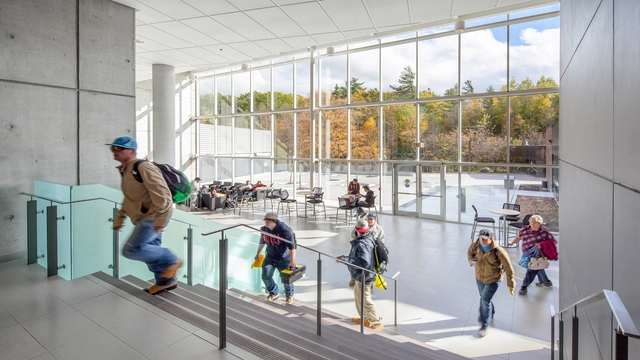
The American Institute of Architects Committee on Architecture for Education has announced the winners of this year’s Education Facility Design Awards. The eight winners and two merit honors were awarded this year’s best educational facilities that not only demonstrate excellence in contemporary architectural design but also further education in innovative ways and serve as an inspirational learning space. This year’s projects are designed for students of all ages, from childhood facilities to higher education buildings.
“Education continues to evolve, and the projects from this year’s Education Facility Design Awards program—presented by the AIA and the Committee on Architecture for Education—represent the state-of-the-art learning environments being developed in today's learning spaces. These projects showcase innovation across the entire learning continuum, displaying how architects are creating cutting-edge spaces that enhance modern pedagogy.”
Read more about the winners below.
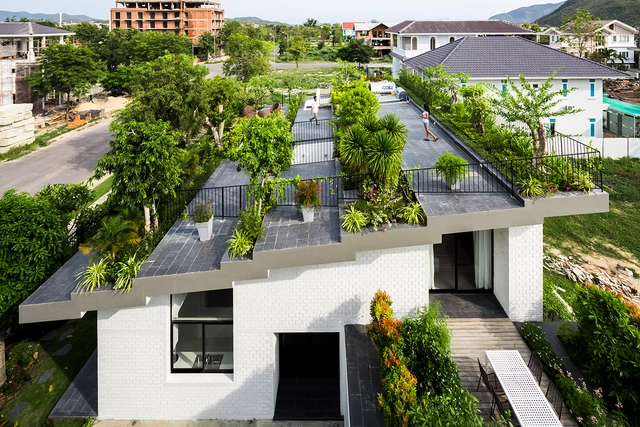
This week, we present a selection of 11 of the best images of rooftop spaces. These spaces, usually terraces conceived for the enjoyment of views and fresh air, can often be the most important element of a design. Some of these rooftops surprise us with wonderful gardens, others with impressive pools, and others even with fun games for children. Below is a selection of images from prominent photographers such as Nico Arellano, Hiroyuki Oki, and Amit Geron.


The staircase is a fundamental element for the connection of architectural spaces. But beyond its functional use, in many projects the staircase serves as a sculptural object, offering an opportunity for architects to generate creative spatial forms that animate the built space. In this installment of our Photos of the Week, we present 15 incredible staircases captured by photographers such as Patricia Parinejad, José Campos, and Brigida González.

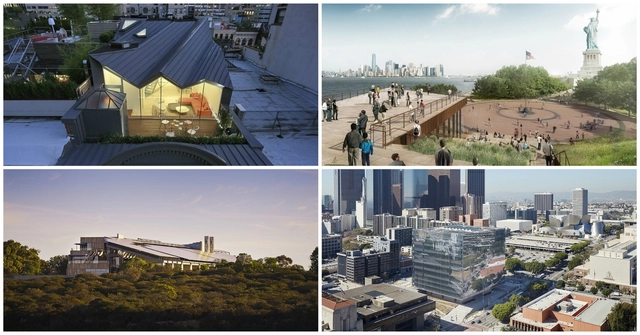
Architect Magazine has unveiled the 2017 edition of the “Architect 50,” their list of the 50 best architecture firms in the United States. The 2017 rankings are based on scores from three categories: business, design and sustainability. This year saw more entrants than ever before, with several first-time entrants making notable impressions, including the number 1 ranked design firm, WORKac. Topping the overall list was Skidmore, Owings & Merrill (SOM), who also ranked in the top 10 in both design and sustainability.
See the top 10 from each category after the break.
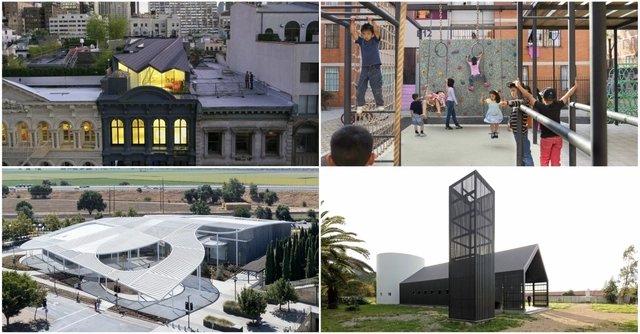
ARCHMARATHON has announced the winners of their 2017 Awards Program as the event, which took place at Faena Forum in Miami from October 12-14, comes to a close. Now in its 4th edition, the Awards focus on architecture studios that have been actively practicing in USA, Canada, Central America and Latin America.
Winners were chosen by a jury consisting of Luca Molinari, Francisco Pardo, Sebastian Salvat, Alejandro Paredes Fontanals and ArchDaily’s David Basulto and David Assael in in 8 themed categories: MOVING, LIVING, DREAMING, WORKING, CHILLING OUT, CARING, VISIONING and RE-THINKING. This year’s overall winner was awarded to Rozana Montiel | Estudio de Arquitectura + Alin V. Wallach for their community space, Common Unit.
See all the winners below:


.jpg?1538563752&format=webp&width=230&height=230&crop=true)




.jpg?1527852711&format=webp&width=230&height=230&crop=true)
.jpg?1527852699&format=webp&width=230&height=230&crop=true)




-03.jpg?1524108231&format=webp&width=230&height=230&crop=true)