With decaying infrastructure and a lack of viable public amenities, Hong Kong’s popular yet problematic waterfront is the focus of the latest undertaking by James Corner Field Operations, aiming to transform the site into an attractive tourist and local destination. Home to Hong Kong’s Avenue of Stars (the equivalent of Hollywood’s Walk of Fame), the Tsim Sha Tsui (TST) waterfront is in need of severe revitalization, with areas requiring demolition if not reinforced within the decade.
Part of a larger project known as Victoria Dockside, the landscape architecture firm’s vision incorporates new seating, shading and green space to reinvigorate the promenade while offering panoramic views of the city’s skyline as it guides visitors towards the harbor, allowing visitors to get closer to the harbor than ever before. Trellises will provide 800 times more shade than what is currently offered, while seating will increase 325-fold to encourage public engagement and interaction with each other and the space.
https://www.archdaily.com/870640/james-corner-field-operations-to-lead-much-needed-revitalisation-of-hong-kongs-waterfrontOsman Bari
Founded in 1996 by Buenos Aires-born Martin Rein-Cano, TOPOTEK 1 has quickly developed a reputation as a multidisciplinary landscape architecture firm, focussing on the re-contextualization of objects and spaces and the interdisciplinary approaches to design, framed within contemporary cultural and societal discourse.
The award-winning Berlin-based firm has completed a range of public spaces, from sports complexes and gardens to public squares and international installations. Significant projects include the green rooftop Railway Cover in Munich, Zurich’s hybrid Heerenschürli Sports Complex and the German Embassy in Warsaw. The firm has also recently completed the Schöningen Spears Research and Recreation Centre near Hannover, working with contrasting typologies of the open meadow and the dense forest on a historic site.
https://www.archdaily.com/871052/topotek-1-s-martin-rein-cano-on-superkilens-translation-of-cultural-objectsOsman Bari
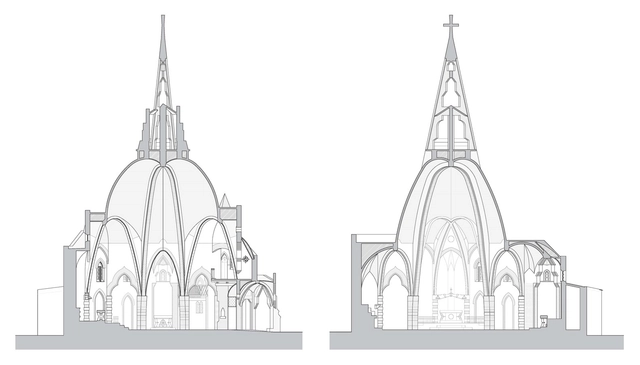
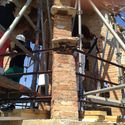
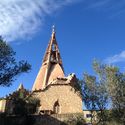
The object of this architectural restoration is the Church of the Sacred Heart of Jesus, in Vistabella, the work of Catalan architect Josep Maria Jujol (16 September 1879 – 1 May 1949). The original design dates from 1917 with the construction completed in 1923. The building is a magnificent and personal work of Catalan architecture.
The simplicity of the materials used—basically brick, mortar, and stone—contrasts with the spectacular formal richness of the structural solutions: columns, arches, and vaults that generate a complex, rich, and surreal interior space typical of the mysticism of Jujol.
A post shared by Office Of Adrian Phiffer (@officeofadrianphiffer) on
Instagram is an app. Instagram shows images. Instagram is a verb. Instagram it! Instagram has 600 million users. Numbers are very important. These days, they are an exact expression of what one is, or isn’t; by the way, how many followers do you have? Instagram is the great equalizer.
I don’t think Instagram is about news. Instagram is about influence. It is that very moment when the old order is changed; the moment when the recent graduate changes the established practice. Instagram is space. Have you seen @archiveofaffinities? It is better than any school library. It is the space to spend your most important time. It is a spa.
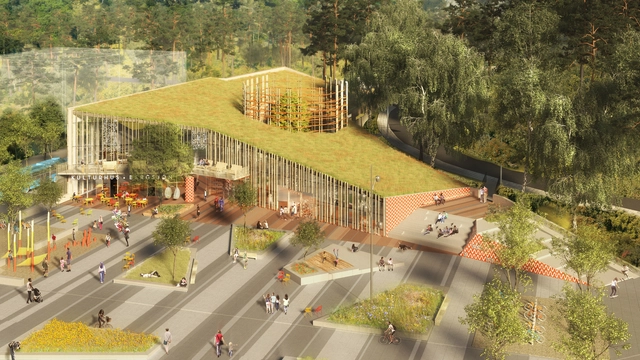
The Kulturkorgen emerges as an outcrop from the hills of Gothenburg. Image Courtesy of Sweco
Growing like an outcrop amongst the hills of Gothenburg, the Kulturkorgen by Swedish firm Sweco Architects offers the public an opportunity to watch, engage, and perform. The scheme is a result of an architectural competition for a new Culture House in the city, run in collaboration with Architects Sweden. The winning proposal, who’s name translates to ‘Basket of Culture’, acts as both a building and a square – a social arena where flexible interior spaces act in tandem with a generous public green landscape for recreation and gathering.
Placing third place out of 69 entries in an international competition for a new cultural building in Shenzhen, China, Mecanoo’s proposal for the Bao’an Public Culture and Art Center aiming to re-evaluate the “inwardly focused identity of cultural facilities in Hong Kong," through the form of an elevated cube. Situated near the Bao’an Metro Station and the Binhai School, the Dutch firm responds to the site’s challenges by reconnecting the center with its adjacent infrastructure.
The metro station and cultural center are united by the large masses of people that are channeled by the former and engaged but the latter. In order to capitalize on this condition, the design combines the metro entrance with that of the museum, thereby connecting the wider community with the arts and creating a more appealing public network.
BambooU(niversity) was an idea originally conceived to help teach professionals about the potential of bamboo as a green building material. In its current form it is a design and bamboo build workshop in Bali hosted by The Kul Kul Farm at the Green School; facilitated in collaboration with the bamboo design firm, IBUKU.
Höweler + Yoon Architecture, in collaboration with OFIS Arhitekti, has unveiled its design for a new building for The Circus Conservatory, which will house America’s first accredited degree program in the Circus Arts. Located in Portland, Maine, as the anchor tenant of a peninsula, the project aims to transform an undeveloped part of the city into a “vibrant artistic center complete with public performance venues and recreational facilities.”
Inspired by the historic circus shape—a circle with a radial audience—the design proposal utilizes a radial viewing strategy “in order to similarly activate the educational community.” Furthermore, in the design, acrobatics, performance, and classroom spaces are treated equally, “[challenging] the viewing relationship crucial to a circus and academic settings.”
Love architectural video games like Minecraft or SimCity? Then it's worth checking out this ecological city simulator, Block'hood, which allows players to build their own arcology-style structures for humans and other species to coexist, all while managing a range of environmental and engineering conditions.
Following our review of the beta version of the game last March, the final edition has now launched on gaming platform Steam. New features include a 5-episode guided story mode, an increased maximum building size, an unlockable "unconstrained" mode, and compatibility in 8 different languages: English, Spanish, French, German, Japanese, Chinese, Portuguese and Russian.
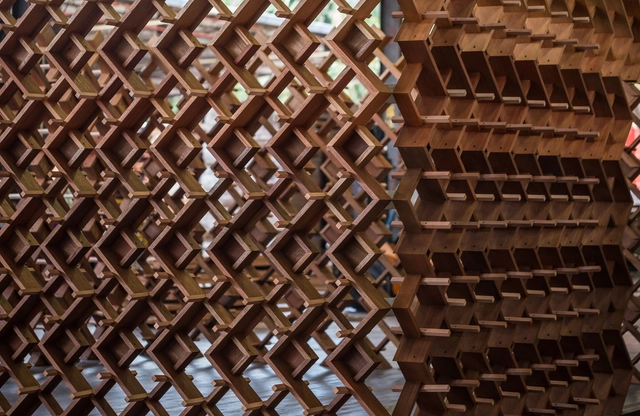
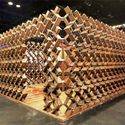
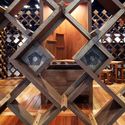
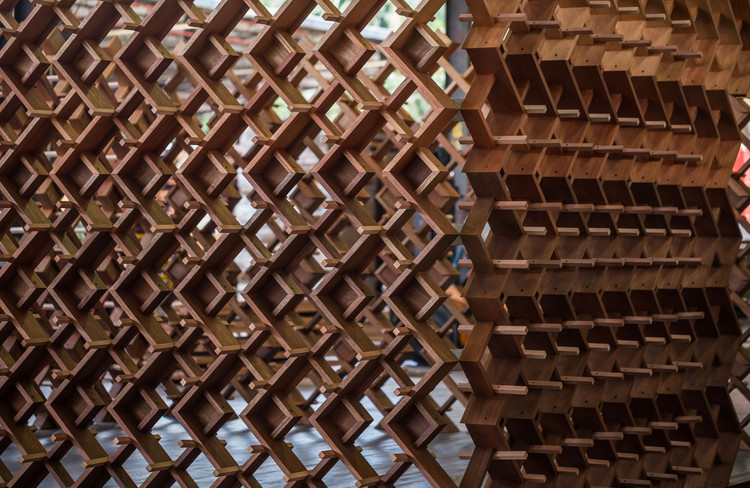
The centerpiece of the Malaysian Timber Council’s exhibition at this year’s AIA Conference on Architecture in Orlando, Florida was a completely dismantlable four-walled enclosure constructed entirely of Meranti timber. Designed by Eleena Jamil Architect, the wholly modular structure showcased the strength and adaptability of this sustainably sourced Southeast Asian hardwood.
Perspective view. Image Courtesy of Heikkinen & Kangasaho
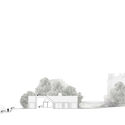
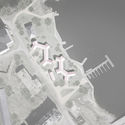
When placed in a historic landscape, contemporary architecture requires a layered approach. It must often strike a respectful, vernacular tone, whilst embracing the innovative, functional hallmarks of a modern building. This balance has particular relevance at Suomenlinna Sea Fortress, located off the coast of Helsinki, Finland. Throughout its 300-year history, it was once occupied by the armies of Sweden, Russia and Finland – a rich history attracting UNESCO World Heritage status, and almost one million annual visitors. The site is more than a museum, however, but a living district of Helsinki with 800 inhabitants and 500 jobs.
Against the prerequisites of past and present, Heikkinen & Kangasaho Architects have combined sharp, functional modernity with respectful, restrained simplicity in a new housing scheme to sit amongst Suomenlinna’s historic fortifications.


.jpg?1493944015&format=webp&width=640&height=580)

















.jpg?1494620356 "Courtesy of Block'hood")
.jpg?1494620342 "Courtesy of Block'hood")
.jpg?1494620366 "Courtesy of Block'hood")



.jpg?1494590696)
.jpg?1494590883 "© Federico Cairoli")
.jpg?1494590949 "© Federico Cairoli")
.jpg?1494590765 "© Federico Cairoli")
.jpg?1494590873 "© Federico Cairoli")
.jpg?1494590696)