1. ArchDaily
  2. noruega

noruega: The Latest Architecture and News

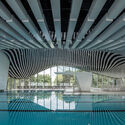
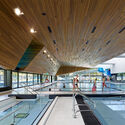
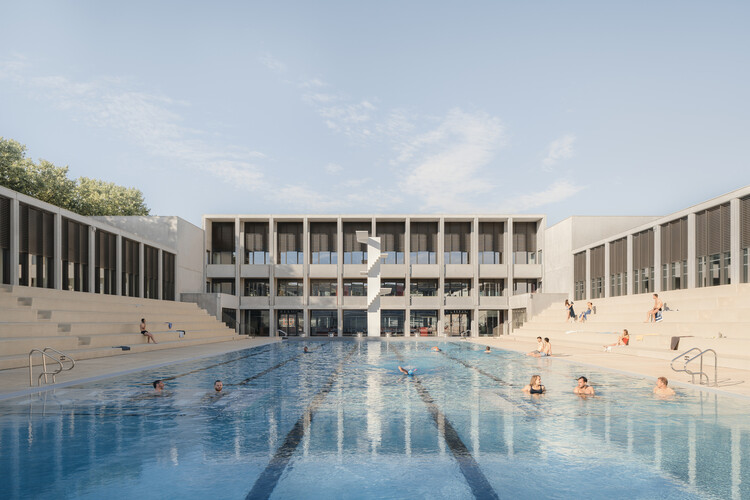
The Shape of Water: 20 Aquatic Centers That Build Collective Landscapes

Subscriber Access | 

Almost certainly, everyone has their own ritual when entering a pool. There are those who dive in without hesitation, those who start with their toes, those who swim for sport, and those who submerge themselves for pure pleasure. Private or shared, intense or contemplative, every experience with water takes place within an environment carefully constructed to receive it.

Architecture and water are of opposing natures. While one delimits and contains, the other insists on spreading, and it is from this tension between solid and liquid that aquatic centers emerge. In these buildings, the presence of water transforms everything around it. Light fragments into shimmering reflections, sound acquires a distinct reverberation, and temperature and humidity define the atmosphere of the spaces, while materials and structural systems are constantly put to the test. Yet their uniqueness is not merely technical.
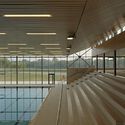
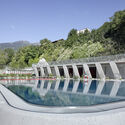
The Shape of Water: 20 Aquatic Centers That Build Collective Landscapes - Imagem 1 de 4The Shape of Water: 20 Aquatic Centers That Build Collective Landscapes - Imagem 2 de 4The Shape of Water: 20 Aquatic Centers That Build Collective Landscapes - Imagem 3 de 4The Shape of Water: 20 Aquatic Centers That Build Collective Landscapes - Imagem 4 de 4The Shape of Water: 20 Aquatic Centers That Build Collective Landscapes - More Images+ 35

Between Sea and City: Contemporary Fish Market Architecture

Subscriber Access | 

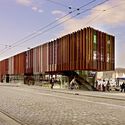
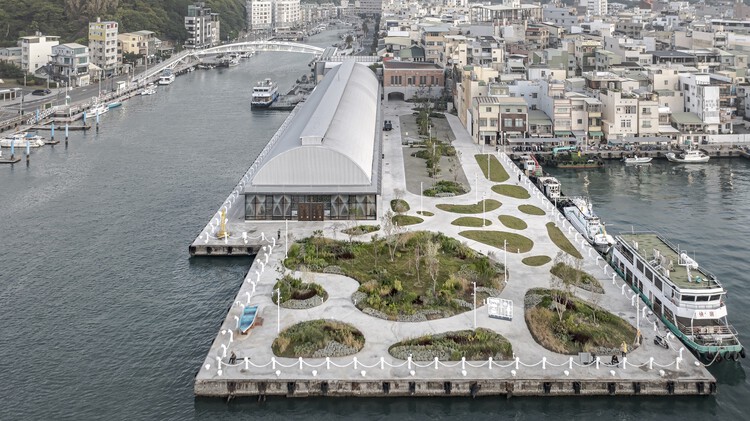
Throughout history, fish markets have played a singular role in mediating the relationship between city and sea. From the port agoras of antiquity, through medieval markets established along docks and estuaries, to the large covered structures of the 19th century, these spaces have been instrumental in shaping coastal cities. More than simple infrastructures for food supply, fish markets express cultural practices and modes of occupation rooted in proximity to water, consolidating themselves as intense and highly social public spaces. Within them, architecture, landscape, and social dynamics intertwine directly, revealing how the built environment can translate maritime traditions and reinforce the identity of coastal and port communities.

Between Sea and City: Contemporary Fish Market Architecture - Image 1 of 4Between Sea and City: Contemporary Fish Market Architecture - Image 2 of 4Between Sea and City: Contemporary Fish Market Architecture - Image 3 of 4Between Sea and City: Contemporary Fish Market Architecture - Image 4 of 4Between Sea and City: Contemporary Fish Market Architecture - More Images+ 11

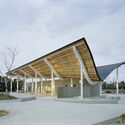
LCLA, Eladio Ramm and Mork-Ulnes Among 10 New Designers for Norway’s National Tourist Routes

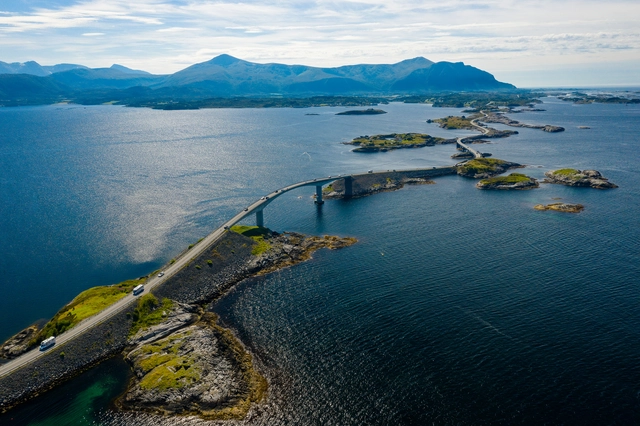
Along coasts and fjords, mountains, and waterfalls, Norway's National Tourist Routes traverse the country's most unique natural landscapes. They are 18 roads that are intended as alternative experiences to the main roads, with rest stops and remote viewpoints that were developed over nearly three decades by some 50 architecture and landscape offices.