1. ArchDaily
  2. life cycle

life cycle: The Latest Architecture and News

The Politics of Bamboo: From Vernacular Craft to Temporal Infrastructure

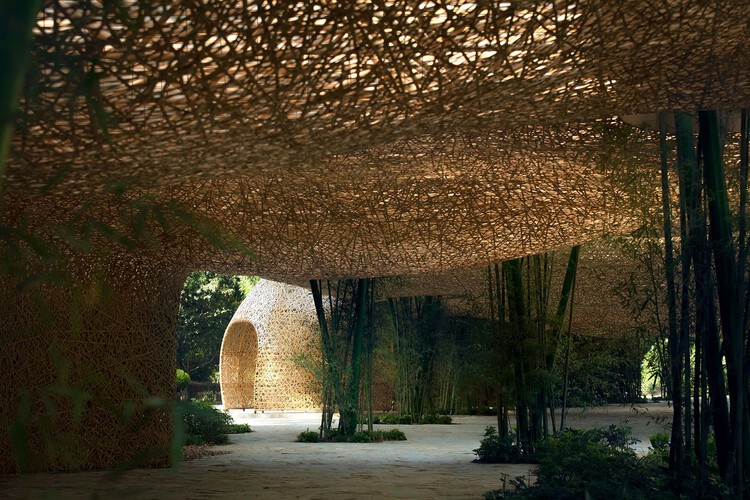
Bamboo is often praised before it is understood. It grows quickly, carries a long history of building cultures, and appears to offer architecture an immediate ecological language. In photographs, it can seem almost self-explanatory: light, natural, renewable, and already aligned with a more sustainable future. Yet this apparent clarity is also what makes bamboo difficult to discuss with precision. Once it becomes a symbol of environmental responsibility, the material itself can disappear behind the image it produces.

This is the risk of bamboo's contemporary revival. It can be imagined too easily as a green substitute for industrial materials, a regional atmosphere, or a softer alternative to the harder languages of steel and concrete. In each case, bamboo is admired before its conditions are understood. The more important question is not whether bamboo is sustainable in a general sense, but what kind of architectural culture it requires: what forms of knowledge, maintenance, regulation, labor, and time are needed for its sustainability to become real.
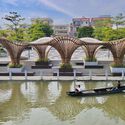
The Politics of Bamboo: From Vernacular Craft to Temporal Infrastructure  - Imagen 1 de 4The Politics of Bamboo: From Vernacular Craft to Temporal Infrastructure  - Imagen 2 de 4The Politics of Bamboo: From Vernacular Craft to Temporal Infrastructure  - Imagen 3 de 4The Politics of Bamboo: From Vernacular Craft to Temporal Infrastructure  - Imagen 4 de 4The Politics of Bamboo: From Vernacular Craft to Temporal Infrastructure  - More Images+ 19

Material Intelligence: How Steel Resists Weather, Corrosion, and Time

 | In Collaboration

Produced on an industrial scale since the 19th century, steel has profoundly transformed the way we build. Iron, refined through controlled metallurgical processes, has given rise to a material capable of combining mechanical strength, relative lightness, and constructive precision, making possible some of the major achievements of modern engineering and architecture. From skyscrapers and bridges to facades, roofs, and industrialized systems, few materials have had such a significant impact on shaping the built environment.

However, the quality of a material cannot be measured solely by its initial structural performance or its appearance at the time of delivery. Although buildings are often evaluated when they are completed, their true performance only reveals itself over time. Photographs record impeccable facades, newly installed surfaces, and spaces ready for use. The following decades, however, expose these constructions to solar radiation, rain, humidity, salinity, air pollution, and thermal variations. It is in this continuous contact with the environment that material choices are effectively put to the test.