1. ArchDaily
  2. elevator

elevator: The Latest Architecture and News

The Building in Motion: How Vertical Mobility Is Redefining Contemporary Architecture

 | In Collaboration

In 1743, a small cabin suspended by ropes was installed in a courtyard of the Palace of Versailles for the private use of King Louis XV. Manually operated by servants hidden from view, the so-called "flying chair" allowed movement between floors without stairs, and unknowingly introduced one of the central questions of modern architecture: how to move people vertically in a way that is efficient, safe, and integrated into the building.

The mechanization of this principle, with the introduction of a safety elevator in the early 1850s, paved the way for an unprecedented urban transformation. Without the elevator, the skyscrapers of Chicago and New York in the 1880s would have been unfeasible not because of structural limitations, but because of access. The elevator made it possible to build higher, and it also defined the logic of how these buildings would operate, where their cores would be placed, how their lobbies would be organized, and who could reach which spaces.
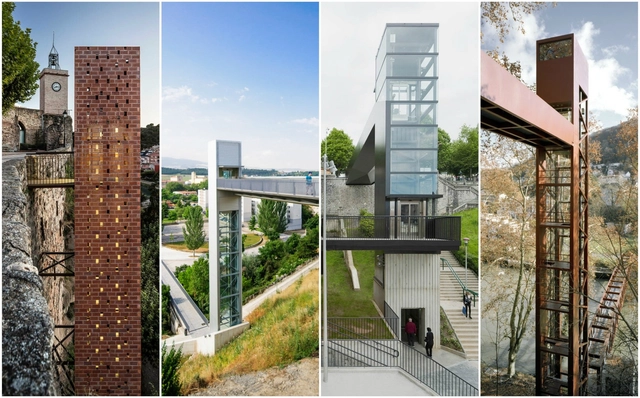
8 Urban Elevators That Bring Connectivity and Continuity to Cities

When working in an urban area with a complex topography, one of the biggest challenges is urban integration. Worldwide, many socially deprived neighborhoods are situated in complicated geographical locations surrounded by steep slopes. Such areas complicate mobility for pedestrians, cyclists, and the elderly, with a lack of accessibility often excluding them from taking part in city life effectively.

In this context, urban elevators can be a novel solution which combine elements of both functional connectivity and sculpture. With some rising up to 30 meters in height, they become urban and touristic landmarks, creating new viewpoints and walkways. Additionally, in many cases, they can help to uphold the historic legacy of the city.

Below we have collected some interesting examples of urban elevators that have been key in the spatial planning of the urban environment.

Which Building Has the World's Fastest-Moving Elevator?

Subscriber Access | 

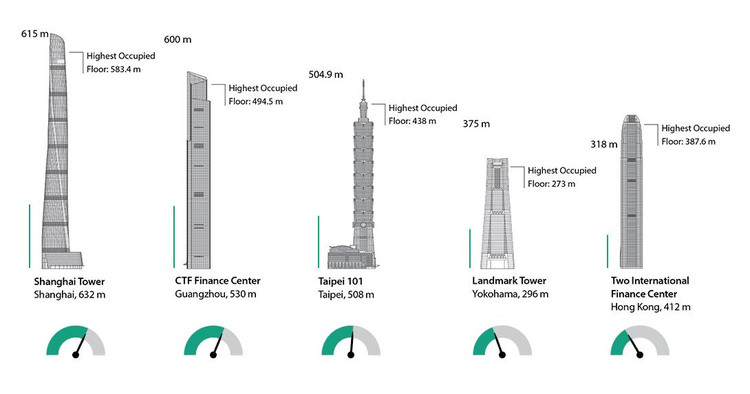
The targeted maximum wait time in office building elevators is 20 seconds—it just feels like 2 minutes when you’re in a rush. But how quickly are the elevators actually moving?

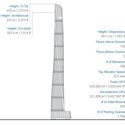
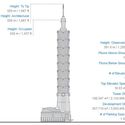
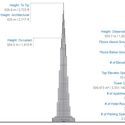
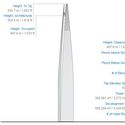
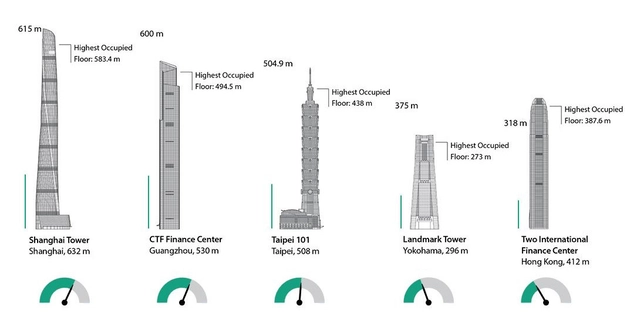
The fastest installed elevator reaches speeds of 67 feet per second (20.5 meters per second), or 46 miles per hour (73.8 kilometers per hour) in the Shanghai Tower. Not only does the Gensler-designed Shanghai Tower boast the fastest elevator, but also the longest continuous run of 1,898 feet of the 2,073-foot tower (578.5 of 632 meters), as revealed in a recent study by the Council on Tall Buildings and Urban Habitat (CTBUH). At these speeds, you can reach the 119th floor in 55 seconds.

Which Building Has the World's Fastest-Moving Elevator? - Image 1 of 4Which Building Has the World's Fastest-Moving Elevator? - Image 2 of 4Which Building Has the World's Fastest-Moving Elevator? - Image 3 of 4Which Building Has the World's Fastest-Moving Elevator? - Image 4 of 4Which Building Has the World's Fastest-Moving Elevator? - More Images+ 1