
Bosnian or Herzegovinian Architecture

  1. ArchDaily
  2. Countries
  3. Bosnia and Herzegovina

Latest projects in Bosnia and Herzegovina

Latest news in Bosnia and Herzegovina

Austria's 2027 Venice Architecture Biennale Pavilion Proposes a Shared Platform with Bosnia and Herzegovina

Austria has announced Koncesija / Konzession / Concession(e) as its contribution to the 20th International Architecture Exhibition – La Biennale di Venezia. Curated by architects Adna Babahmetović and Ajna Babahmetović together with curator Sebastian Höglinger, the project proposes temporarily granting the Austrian Pavilion to Bosnia and Herzegovina through a cooperative concession. Selected through Austria's open competition process, the pavilion examines questions of national representation, diplomacy, and architectural exchange by responding to the absence of a Bosnian national pavilion in the Giardini, where the Biennale's historic national pavilions are located.

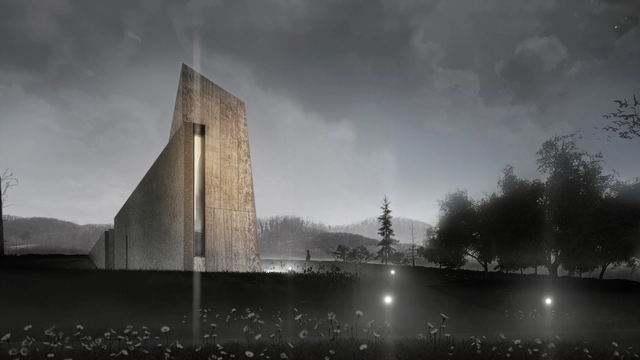
Concrete Memory: 12 Postwar Monuments Across Eastern Europe

Subscriber Access | 

A monument is usually the most conservative building a state will commission. It is expected to stabilize memory, to make history legible, and to give public form to a shared narrative. Eastern Europe's twentieth century produced an entire body of work from the Baltic to the Balkans that resisted precisely those expectations, challenging the conventional relationship between monument, memory, and representation. Commonly grouped under the name spomeniks, these architectural exercises are perhaps the best-known examples of a much broader landscape of memorial architecture that emerged across the region. These were societies emerging from occupation, civil conflict, or revolution, and none of them possessed a single symbolic language capable of accommodating the complexity of their histories. Rather than searching for new heroes or new icons, many architects and artists turned to space itself as the medium through which remembrance could be constructed.

A Floating Pavilion in Slovenia and a Bicycle Route through the Tree-Tops in Italy: 10 Unbuilt Public Space Projects Submitted to ArchDaily

Subscriber Access | 

One of the central responsibilities of urban planners and designers is to create places within the city for gatherings, demonstrations, leisure, and relaxation. The following list of unbuilt public spaces presents projects that expand these spaces beyond the shores or riverfronts, return misused spaces back to the local communities and seek to optimize otherwise overlooked areas. These types of interventions are essential in improving the quality of life of the citizens and in making cities more enjoyable to live in.

An Extreme Sports Park in Russia and a Latvian Eco-Tourism Catalyst: 10 Unbuilt Projects Submitted by our Readers

Subscriber Access | 

10 projects, 10 functions. Featuring a multitude of different programs, this week's curated selection of Best Unbuilt Architecture highlights diverse and innovative conceptual approaches. Submitted by our readers, this variety of proposals includes sports, religious, cultural, educational, and social purposes.

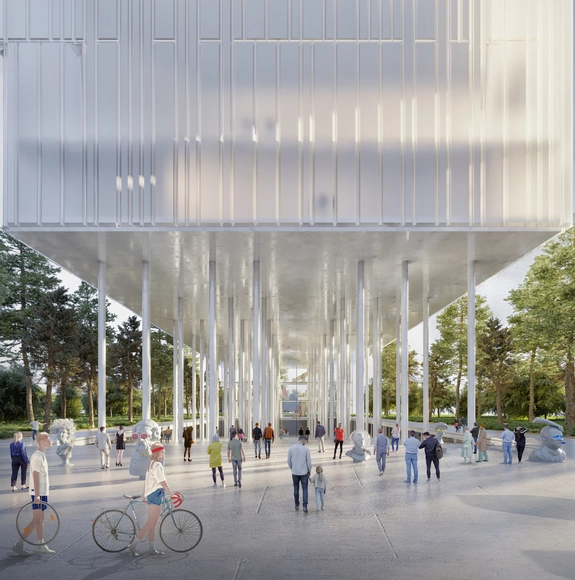
Cosmos Architecture Designs New Congress Center of Banja Luka, in Bosnia and Herzegovina

Creating a building that is adaptable, interactive, and accessible for everybody, Cosmos Architecture, an international architecture practice based in Milan, Madrid, and Shanghai, imagined the new congress center of Banja Luka, in Bosnia and Herzegovina. The project, an iconic lighthouse represents innovative architecture paradigms and urban identity, generating narratives within the city scheme.

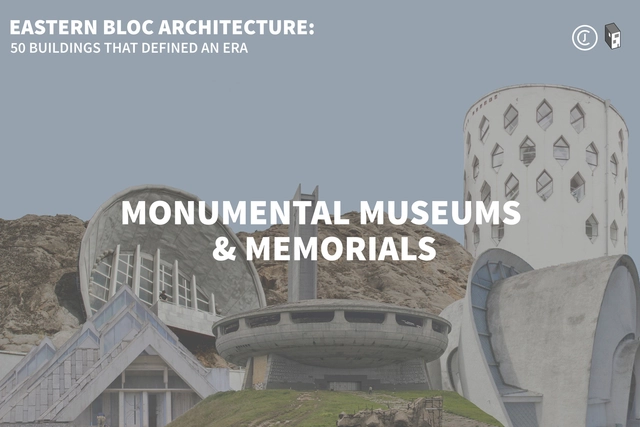
Eastern Bloc Architecture: Monumental Museums & Memorials

This article is part of "Eastern Bloc Architecture: 50 Buildings that Defined an Era", a collaborative series by The Calvert Journal and ArchDaily highlighting iconic architecture that had shaped the Eastern world. Every week both publications will be releasing a listing rounding up five Eastern Bloc projects of certain typology. Read on for your weekly dose: Monumental Museums and Memorials.

How to Change Cities With Culture: 10 Tips Using UNESCO

This article, written by Svetlana Kondratyeva and translated by Olga Baltsatu for Strelka Magazine, examines the most interesting cases of the role of culture in sustainable urban development based on the UNESCO report.

Nevena Katalina Remembers Yugoslav Memorials Through Posters

Subscriber Access | 

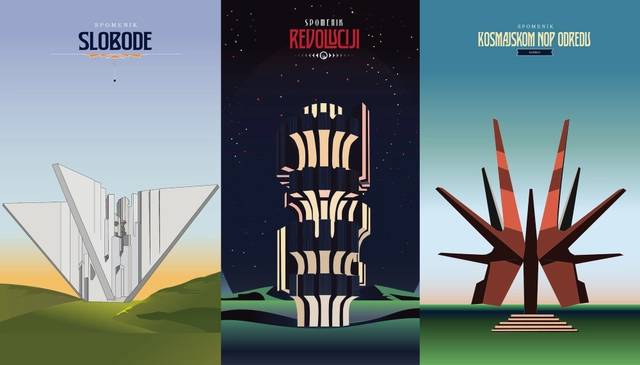
The act of remembering looms large in national cultures. Shared national memories act as a foundation for national identity, a unifying collective interpretation of history that can define what it means to belong in a certain place. Monuments loom even larger - define a national memory in concrete and stone, and you can help define your vision of the nation. That's why Nevena Katalina, a graphic design masters student at the University of Novi Sad in Serbia, has taken the famous abstract war memorials in the former Yugoslavia and translated them into posters, attempting to reconcile the imposing concrete forms with the impact they've had on culture and memory in countries around the former Yugoslavia.

Tourist Centre on Klekovaca Mountain International Competition

Subscriber Access | 

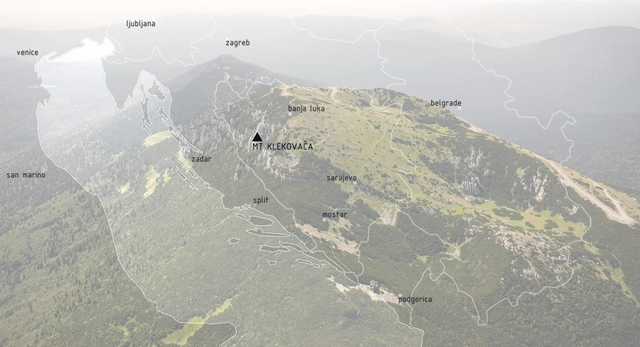
The purpose of the Competition is to obtain the preliminary urban and architectural design for the future urban zone of the Klekovaca Tourist Centre on Klekovaca Mountain. Klekovaca Mountain is located in the western part of Bosnia and Herzegovina and belongs to the central part of the Dinaric Arc - Southeast Europe region. Its highest peak is Velika Klekovaca (1.962m) and it stretches in a north-westerly to southeasterly direction, covering a distance of 43 km.