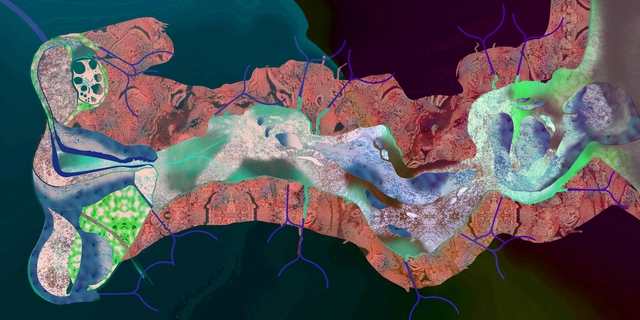
Power Station of Art (PSA) has announced the curatorial team and theme for the 13th Shanghai Biennale, proposed by its Chief Curator, the architect and writer Andrés Jaque (Office for Political Innovation).
ArchDaily China Team Lead Editorial & Business Development, Chinese architect and curator. You can follow me on Instagram @hanshuang_hhh
Power Station of Art (PSA) has announced the curatorial team and theme for the 13th Shanghai Biennale, proposed by its Chief Curator, the architect and writer Andrés Jaque (Office for Political Innovation).
Another year, another successful ArchDaily China Building of the Year Awards! With more than 20,000 votes gathered over the past 20 days, the results of the 2020 edition are in! Once more, the award has proved to be the largest architecture prize centered around people’s opinion. Crowdsourced, the most relevant projects of the year were nominated and selected by our readers.
This year we celebrate three projects -- highlighting a wide range of interventions, typologies, scale, material and locations, the winners are a mere reflection of the vast outreach of the profession. With new names surfacing every year, this edition, as the previous ones did, honors well-established practices and the newcomers. High-profile figures include Atelier FCJZ with its bridge museum in the Chinese countryside, Neri&Hu Design and Research Office and its sculpture art center, and Atelier Lai's Bamboo Bridge.
True to its status, ArchDaily China, the most far-reaching Chinese architectural website, is and will always be a platform for all architecture enthusiasts. Curating the best in the world, thanks to the trust of architectural firms and the devotion of our readers, ArchDaily’s realm keeps expanding exponentially. For that, we are grateful!
Following an exciting week of nominations, ArchDaily’s readers have evaluated over 800 projects and selected 10 finalists of the Building of the Year Award. Over 20,000 architects and enthusiasts participated in the nomination process, choosing projects that exemplify what it means to push architecture forward. These finalists are the buildings that have inspired ArchDaily readers the most.
As we successfully launched our 12th Building of the Year (BOTY) award earlier this year, we want to thank you for being part of our community for over 10 years. Together we have been growing and contributing to the architectural scene, aiming for a better world.
ArchDaily China is 5 years old this year. We have been introducing Chinese architecture to the world and bringing global architecture to our readers in China. We are an open platform that benefits global audiences, making the industry more inclusive and equal. While our database, mission, and focus develop, some traditions stay with us over the years, such as our flagship award series – the Building of the Year Awards. Now, we are proud to announce that BOTY's 4th Chinese edition celebrating the best architecture in the country, as chosen by you, the reader.
By nominating and voting, you form part of an interdependent, impartial, distributed network of jurors and peers that has consistently helped us celebrate architecture of every scale, purpose, and condition, from large and small countries, and architects of all profiles. Over the coming weeks, your votes will result in 600 Chinese projects filtered down to just 10 best projects in China.
Read below for more details on how to submit, and thank you for helping us continue to democratize architectural excellence across the world.
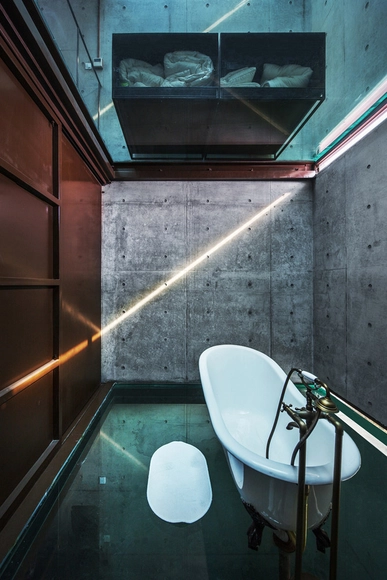
Since the beginning of modernism, countless architects have expressed their architectural theories and concepts through the design of residential interiors. In Vanna Venturi House, Venturi exaggerated the scale of internal components to create a counterbalance to the small house, expressing complexity and contradiction. In Villa Mairea, Alvar Aalto built an ‘imperfect’ home, as a way of rebelling against the strict aesthetic standards of functionalism.
Conceptual and theoretical experimentation of housing interiors in China has had a delayed start due to political influences and differing pace of development. While the birth of communism lead to standardisation, rapid urbanisation and economic rebirth has provided the perfect catalyst for architects to challenge the status quo and conceptualise new definitions of interior and living.
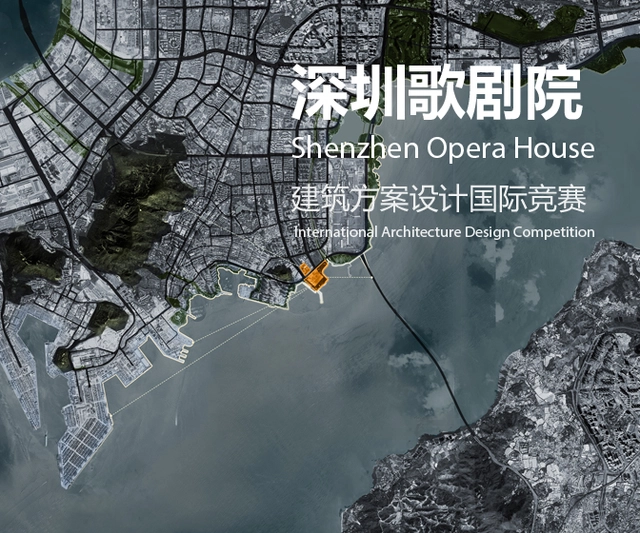
In response to China’s State Council’s notice on extending the Lunar New Year holiday to February 2 and Guangdong Province’s notice on returning to work after February 9, we decide to adjust the Timetable of International Architecture Design Competition of Shenzhen Opera House accordingly. The deadline for submitting the Application Documents (including registration documents and early concept proposal in the form of hardcopy and softcopy (U disk)) in open call phase has been adjusted from before 15:00 on February 18, 2020 to before 15:00 on March 10, 2020. For details of the adjusted competition timetable, please refer to the attachment.
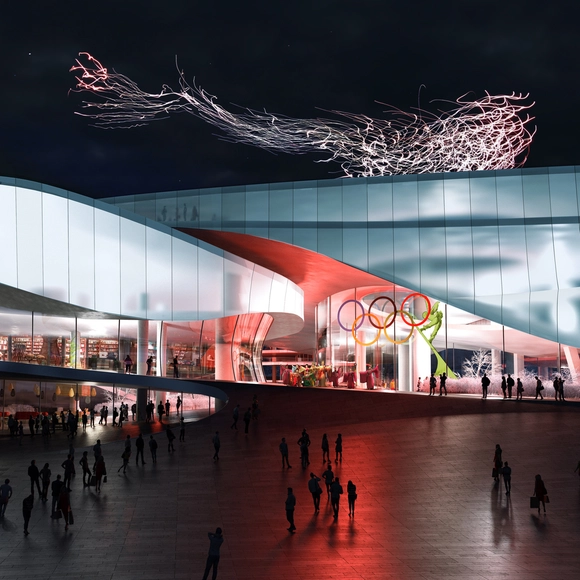
maison h has just completed the design for the world’s first Winter Olympics Museum for the Beijing 2022 Winter Olympics. This pivotal museum will extend the legacy of the 2008 Beijing Olympics into an enduring strategy for the Olympics to become a catalyst for sustainable social and economic development.
The preliminary qualification review on the bidding of Curator of the Opening Ceremony of Brewery Arts Festival and Architectural Exhibition (Luohu•2021) has been completed. The result is hereby publicized as follows:
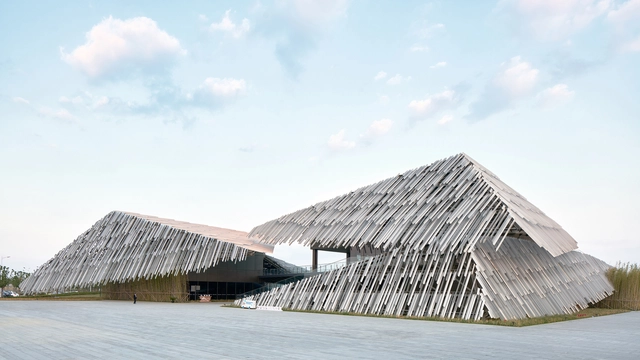
From Chinese architectural photographer Zheng Shi comes imagery of Kengo Kuma's Yangcheng Lake Tourist Transportation Center in China. Architecture aimed to build a topographic structure as a large hill by randomly placing aluminum extruded materials with single-sized sections. Inside is designed as the assemblage of slanted floors, in order to maintain the same landform both in inside and outside that create some random yet ambiguous state.
WA Awards for Chinese Architecture (WAACA) was established by World Architecture magazine in 2002, and was awarded biennially. The mission of WAACA is to encourage and introduce completed works addressing the national conditions of China with innovative values. It aims at enlivening the academic atmosphere of Chinese architectural community, promoting the prosperity of Chinese architectural design, enhancing the quality of Chinese architecture, contributing to the public understanding and recognition of architectural industry in China, and introducing Chinese architects and architectures to the world.
In 2014, the seventh cycle of WA Awards for Chinese Architecture expanded to a larger range, with increased the categories of the awards, and identifying more clearly the value appeal of each award. By encouraging more types of projects to participate in the selection, WAACA intends to introduce more outstanding Chinese architectural works to the Chinese society and the world.
Oct 12th, 2018, when 2018 WAACA was held in Beidaihe, the jury selected 59 entries in total for Winners, Highly commended and Shortlisted projects of WA Achievement Award, WA Design Experiment Award, WA Social Equality Award, WA Technological Innovation Award, WA City Regeneration Award and WA Housing Award from a total of 354 valid entries on the basis of their independent judgment.

This Monday brings with it not just a new week, but a new year. 2019 is the year of the Pig, and as the New Year starts ArchDaily is committed to furthering its mission of fostering knowledge and inspiration for architects, helping them build better cities, and becoming a professional tool. Since Archdaily China was founded in 2015, the team has been dedicated to serving Chinese architects and promoting their works worldwide.
To celebrate the New Year, we have collected greetings from a number Chinese architects. Through this call, we hope to extend their blessing to all architecture lovers.
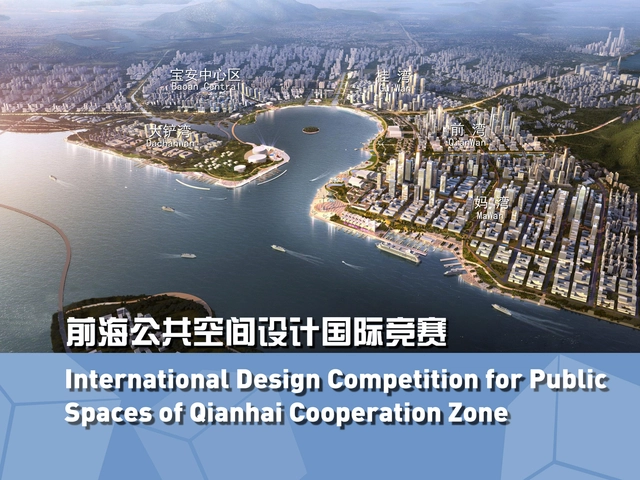
With the implementation of the “Belt and Road” initiative, the Guangdong-Hong Kong-Macao Greater Bay Area (Greater Bay Area) has become an important part of China’s national strategy, ushering the Pearl River Delta urban agglomeration into the “Greater Bay Area” era. In this context, the Qianhai Cooperation Zone will demonstrate best practices for deeper cooperation in the Greater Bay Area. A locus for international resources in service of the Chinese mainland with support from Hong Kong and Macau, the zone will feature a unique, forward-looking urban center in the world-renowned bay area, a novel core engine for collaborative innovation in the Greater Bay Area, a demonstrative pilot zone for future urban development, and a strategic pivot for the “Belt and Road” initiative.
In accordance with Planning of Qianhai New Urban Center, as one of the major innovation nuclei defined in the upper-level plan, Qianhai is well positioned to lead the development of the Greater Bay Area. On the one hand, it will actively coordinate and utilize S&T innovation resources from all around the world to build an internationalized and open regional innovation system and a novel cooperative community for the Greater Bay Area. On the other hand, as one of the dual centers of the city, Qianhai will promote axial coordinated development of urban functions, strengthening the regional service functions of modern service industries while further aggregating urban public service functions to create a new mixed-use urban center.
Qianhai is in western Shenzhen, Guangdong Province, on the eastern bank of the Pearl River Estuary, near Hong Kong; it is the future demonstration area of in-depth cooperation of Guangdong, Hong Kong and Macao and new urban center. It’s in order to plan and construct a bunch of high-level and high-quality landmark buildings, forming new landmarks in Qianhai in terms of model, design, and function, etc., and increase the influence and appeal of the region. There are plans to build Qianhai International Financial Exchange Center at Unit 1, Guiwan Area, Qianhai, and currently the Tender for the Architectural Scheme Design of Qianhai International Financial Exchange Center (hereinafter referred to as the "project") is in progress.
This project is hosted by the Authority of Qianhai Shenzhen-Hong Kong Modern Service Industry Cooperation Zone and organized by the Shenzhen Qianhai Development Investment Holdings Co., Ltd. We sincerely invite the domestic and overseas design organizations and winners of famous architectural design awards to participate in the project. We will select the most creative and international vision of the design scheme and build a waterfront public building as the new landmark of Qianhai City with high standards and starting points.
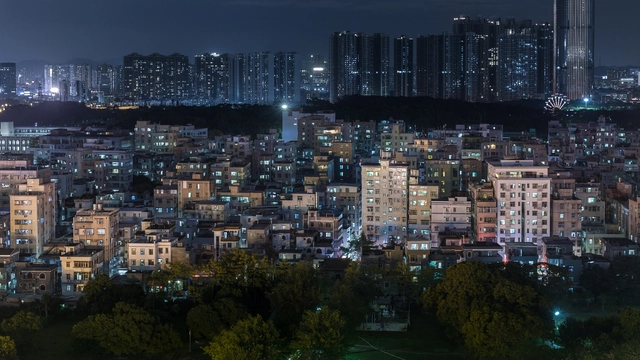
Text from the organizers Bi-City Biennale of Urbanism\Architecture (UABB). The Bi-City Biennale of Urbanism\Architecture (UABB), the only exhibition in the world to explore issues of urbanization and architectural development, will be opening for its 7th edition on December 15th, 2017. UABB will be held at Nantou Old Town in Nanshan district, an urban village that was once the administrative center of the Bao'An County. Hou Hanru, Liu Xiaodu, and Meng Yan (in alphabetic order) make up the curatorial team, all known for notable accomplishments in their respective fields. UABB is thrilled to host more than 200 award-winning exhibitors from 25 countries to share their perspectives on diversity and urban villages at this year’s biennale.
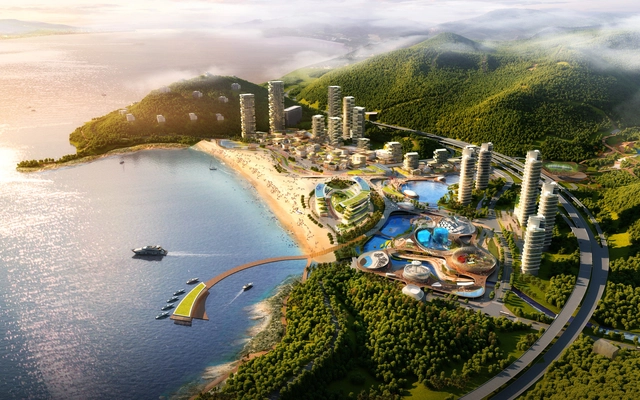
Shenzhen, a modern, international, innovative coastal city, one of the core cities of the Guangdong-Hong Kong-Macau Greater Bay Area, one of the most economically competitive cities and the most dynamic cities in the world, and having the reputation of “City of Design”, now is striving to become a global marine central city.
Xiaomeisha is located in the eastern golden coastline of Shenzhen, and adjacent to Dapeng New District to the east, Dameisha to the west, Maluan Mountain Country Park to the north and Dapeng Bay to the south. Being 28 kilometers away from Futian Center and 10 kilometers away from Yiantian Sub-Center and having excellent mountain and marine resources including mountains, lakes, a sandy beach, and reef, it is nearest to the downtown area of Shenzhen and one of the coastal leisure and tourism resorts which have a natural sandy beach.
.jpg?1508145447&format=webp&width=640&height=580)
In the future Ban Xue Gang High-Tech Zone will use information and communications technology, and technological creative industry as its engine, together with Longhua Center, Qinghu Sub- center, Shenezhenbei Railway Station business center, to develop jointly and become a demonstrative area that unites technological business, industry incubation, and service, merges industrial and urban qualities.