Designing for Coexistence: The Invisible City of Bees

9:02

Subscriber Access

In the first days after birth, the bee remains inside the nest, cleaning cells and being fed by other workers. Over time, it begins organizing pollen stores, regulating the hive's temperature, and guarding the entrance. Only in the final weeks of its life does it leave the shelter to fly. It is in the moment of flight that its trajectory begins to intersect with architecture and the city. In search of nectar, it moves across a territory shaped not only by its spatial memory and the availability of flowers, but by the way we construct the built environment. Each movement becomes a negotiation with urban space: impermeable surfaces that disrupt natural cycles, air currents intensified between buildings, vegetation-free voids, scattered green fragments between lots, and technical rooftops.
Designing for Coexistence: The Invisible City of Bees - Image 2 of 16Designing for Coexistence: The Invisible City of Bees - Image 3 of 16Designing for Coexistence: The Invisible City of Bees - Image 4 of 16Designing for Coexistence: The Invisible City of Bees - Image 5 of 16Designing for Coexistence: The Invisible City of Bees - More Images+ 11

Content Loader

Image gallery

See allShow less
About this author
Cite: Eduardo Souza. "Designing for Coexistence: The Invisible City of Bees" 24 Feb 2026. ArchDaily. Accessed . <https://www.archdaily.com/1038974/designing-for-coexistence-the-invisible-city-of-bees> ISSN 0719-8884
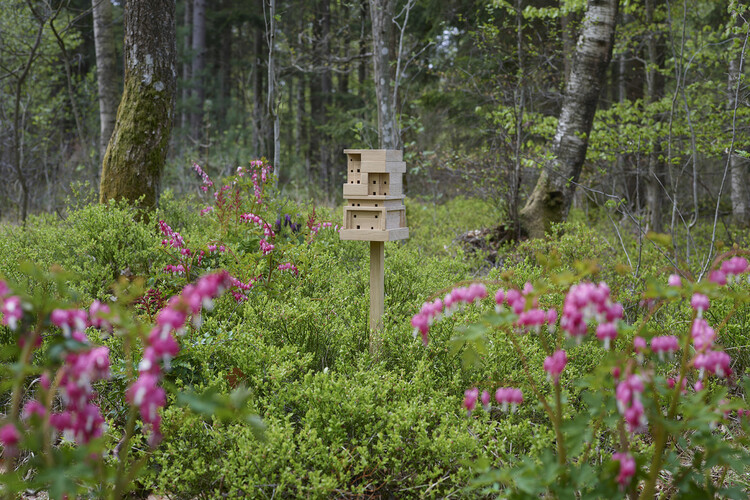
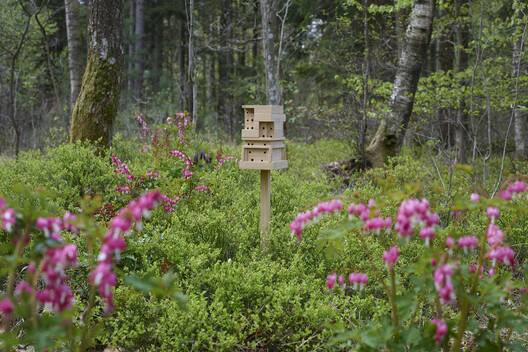
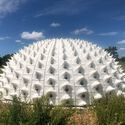
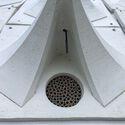
Bee Home from SPACE10. Image © Irina Boersma

为共生而设计:蜜蜂的隐形城市

You've started following your first account!

Did you know?

You'll now receive updates based on what you follow! Personalize your stream and start following your favorite authors, offices and users.