

-
Architects: Multistudio
- Area: 124000 ft²
- Year: 2013
-
Manufacturers: Shildan
-
Professionals: Gibbens Drake Scott, Raytown, MO, TranSystems Corporation, NOAA Office of the Chief Administration Officer, +7



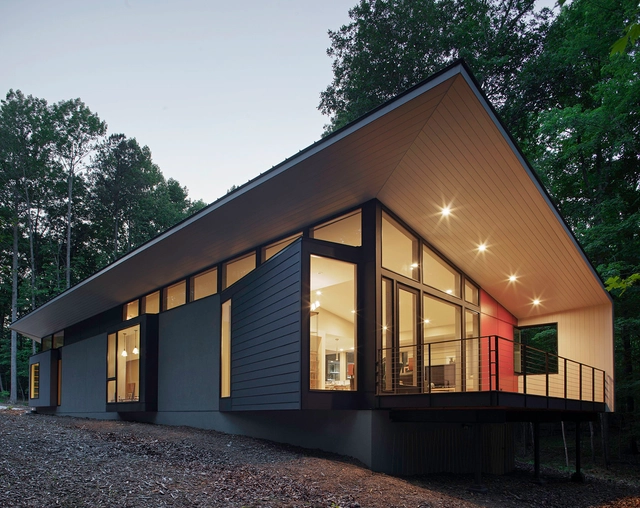

Tulane City Center and a team of Tulane architecture students worked together with the Lousiana Outdoor Outreach Program to design a shade structure made from traffic yield signs for a challenge course in City Park. Drawing inspiration from the surrounding tree canopy and the structure of the ropes course, the design team crafted a faceted, curving aluminum canopy suspended by steel cables with an earthen berm for seating below. More about the pavilion, after the break.
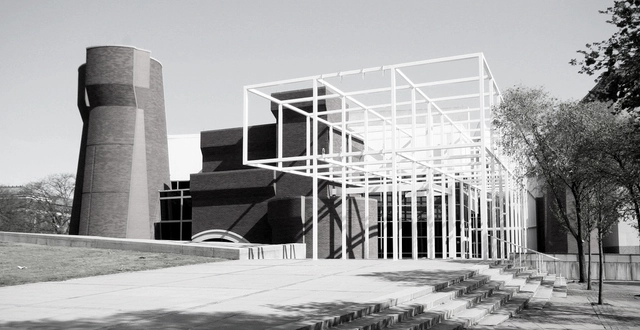
Before it was even completed, New York Times critic Paul Goldberger dubbed the Wexner Center for the Arts “The Museum That Theory Built.” [1] Given its architect, this epithet came as no surprise; Peter Eisenman, the museum’s designer, had spent the better part of his career distilling architectural form down to a theoretical science. It was with tremendous anticipation that this building, the first major public work of Eisenman’s career, opened in 1989. For some, it heralded a validation of deconstructivism and theory, while its problems provided ammunition for others who saw theory and practice as complimentary but ultimately divergent pursuits. The building’s popular reception has been equally mixed, but its influence and intrigue in the academic community is as pronounced and unmistakeable as the design itself.


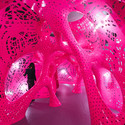
Marc Fornes & THEVERYMANY has constructed a light-weight, ultra-thin self-supported shell structure augmented by artist Jana Winderen’s engineered sounds at the Storefront for Art and Architecture in New York City. Now on view through November 21, the “Situation Room” presents itself, as Storefront describes, "a vibrating sound experiment that that aims to transform architecture into animated sensible form."
“The overall form is an aggregate of twenty spheres of incremental diameters, combined to create an envelope of experiential tension, a sort of sublime dialogue between the comfort of the known and an uneasy interaction with the unknown,” described Fornes. “The resultant morphology resonates with a series of distributed transducers and lighting sources playing out through streams of porosity derived from structural stress flows across the elements.”
More images and information about the “Situation Room,” after the break.

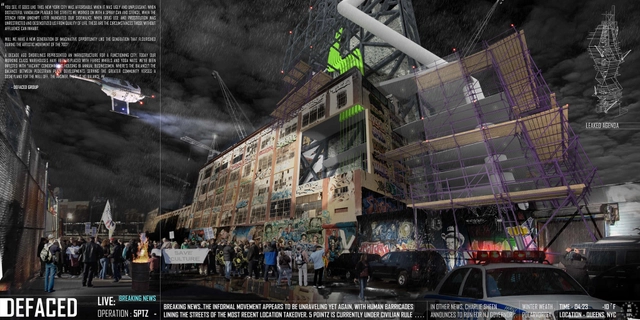
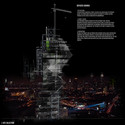
Upon the announcement of the imminent demolition of 5 Pointz, the internationally renown graffiti mecca in Long Island City, New York, a group of young designers - Arianna Armelli, Ishaan Kumar, David Sepulveda and Wagdy Moussa - joined together to form DEFACED, "a theoretical project designed to ask the question of whether an organization for the preservation of cultural relics of New York and cities around the world can be formed and implemented." The group focuses on the gentrification of New York City's cityscape and its accompanying sociopolitical issues, along with the protection of cultural landmarks and districts around the world.
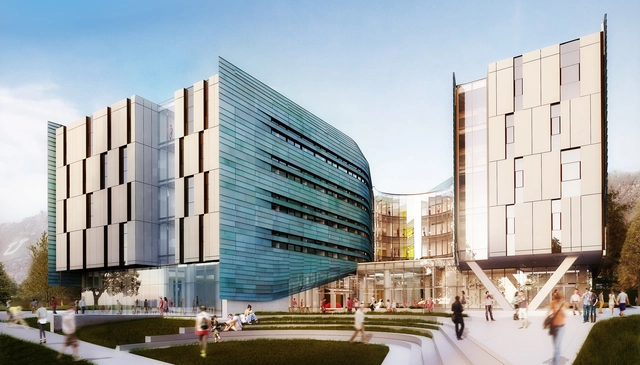
A collaboration of EDA Architects, Yazdani Studio of Cannon Design, and Arup, the University of Utah's newest project for the Lassonde Entrepreneur Institute - "Lassonde Studios" - has broke ground. Slated as a space to live, work, and create, the building supports the mission to make the Lassonde Institute an international destination for student entrepreneurs, innovators and “makers.” The Studios will open for students in fall of 2016.
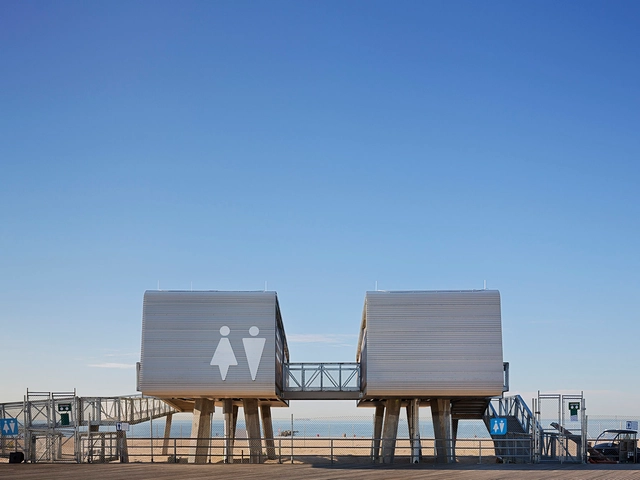
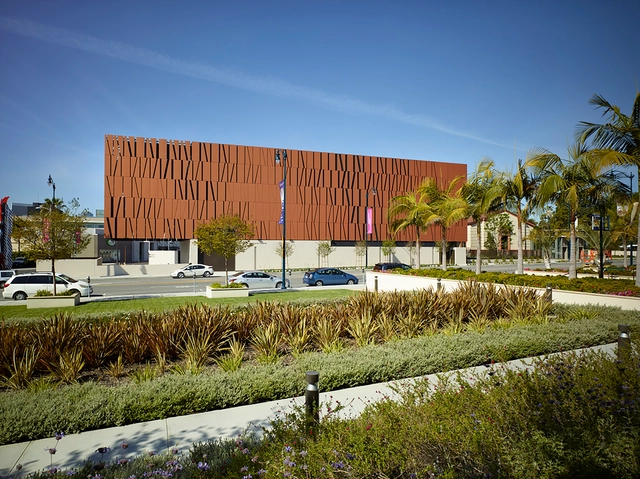


.jpg?1412657909 "© Flickr user: joevare")

.jpg?1412657922 "© Flickr user: joevare")
.jpg?1412657910 "© Flickr user: joevare")




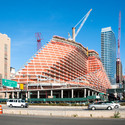
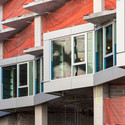
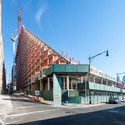
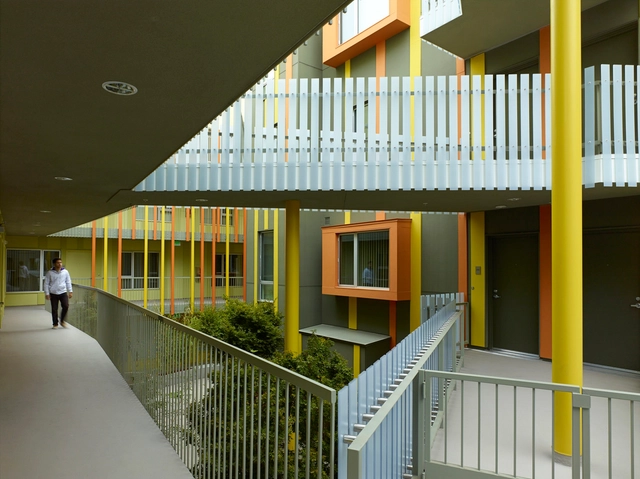
.jpg?1413546606 "Detail of the interior courtyard façade. Image © Field Condition")