Update: The deadline has been extended to January 4, 2016.
LOCALIZING COORDINATES


Update: The deadline has been extended to January 4, 2016.
LOCALIZING COORDINATES

In Mark Foster Gage’s essay “Rot Munching Architects,” published in Perspecta 47: Money, the Assistant Dean of the Yale School of Architecture strove to find meaning in the current design landscape. Taking the essay title from a larger stream of expletives spun across the facade of the Canadian pavilion as part of artist Steven Shearer’s installation at the 54th Venice Art Biennale in 2011, Gage found truth in the vulgarities, arguing that - in a very literal sense - “architectural experimentation has left the building” as the discipline has been made impotent under the hostage of late capitalist ambition.
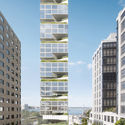
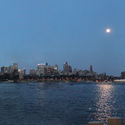
Last summer, when Brooklyn Bridge Park unveiled 14 proposals as finalists for two residential towers at the park's controversial pier 6 site, you could be fooled into thinking that design is alive and well. A caveat of the park’s General Project Plan (GPP) was to set aside land for retail, residential and a hotel development, in order to secure funding and achieve financial autonomy. The plans had already fueled a decade of legal battles and fierce opposition from the local community, with arguments ranging from the environment, to park aesthetics, to money-making schemes, but last year a bright outcome appeared a possibility, when the park unveiled the competing plans including those by Asymptote Architecture, BIG, Davis Brody Bond, Future Expansion + SBN Architects, WASA Studio, and of particular interest, O’Neill McVoy Architects + NV/design architecture (NVda).

COME TO THE TABLE WITH CHICAGO EDUCATORS

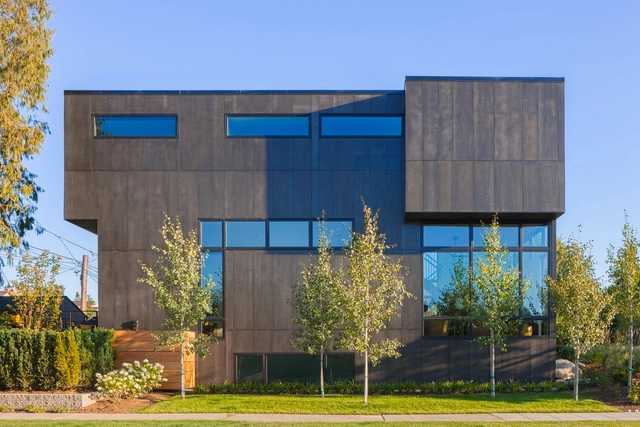
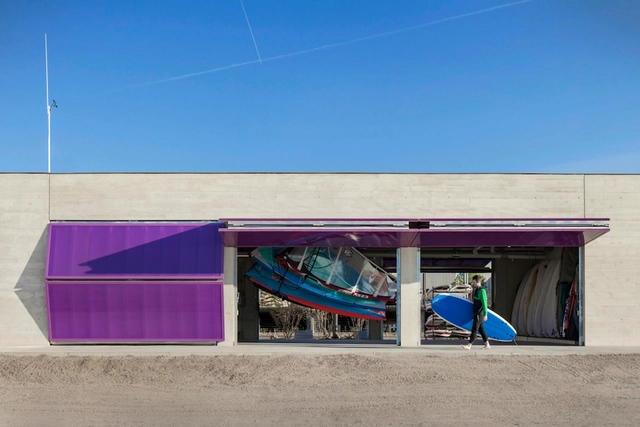
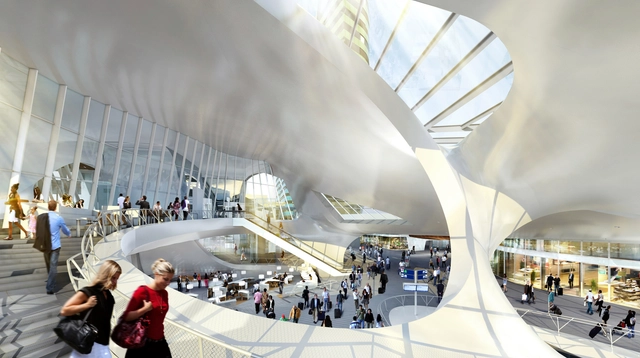
In collaboration with the Los Angeles County Museum of Art and the Cal Poly LA Metro Program in Architecture and Urban Design, Caroline Bos, co-founder and Principal Urban Planner of UNStudio (www.unstudio.com), will speak about recent architectural, infrastructural and masterplan projects carried out by UNStudio. She will also introduce UNStudio’s Urban Unit and the approach to knowledge sharing recently adopted by the practice to enable the development, application and dissemination of practice related research.

STANLEY TIGERMAN UNVEILS HIS 2015 NEW TITANIC
Stanley Tigerman will discuss his 2015 New Titanic along with the opening of a special exhibit that includes a selection of past and recent work featuring the 1978 “Titanic” photomontage.

Monuments are deliberate gestures—objects or structures created to commemorate an event, person or era. Their meaning is usually imposed, and they often serve as focal points for aspirational civic and political attributes like valor and sacrifice, or to underscore a foundational political narrative. But their meaning can transform, changing over time as the relevance of their symbolism ebbs and flows due to social and political shifts. Like monuments, architecture and photography are also inflected with a grace of intention, and both have the ability to commemorate or represent a nation, event, time or place. The act of photographing monuments and buildings transforms them, sometimes revealing some of the original qualities and more closely evoking the response that they were originally intended to have. And photographs have an inherent memorial quality. This group exhibition examines the work of international artists, some of whose work addresses actual monuments, some whom look at architecture and its relationship to memory and how its importance and symbolism can shift over time, and others approach the idea of the future monument.

In a Los Angeles Times article last December, “The future is in the past: Architecture trends in 2014,” acting critic Christopher Hawthorne sought to make sense of a year that included Koolhaas’s Venice Biennale, Smiljan Radic’s Serpentine Pavilion, and periodicals like Log 31: New Ancients and San Rocco 8: What’s Wrong with the Primitive Hut? Through these examples and others, Hawthorne concluded that it was a year of overdue self-reflection, where in order to determine architecture’s future it was necessary to mine the past.
Building on these precedents, Hawthorne predicted that after years of baroque parametricism, in 2015 architects would use last year’s meditations on history as a practical foundation for new projects and proposals. An example of this can be found in the work of Michael Ryan Charters and Ranjit John Korah, a duo who recently shared the top-five prize for the CAF led ChiDesign Competition (part of the Chicago Architecture Biennial) for their project Unveiled. In a brief that called for “a new center for architecture, design and education,” and with lauded jurors including Stanley Tigerman, David Adjaye, Ned Cramer, Monica Ponce de Leon, and Billie Tsien, Charters and Korah proposed what could casually be summarized as a terracotta framework over a multi-story crystalline form of wooden vaults, but is actually something much more complex.
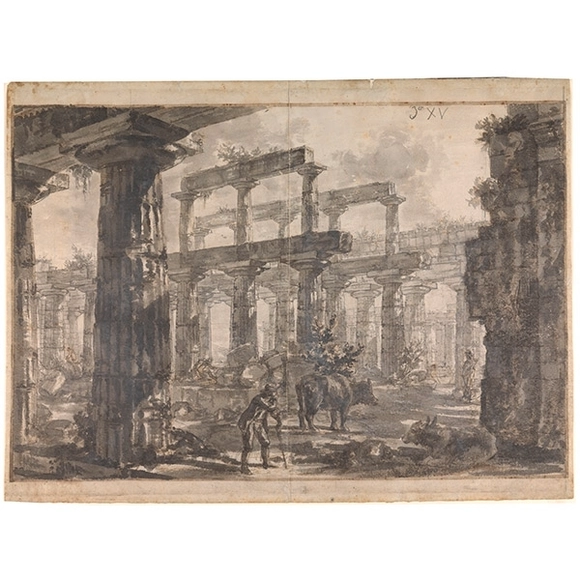
Sergei Tchoban, managing partner of the architectural firm nps tchoban voss with offices in Berlin, Dresden, and Hamburg, SPEECH in Moscow and founder of the Tchoban Foundation – Museum for Architectural Drawing in Berlin and Andrew Zago, partner and founder of the firm Zago Architecture in Los Angeles will talk about the architectural hand- and computer generated drawings in architectural practice today. The importance of a drawing as an official language of an architect, as well as collecting and displaying it.