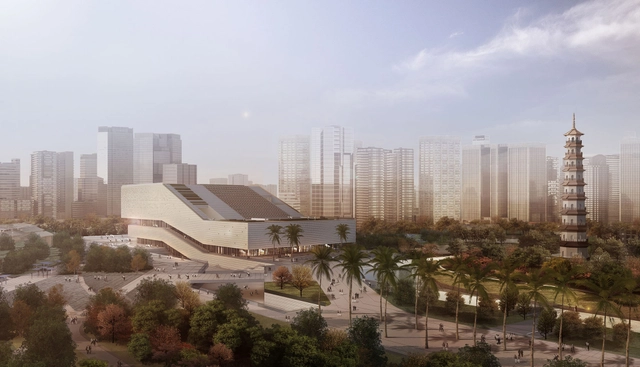
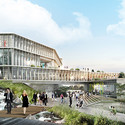
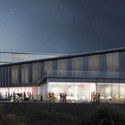
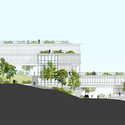
schmidt hammer lassen architects has broken ground on their first Chinese library. Selected through an international competition in 2013, the project will provide a new home for the Ningbo City Library's massive collection - the region's largest for historic and ancient books - on the edge of an ecological wetland area in the eastern port city of Ningbo.
"Given our great collaboration with the Local Design Institute and the client team, we are full of confidence that the Ningbo New Central Library will become a vibrant new public space for the citizens of Ningbo,” says Chris Hardie, partner and director of schmidt hammer lassen.
The Gui’an New District, the eighth National New Districts in China, is located between Guiyang City and Anshun City, Guizhou Province with a planned area of 1,795 km2. The District, committed to the goal of “creating a city with pastoral landscapes”, will be built into a new leading area in inland economic development, a pilot area for innovation and development, an agglomeration of high-end service industries, an international area for leisure, vacation and tourism and a leading area for the construction of ecological civilization. The planning of a comprehensive high-speed railway transportation hub and CBD in central Gui’an New District strives to build it into an important transportation hub and central business district. The Management Committee of Guizhou Guian New District and the Planning and Construction Bureau of The Management Committee of Guizhou Guian New District hereby publicly call for the proposals for the planning of such a transportation hub and CBD as required, sincerely inviting the participation of experienced and qualified design agencies worldwide.
Registration deadline for international teams is on July 10th, 2015. More details below:
https://www.archdaily.com/769329/call-for-proposals-for-high-speed-railway-transportation-hub-and-cbd-in-central-guian-new-district-chinaAD Editorial Team
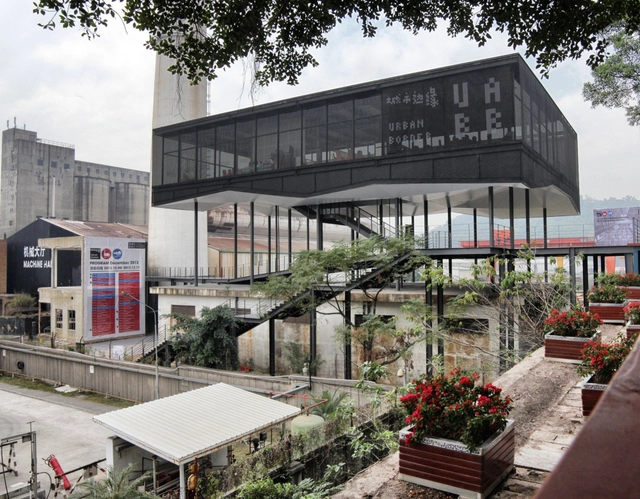
The 2015 Bi-City Biennale of Urbanism Architecture (UABB) has launched an open call for exhibitors. Co-organized by Shenzhen and Hong Kong, UABB is the only biennial exhibition in the world that is based exclusively on the themes of urbanism and urbanization. This year's edition, which will run from December 2015 to February 2016, will be based around the themes "Re-Living the City" and "Visions 2050 - Lifestyle & The City." All those who are interested in participating as an exhibitor should submit their proposals to the organizers of the Shenzhen curatorial team (here) and Hong Kong curatorial team (here) before June 30, 2015. See our past coverage on the 2013 UABB to learn more about the event.
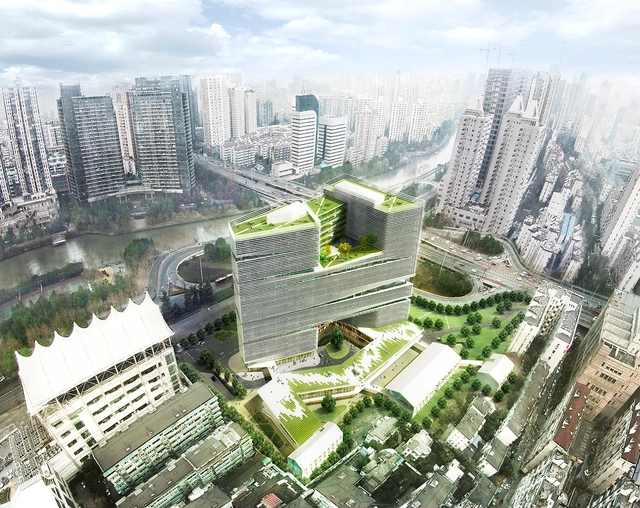
LYCS Architecture has won a competition to design urban headquarters for the Zhejiang Printing Group. Dubbed "The Corner of Hangzhou," their proposal is informed by the surrounding cultural context, and the distinctive highrise creates both a habitable thoroughfare and a landmark for the city.
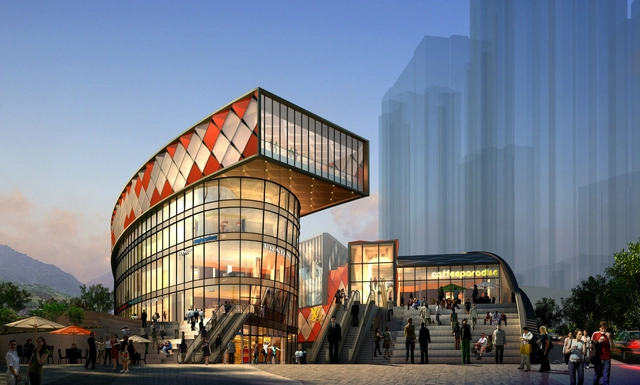
Sunlay Design Group's latest endeavor is a modern shopping center with heavy ties to China’s ancient cultural influences. Inspired by classical dragon mythology and the principles of feng shui, the Chengde Tianshan Retail Center will offer the Hebei province a mixed-use shopping experience that fuses contemporary form with traditional methodology. Construction is set to begin this summer.
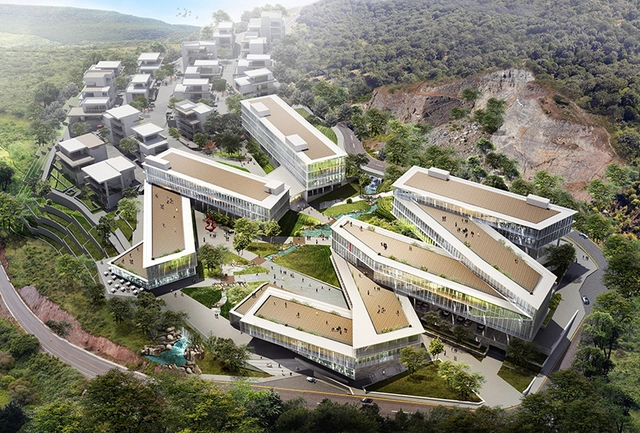
China-based firm PWD Architecture will soon break ground on Dali Creative Area, a mixed-use development in Dali City, in Yunnan province. The project took home first place in a 2014 design competition, and takes significant direction from the area’s landscape, employing a minimalist stepped-form that celebrates its setting. The development will include a hotel, restaurants, offices, retail and exhibition space. It is slated for completion in 2016.
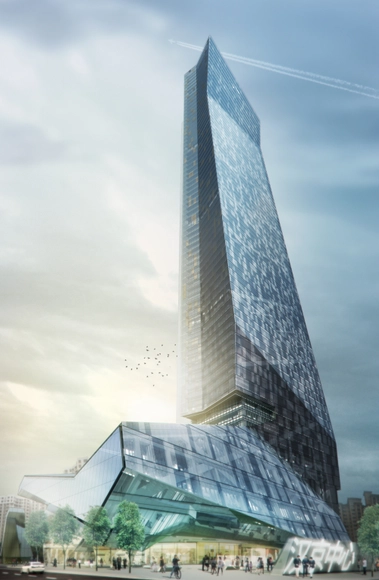
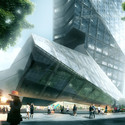
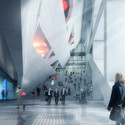
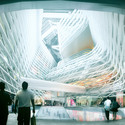
Construction is underway on a striking new tower by Morphosis Architects in Shenzhen. "A departure from conventional towers," as the practice describes, the "Hanking Center Tower" merges commercial retail with private office space through the folding of its steel structure. Beyond that, tenants are connected via a series communal sky gardens and a massive sun-lit atrium that occupies the building's core.









.jpg?1433216600&format=webp&width=640&height=580)
.jpg?1433216579 "© Shengliang Su")
.jpg?1433217035 "© Shengliang Su")
.jpg?1433216657 "© Xia Zhi")
.jpg?1433216416 "© Shengliang Su")
.jpg?1433216600)









.jpg?1429675171&format=webp&width=640&height=580)
.jpg?1429674959 "Courtesy of Nacasa & Partners")
.jpg?1429675159 "Courtesy of Nacasa & Partners")
.jpg?1429675014 "Courtesy of Nacasa & Partners")
.jpg?1429675103 "Courtesy of Nacasa & Partners")
.jpg?1429675171)

.jpg?1429208050&format=webp&width=640&height=580)
.jpg?1429208125 "© Xia Zhi")
.jpg?1429209154 "© Xia Zhi")
.jpg?1429208029 "© Xia Zhi")
.jpg?1429209086 "© Xia Zhi")
.jpg?1429208050)