Yamid Rivera

BROWSE ALL FROM THIS AUTHOR HERE

Colombian Bamboo According to Simón Vélez and Marcelo Villegas: Assemblies, Connections, and Structural Supports

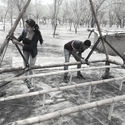
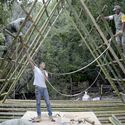
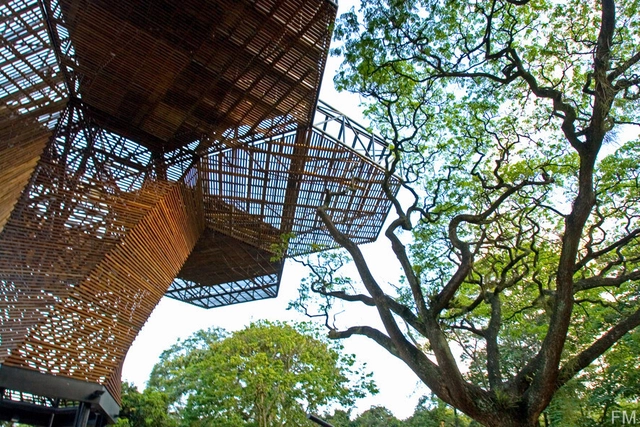
Originally titled "Colombian Bamboo: A Strategic Ally for the Sustainability of Tropical Ecosystems," architect Luca Bullaro reflects on the work of architect Simón Vélez and designer Marcelo Villegas with bamboo—often called vegetable steel—through new assembly methods, new connections, and various structural support systems.

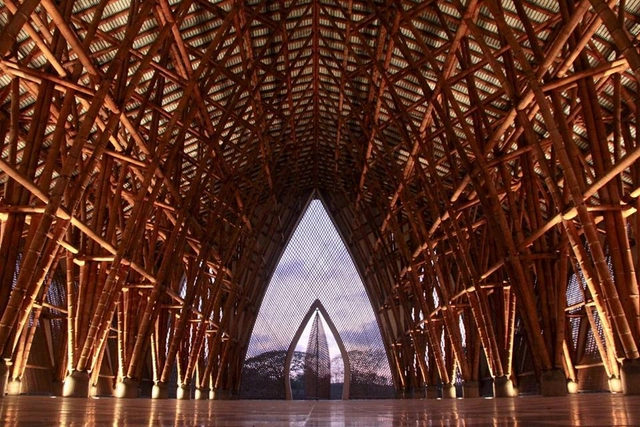
Simón Vélez, a Colombian architect recognized for his contribution to sustainable architecture, has earned an international reputation backed by outstanding works across the globe. With over forty years of experience in bamboo construction, he is a tireless traveler, inaugurating projects and exhibitions, and leading workshops and lectures.

Today, he seems to have entered a new phase of his professional life. At one point, Vélez remarked: "I want to focus on social housing, but on my own terms. I want to show that high-quality, affordable housing can be built using a hybrid technique of concrete, steel, and laminated bamboo. We have already opened a factory in Manizales to create the first prototypes."
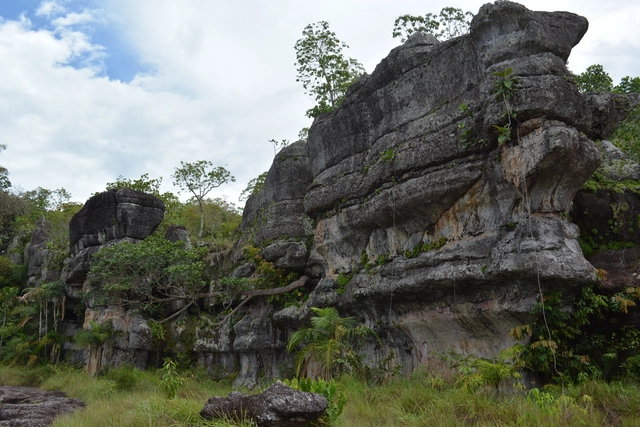
Colombia's Serranía de Chiribiquete National Park, New World Heritage Site

Spanning 4.2 million hectares—an area similar in size to Denmark—and making it the largest natural park in Colombia and the continent, the Serranía de Chiribiquete National Park has been declared a UNESCO World Heritage Site. Located in the heart of the Colombian Amazon, the park is one of the richest regions in biodiversity, history, and archaeology, safeguarding one of the world's most important wilderness areas.

A 50-meter-high stone amphitheater serves as the gateway to this natural sanctuary, where trees reach up to 20 meters tall. Its rocky, tabletop mountains—known as tepuis—are over 1.5 billion years old and rise to heights of 800 meters, equivalent to the height of the iconic Burj Khalifa in Dubai.

5 Projects for Post-Conflict Colombia

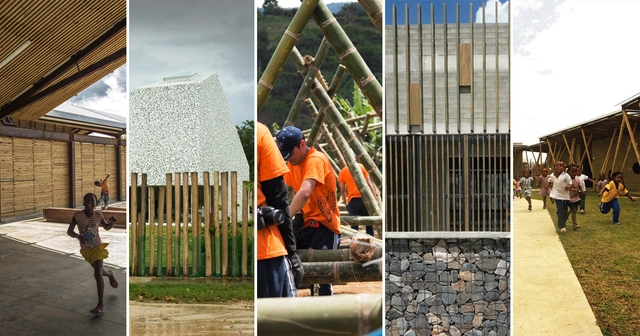
The need for both physical and mental reconstruction opens the door to various interpretations, highlighting the human capacity to adapt despite adversity: resilient individuals facing challenges in remote territories once constrained by armed conflict, oppression, and fear.

Post-conflict architecture is one of the major contributions to rebuilding a country that needs greater social awareness in this peace process. Redefining territories, preserving memory, and fostering a sense of ownership are the essential characteristics shaping these architectural spaces and reclaiming areas once marked by violence. Today, their symbolism plays an important role within many communities that find identity through architecture, proving that these remote locations in Colombia are now examples of unity and coexistence.

In light of this reality, we have selected five projects that have fostered a deep connection to the territory, offering flexible spaces that support new ways of building social fabric.

How to Design Semi-Permanent Buildings

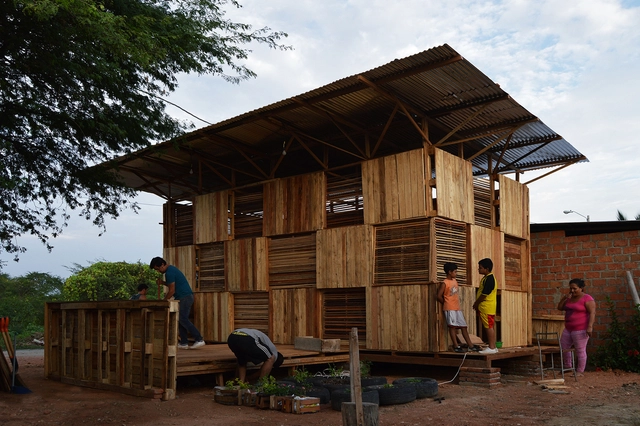
Year after year, natural disasters leave thousands of people homeless, forcing them to seek shelter as their only option. In many cases, cities are unable to address these crises due to a lack of resources. Furthermore, providing aid while preserving human dignity has become increasingly complex, rendering traditional solutions completely unviable.

In these moments, innovation and creativity in hands-on construction play a vital role, ultimately yielding faster, more efficient architectural models that can be rapidly replicated following natural disasters.

When designing semi-permanent architecture, certain principles must be followed. Below, we have compiled a set of tips and examples to guide this process.

How to Design Semi-Permanent Buildings - Imagen 8 de 4How to Design Semi-Permanent Buildings - Imagen 7 de 4How to Design Semi-Permanent Buildings - Imagen 3 de 4How to Design Semi-Permanent Buildings - Imagen 5 de 4How to Design Semi-Permanent Buildings - More Images+ 4

Bahareque, an earthquake-resistant construction technique in Colombia

The vernacular architecture of bahareque was one of the first seismic-resistant building technologies in Colombia. By the late 19th century, this construction method was widely used across many regions of the South American country, valued for its earthquake resistance, speed of construction, and low cost. This was well before brick and sand-cement mortar arrived in cities like Medellín and Bogotá, eventually spreading to the rest of the country.

This construction method arose after its performance was analyzed as a viable system for implementation in different regions with high seismic activity. Its application leverages local, context-specific materials, making it a prominent vernacular technique in Colombia. It characterizes much of the colonial architecture still found today in historic centers and towns with rich heritage.

Colombia to Have a New Herbarium for the Protection of Orchids

The orchid, or Cattleya trianae as it is scientifically known, is one of the most beautiful flowers. Its texture, combined with the variety of colors and species, makes this flower truly unique. It is estimated that Colombia has more than 3,500 species growing across nearly the entire country. Furthermore, the country has become the second-largest exporter of orchids in the world, behind only the Netherlands.

Colombia's first virtual herbarium of living orchid collections is a research project led by the Colombian Orchidology Society (SCO) with the support of the Humboldt Institute and the Corporation for Biological Research (CIB). The main objective is to establish and develop the virtual herbarium, backing it with a tissue bank. This initiative aims to promote and conserve the species through sustainable use as established in Colombia's orchid conservation plan.

Medellín Confirms That Environmental Pollution Is the Most Concerning in Colombia

On March 6, environmental pollution in Medellín, Colombia, triggered the highest alert levels. For three days, industrial production and driving restrictions (locally known as pico y placa) have been tightened. According to specialists consulted by the local newspaper El Tiempo, meteorological conditions are expected to make the situation “most critical” in two weeks.

In light of situations like this, air quality monitoring and control have taken on greater importance in Colombia. This is especially critical given that one in eight deaths worldwide is caused by air pollution, according to figures from the World Health Organization (WHO). In Colombia, 10,527 deaths and 67.8 million cases of related symptoms and illnesses occurred in 2015, as reported in 2017 by the National Planning Department following a study on the health costs of environmental degradation.

Save the City: Collective Mapping for an Urban Diagnosis of Barranquilla

The CitYzens Collective and the Arkco-CUC research group at the Universidad de la Costa (CUC) conducted a collective mapping exercise in the Plaza de la Paz, located in the historic center of Barranquilla, Colombia. The event took place on June 1, 2018, at this emblematic public square.

The initiative not only involved collaboration with urban design collectives like Colectivo 016, but also drew the participation of dozens of citizens and passersby. They made symbolic contributions to "Save Barranquilla" by mapping their experiences, identities, appropriations, uses, and collective imaginaries of the city.

Cartagena risks being removed from the UNESCO World Heritage list

The construction of a four-tower housing complex just steps from the historic center threatens Cartagena (Colombia)’s status as a UNESCO World Heritage site. The community is currently awaiting a judicial ruling on the Aquarela case, the name of the multi-family social housing (VIS) project.

According to statements by the Bolívar Business Council (Consejo Gremial de Bolívar)—the organization tasked with promoting competitive development in the city and department—the situation is delicate, as the advanced stage of construction complicates potential decisions. Given that the city is one of Latin America's primary tourist destinations, the lack of oversight from national and local authorities—who failed to act in accordance with the planning principles outlined in Article 2 of the Colombian Constitution—is difficult to explain.

Bogotá Through the Visual Chronicles of Wildlife

Thanks to its geographical and climatic characteristics, Bogotá has great potential for the development and enjoyment of nature tourism. The Colombian capital is bordered by the beautiful Eastern Hills, which connect with countless parks and trails that welcome visitors.

Among its natural wonders is the Sumapaz Páramo, the largest of its kind in the world. Exploring each of these places is undoubtedly an experience that few have the opportunity to enjoy and admire. As a result, numerous activities have sparked public interest in weaving together a city rich in environmental assets, including parks, rivers, wetlands, and gardens.

10 Colombian Projects Adapted to Their Landscape

The close relationship between architecture and landscape in Latin America is undeniable. This is due not only to the region's geographical, climatic, and ecological diversity, but also to how these countries have built and shaped their cities amidst progress and setbacks. Among these ongoing achievements is a growing respect for the landscape, an architectural language tailored to its context, and solutions designed for its diverse climates.

For this selection, we have chosen 10 projects in Colombia that have successfully adapted to their landscape, both in form and construction, across both urban and rural contexts.

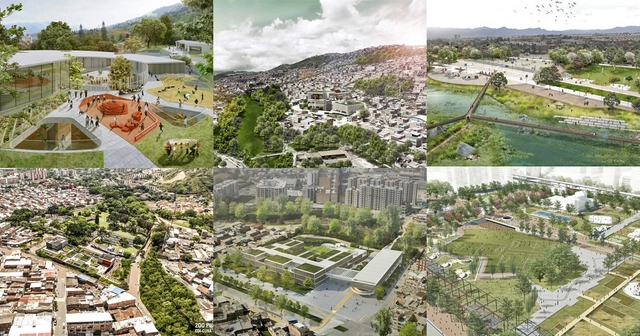
6 Award-Winning Architecture Competition Projects in Colombia You Should Know

"Architectural competitions represent the combination of the art of choosing and the craft of being chosen," says Roberto Fernández about an area of our discipline that is widely recognized as an excellent platform for firms and independent professionals to present their ideas as true manifestos. Meanwhile, in academic circles, competitions often serve as tools for formal, conceptual, and graphic experimentation.

These types of commissions undoubtedly inspire not only architecture and urban planning professionals but also the public as a key player in their evaluation. Whether or not these proposals are built, they demonstrate that we must constantly champion innovation, recognizing the immense effort behind these results. With this in mind, we have selected six award-winning projects that reflect the value of architectural competitions in Colombia.

8 Colombian Projects That Speak to Functionality and Interior Design

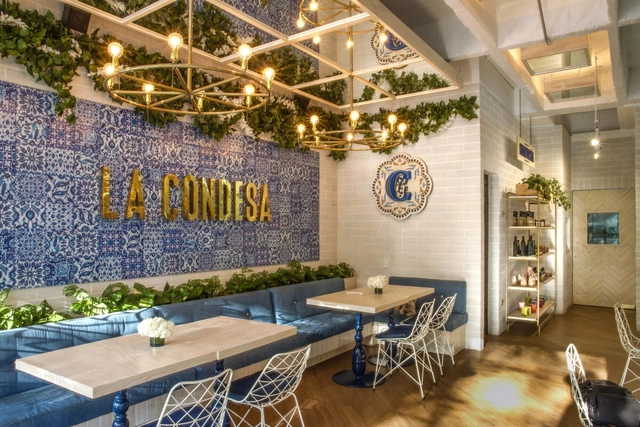
In interior design, striking a balance between aesthetic style and the functional needs of a project is essential. In this regard, it is fascinating to see the diverse solutions that Colombian architects and designers have recently proposed. We have selected eight local projects that demonstrate a compelling balance between functionality and aesthetics in interior design.

8 Colombian Projects That Speak to Functionality and Interior Design - More Images+ 4

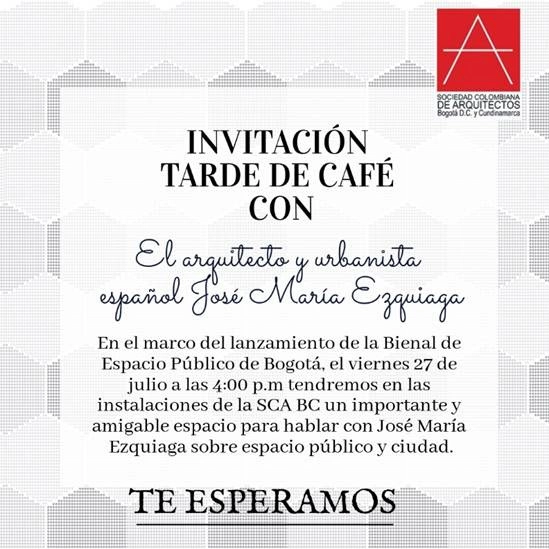
An Afternoon Coffee with Spanish architect José María Ezquiaga

As part of the launch of the Bogotá Public Space Biennial, we invite you to join us this Friday, July 27, at 4:00 p.m. for coffee with Spanish architect and urbanist José María Ezquiaga to discuss public space and the city.

How to Design Semi-Permanent Structures

Natural disasters continue to leave thousands of people homeless every year, forcing them to seek refuge without any alternatives. On many occasions, cities cannot cope with refugees, limiting their resources. In addition to this, the difficulties to sustain refugees in a dignified way, becomes increasingly complex, leading to the collapse of conventional strategies.

It is at this moment when innovation and creativity play an important role in construction practices, ultimately creating a quicker and more efficient construction model that can be replicated after natural disasters.

Undoubtedly, there are some principles that should be taken into account when designing a semi-permanent structure. Thus, we have gathered some tips and examples that you may find useful. 

How to Design Semi-Permanent Structures - Image 1 of 4How to Design Semi-Permanent Structures - Image 5 of 4How to Design Semi-Permanent Structures - Image 6 of 4How to Design Semi-Permanent Structures - Image 7 of 4How to Design Semi-Permanent Structures - More Images+ 3

Lina Toro, winner of the 4th Arquia Foundation and Royal Academy of Fine Arts Scholarship

Out of 41 applicants, Colombian architect Lina Toro has won the 4th New York Research Fellowship organized by the Arquia Caja de Arquitectos Foundation and the Real Academia de Bellas Artes de San Fernando, according to the Spanish foundation.

The jury unanimously decided to award the prize to Toro's project, "Pedagogical Conversations," recognizing it as a way to delve deeper into architectural teaching methodologies through "pedagogical conversations." "Pedagogical Conversations" is part of her doctoral thesis, "Pedagogies on the fringes: the conditions of the next architectural manifesto," developed within the Department of Architectural Design at ETSAM in Madrid, which seeks to highlight conversations with seminal and emerging figures of contemporary thought, art, and architecture.

Bicentenario Park, a project that helps stitch together an urban wound in Bogotá

Subscriber Access | 

In this project by El Equipo de Mazzanti, Independence Park (Bogotá) reclaims ground by expanding southward, covering a section of 26th Street in the Colombian capital.

Featuring an area of 7,257 square meters distributed across eight plazas, the site has become a key redevelopment space in the city center, where major thoroughfares converge. Nature, seating areas, architectural richness, and urban design transform a space conceived to "reconnect" the city, leveraging the site's native vegetation.

Barranquilla Begins Construction of 'La Fábrica de Cultura'

On June 15, construction began on the new 'Fábrica de Cultura' in Barranquilla, Colombia. The project will provide spaces and opportunities for various artistic activities, aiming to expand cultural knowledge through community interaction. The facility will offer courses and a diverse cultural program organized across different units.

According to the Colombian newspaper El Tiempo, the project was selected as a winner at the International Architecture Awards and will integrate with the city's heritage restoration efforts. Barranquilla Mayor Alejandro Char, along with Atlántico Governor Eduardo Verano and the Secretary of Culture, announced the start of construction. The 24-billion-Colombian-peso (USD 8.16 million) project will accommodate more than 1,000 students per shift.