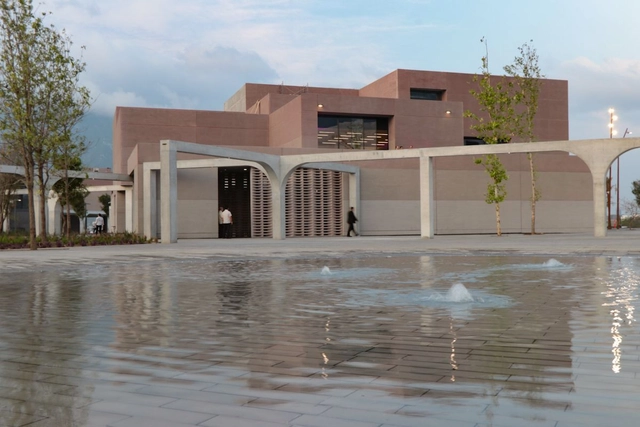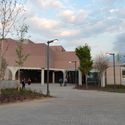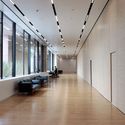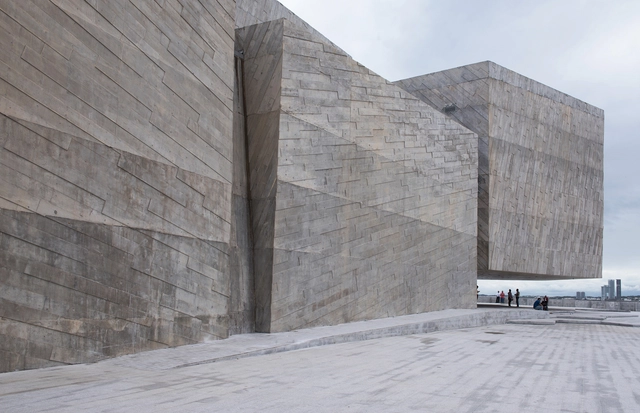
The Universidad de Monterrey in Mexico inaugurated its new gateway to the campus: the Estoa building, presenting a new face to the landscape on the western side of the city. The Estoa building is part of UDEM's Infrastructure Master Plan, which aims to create a pedestrian-friendly campus and a green lung for the western part of the city. Located on the west side of the campus, the building features approximately 90,000 square meters of construction, housing student and community spaces, UDEM's public-facing offices, and continuing education facilities.
As part of the 2019 Chicago Architecture Biennial, the Graham Foundation hosted Tatiana Bilbao's exhibition, "Unraveling Modern Living," featuring an immersive installation that transforms a former domestic space to explore new forms of collectivity. Through this intervention, Bilbao reconfigures the existing architecture to create a garden, a space for knowledge, a space for dialogue, and a space for gathering, in collaboration with the Sweet Water Foundation, Colectivo 1050°, MAS Context, and Lurie Garden, among others.
Eight years ago today, we began this adventure called ArchDaily México, sharing the same mission as the global ArchDaily platform: to continue providing inspiration, knowledge, and tools to architects, but through a local lens, recognizing the value that national talent has to offer to the world.
I am thrilled to share a very important milestone with all of you. Today, August 3, 2021, ArchDaily Mexico celebrates its 9th anniversary! Indeed, nine years ago, with great excitement and high expectations, we launched the Mexican edition of ArchDaily—already the most visited architecture website in the world. Our mission remained to deliver inspiration, knowledge, and tools, but with a dedicated focus on this country's architects, who over these years have enabled us to continue serving as their primary tool for international and Mexican architectural inspiration and knowledge.
By definition, architecture is the art and technique of planning, designing, constructing, and modifying the human habitat. However, my own professional career has constantly forced me to confront the same question: if you are an architect and you don't design, are you still an architect?
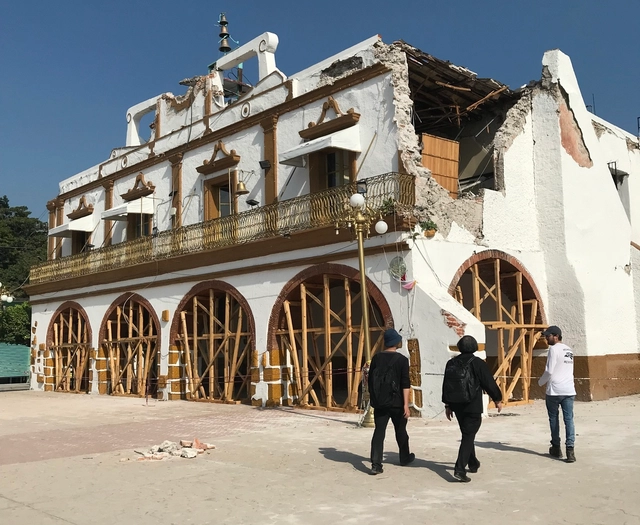
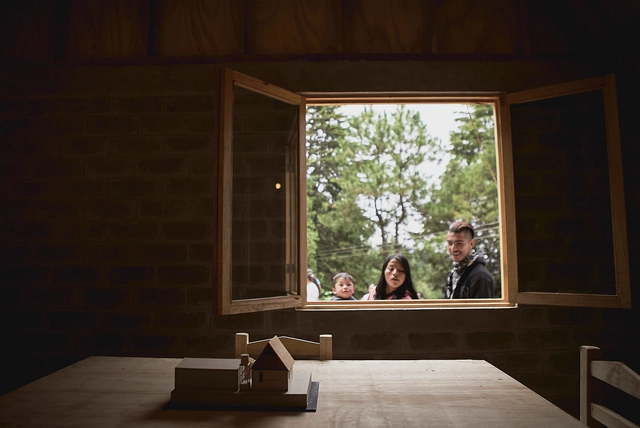
Nearly a year after an earthquake struck Mexico City and several Mexican states on September 19, 2017, we are beginning to see the fruits of the many efforts that arose in response to the slow—and at times nonexistent—government reaction, with citizens taking it upon themselves to organize and help. Various associations, foundations, and collectives joined the cause, and the architectural community was no exception.
This gave rise to ReConstruir México, driven by the determination to put architectural expertise at the service of those most in need, assisting in the reconstruction and conservation of affected heritage by providing technical support and advice, as well as designing and proposing solutions. However, goodwill alone was not enough; a multidisciplinary, integrating entity was needed to channel these efforts into physical housing for the victims. PienZa Sostenible stepped into this role, coordinating the process as a non-profit organization. As a platform for study, analysis, critique, engagement, and implementation addressing Mexico's current situation, PienZa Sostenible promotes outreach and drives projects aimed at improving quality of life, social development, economic growth, and environmental sustainability in line with the United Nations 2030 Agenda for Sustainable Development.
The official inauguration for Foro Boca by Rojkind Arquitectos was held in Veracruz, México, gathering members of the local community as well as special guest Bjarke Ingels for a concert by renowned violinist Joshua Bell and the city's Philarmonic Orchestra.
Last week, Mexico received a visit from 2014 Pritzker Prize winner Shigeru Ban, who, following September’s devastating earthquakes, reached out to the country in order to offer support through his experience with humanitarian projects.