Architect, urbanist, and Content Editor at ArchDaily, covering news and developments in architecture and the built environment. Editorial work focuses on the Gulf region and the Middle East, exploring contemporary regional architectural languages and their relationship to local contexts.
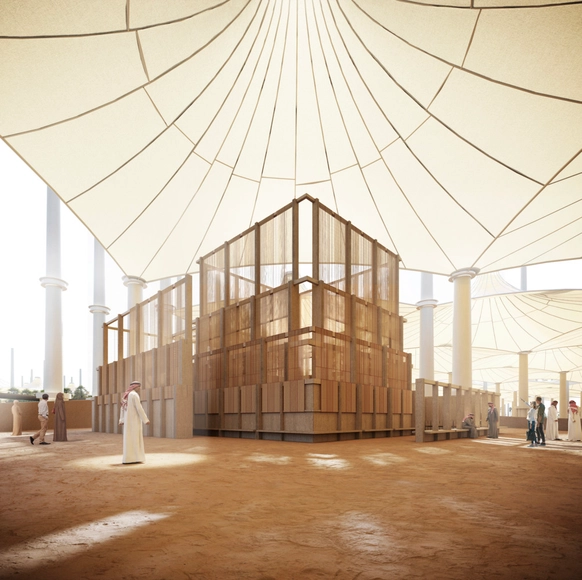
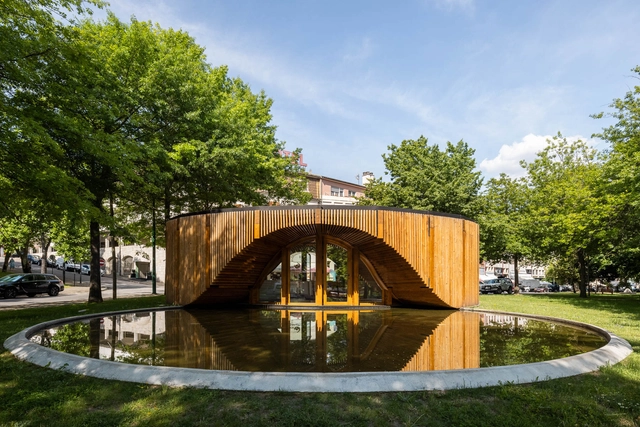
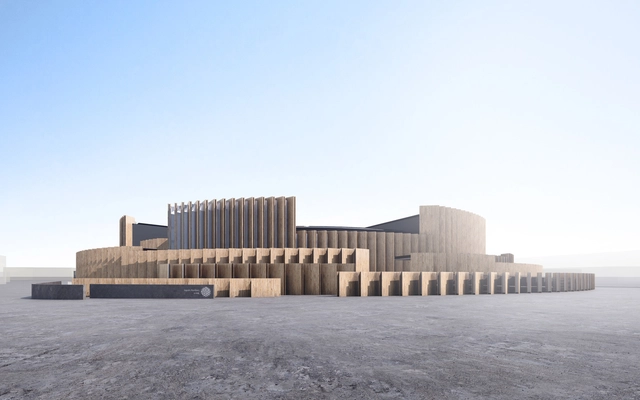
The Diriyah Biennale Foundation has announced Lebanon-based EAST Architecture Studio, in collaboration with artist Rayyane Tabet and engineering firm AKT II, as the winners of the inaugural AlMusalla Prize, a significant new architectural competition launched as part of the Islamic Arts Biennale. Their winning design, a modular structure inspired by regional weaving traditions, uses sustainable materials derived from local date palm waste, including palm fronds and fibers. After the four-month Biennale, the Musalla will be dismantled and reassembled at a new location.
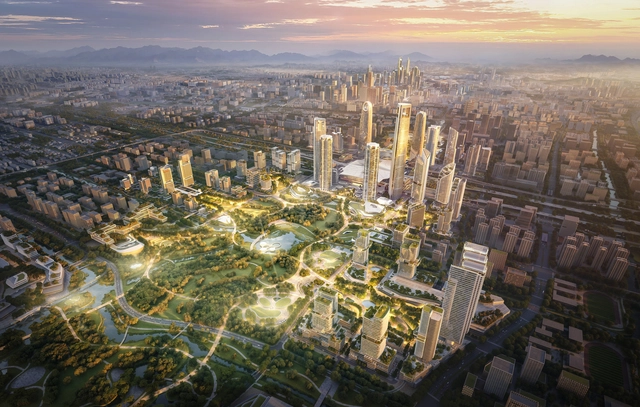
Skidmore, Owings & Merrill (SOM) and GAD have been chosen to design the Hangzhou Science and Technology Innovation Central Business District (CBD) in Hangzhou, the capital of Zhejiang province, China. Their proposal outlines a versatile regional hub that merges advanced transit systems with the traditional Jiangnan landscape, establishing a framework that promotes creativity and the growth of the tech sector.
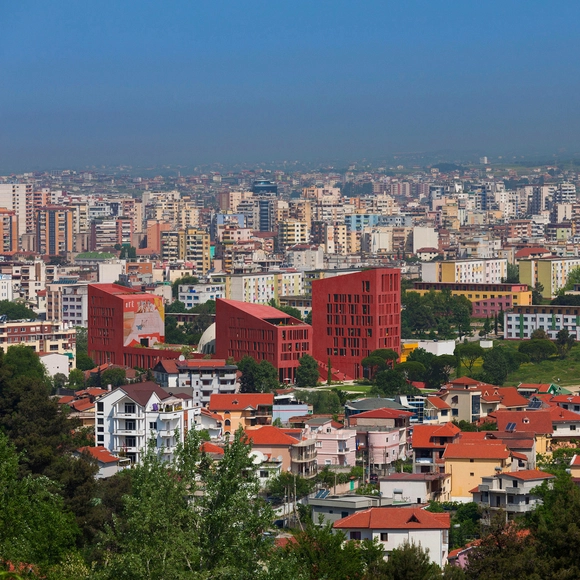
Oppenheim Architecture has unveiled the design for the College of Europe's new campus in Tirana, Albania. This project introduces the first "purpose-built" campus for the College, following its established campuses in Bruges, Belgium, and Natolin, Poland. The College of Europe, created under the initiative of the Hague Congress, is dedicated to promoting European ideals of unity, cooperation, and integration. This expansion to Tirana aims to reflect both a continuation of this mission and an opportunity for the College to establish a presence in a historically significant city.
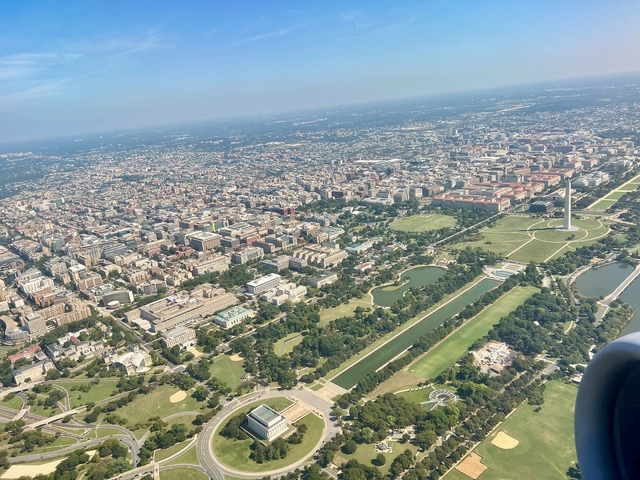
In a surprising development, internationally renowned architect Kengo Kuma has been named the new lead designer for the highly anticipated Global War on Terrorism Memorial on the National Mall in Washington, D.C. The announcement follows the departure of previous designer Marlon Blackwell, who was originally selected in July 2023.
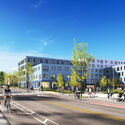
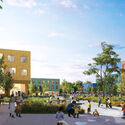
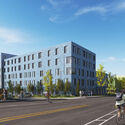
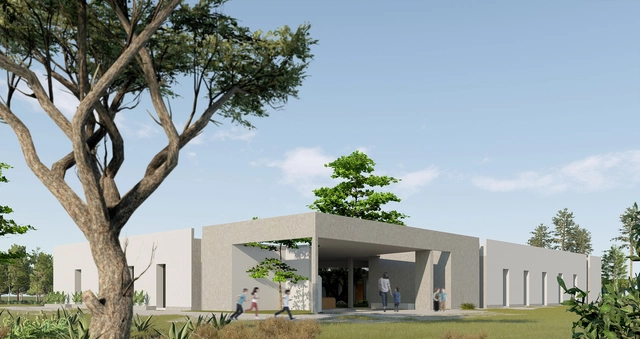
MVRDV, in collaboration with JGE Architects, landscape architects Copley Wolff, and Langan Engineering, has developed a masterplan for the redevelopment of Faneuil Gardens, a public housing site in the Brighton neighborhood of Boston. This project, commissioned by The Community Builders in partnership with the BostonHousing Authority, aims to replace the outdated 1940s apartment complex with five contemporary buildings that incorporate mixed-income affordable housing, artist live-work spaces, and significant green spaces. At the center of the redevelopment is a new community center, located along a public boulevard that runs through the heart of the site.
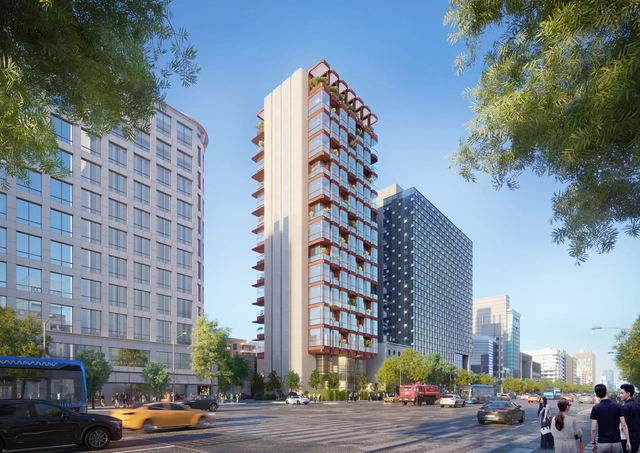
Foster + Partners have just unveiled designs for a new live-work building in Seoul, South Korea, which aims to redefine business hospitality with a personalized approach. This structure is set to accommodate professionals seeking a mixture of work and leisure in an urban environment. With an emphasis on comfort, functionality, and well-being, the building incorporates spaces designed for hosting and entertaining, along with dedicated meeting and negotiation rooms. It also features state-of-the-art wellness facilities, making it a unique setting for both work and relaxation. The project consists of twelve private units, each occupying an entire floor, providing a unique living experience tailored to individual needs.
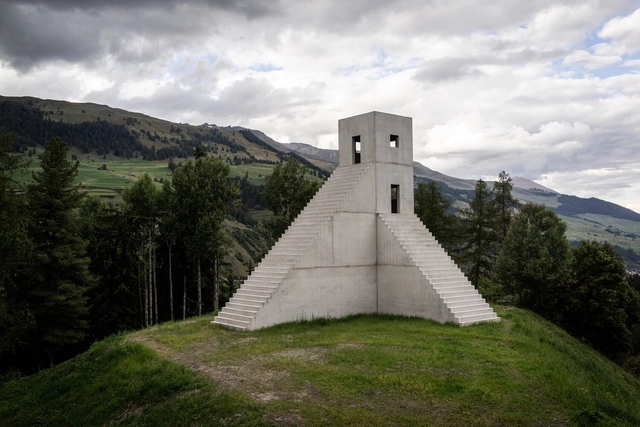
House to Watch the Sunset, concrete. Image Courtesy of Alma Zevi
Alma Zevi has developed a book offering an intimate and definitive account following the career of Swiss sculptor, painter, and architect Not Vital. This comprehensive book delves into Vital's pomading life, seeking and building homes in various cities, from Paris, New York, Beijing, and Rio de Janeiro. The book explores the artist's seminal sculpture practice and architectural projects, featuring a catalog of over 450 sculptures and related works. Drawing on archival material and personal interviews with the artist, Zevi seeks to provide a portrait of his career to date.
In his book "Curation: The Power of Selection in a World of Excess," Michael Bhaskar defines curation as "using acts of selection and arrangement (but also refining, reducing, displaying, simplifying, presenting, and explaining) to add value." Originating from the Latin word curare, meaning to take care of, the curator's role in dissecting our understanding of the world around us cannot be overlooked. Over time, as the definition morphs into different bodies, the practice of curation continues to evolve, filling the roles of caretakers of our built environment and thinkers of different forms for the overall bettering of society.
Tourism, as an urban and architectural phenomenon, has grown to encompass more than just sightseeing; it engages visitors with the social, cultural, and economic narratives that cities tell through their built environments. In celebration of World Tourism Day 2024, this collection of city guides highlights the role of architecture in shaping the urban tourism experience. Today, cities around the world stand as testaments to human ingenuity, historical preservation, and modern innovation. In fact, each city's versatile architecture offers a window into a city's identity, drawing millions of visitors each year who seek to understand how these spaces shape everyday life and collective memory.
In 2024, many cities have seized the world's collective imagination, each with its unique narrative waiting to be uncovered. Whether one finds themselves meandering through London, admiring Paris, or immersing in the cultural treasures of Sharjah, the story is always there to be unraveled. From Amsterdam's canals to Cairo's rich historical layers, Barcelona's avant-garde architecture, the liveliness of Santiago to the ancient marvels of Rome, and the diverse Istanbul to the bustling Bangkok – each city serves as a testament to the enduring spirit of human civilization.
In celebration of World Tourism Day, it's important to highlight the crucial role that tourist information points (TICs) play across Europe. These centers provide essential services, from maps and local advice to promoting sustainable travel. Strategically located at major transit hubs and landmarks, TICs ensure that visitors receive personalized guidance to enhance their travel experience. According to the World Tourism Organization (UNWTO), Europe welcomed an estimated 585 million international tourists in 2023, underscoring the importance of efficient, localized visitor support. TICs have adapted to this surge by offering both in-person and digital services, helping tourists make informed decisions about their upcoming journeys.
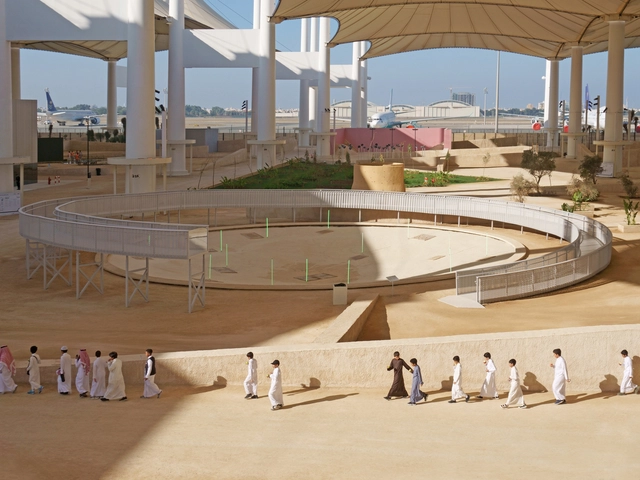
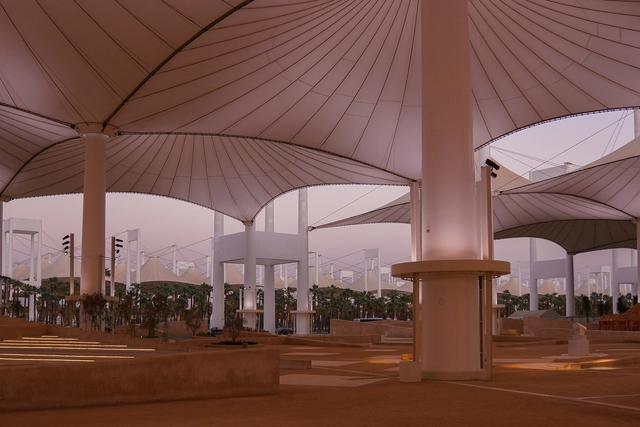
The 2023 Islamic Arts Biennale at the Western Hajj Terminal of King Abdulaziz International Airport. Image Courtesy of Diriyah Biennale Foundation
The Diriyah Biennale Foundation has revealed the theme and title for the 2025 Islamic Arts Biennale: And all that is in between. Scheduled from January 25 to May 25, 2025, at the Western Hajj Terminal of King Abdulaziz International Airport in Jeddah, this second edition will explore how faith is experienced, expressed, and celebrated through the acts of feeling, thinking, and making.
Rendering of the Japan Pavilion. Image Courtesy of Ministry of Economy, Trade and Industry
The Japan Pavilion at Expo 2025 in Osaka, designed by Nikken Sekkei Ltd, centers on the theme "Between Lives," emphasizing cycles of transformation that shape life across plants, animals, and societies. It illustrates how, as entities approach the end of their roles, they transition into new forms, passing on elements of their existence. The Pavilion reflects this continuous cycle, demonstrating how the world operates through countless interconnected loops.
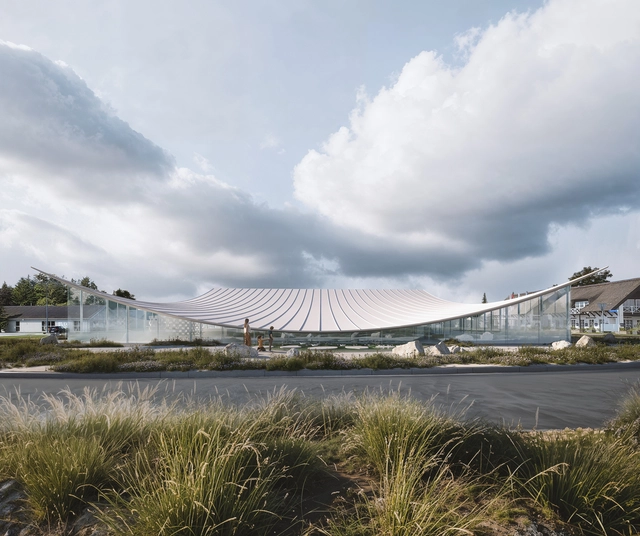
Bjarke Ingels Group (BIG) is leading the transformation of a former supermarket into the new Museum for Paper Art in Denmark's North Jutland region. With paper art deeply ingrained in Danish cultural heritage, symbolized by Le Klint's folded lampshades and H.C. Andersen's intricate paper cuttings, this renovation and expansion aim to elevate the museum's profile and double its visitor numbers. The design will celebrate paper as both an art form and a craft, extending the museum's role in promoting this unique heritage.
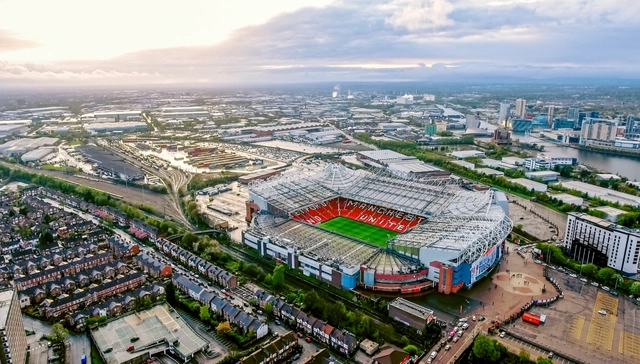
Foster + Partners has just announced its upcoming appointment by Manchester United to lead the development of a masterplan for the Old Trafford Stadium District, focusing on club-owned land surrounding the current stadium. The goal is to create a world-class football destination for Manchester United fans, integrated with a broader vision for a mixed-use development that benefits the local community. This transformation aims to attract new residents, increase job opportunities, and establish the area as a vibrant hub for visitors from Manchester, across the UK, and beyond.
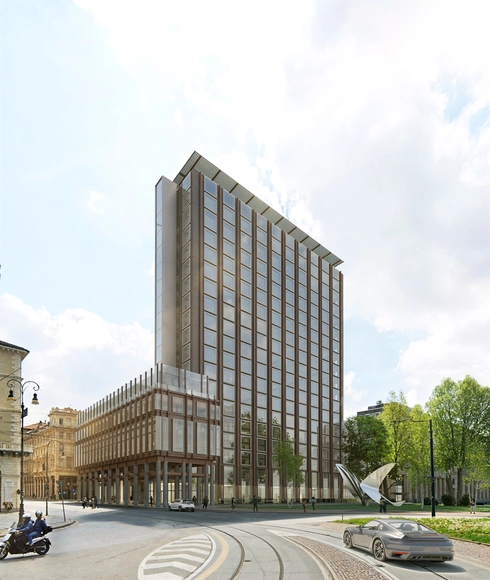
CRA-Carlo Ratti Associati, in partnership with real estate group IPI, has revealed plans to transform the iconic modernist Palazzo Micca in Turin, Italy. Originally the headquarters of RAI, Italy's national broadcaster, the 19-story building will undergo a comprehensive adaptive reuse project. A significant feature of the redesign is the creation of an elevated public plaza at 26.5 meters, offering views of Turin's Baroque rooftops, the surrounding hills, and the Alps. The project also integrates sustainable design principles by converting parts of the office spaces into residential units and reusing existing materials.
The India Autism Center (IAC), situated in Sirakole, West Bengal, represents a new perspective in accessible design and inclusivity. Designed to meet the specific needs of individuals with autism spectrum disorder (ASD) and related conditions, the center embodies a comprehensive approach to neurodiverse living. Developed by Practice Design, an architectural firm based in Mumbai and Kolkata, the 52-acre project is expected to be completed by 2030. It aims to create a supportive community where individuals with autism can realize their full potential through a variety of tailored services.