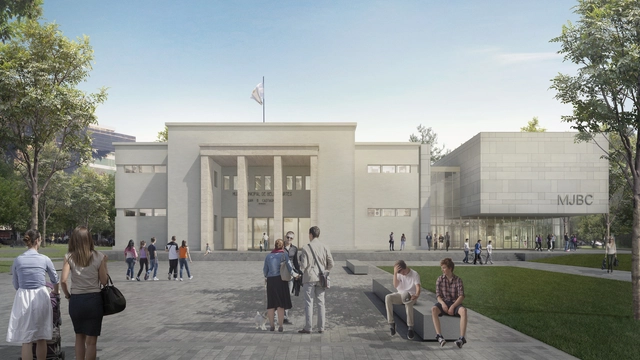
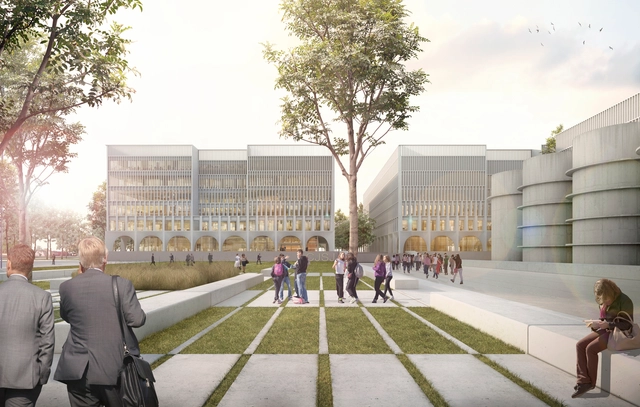
Since the mid-20th century, the Castagnino Museum has established itself as one of Argentina's most important cultural spaces. The historic building by the architectural firm Hérnandez Larguía-Newton (1937) was built in a privileged setting, conceived as the gateway to the city—a condition that will be further emphasized by the new intervention.
Cortesía de Pasto Arquitectos & Carballo- Errasti Arquitectos
On July 9, 2018, the National Ideas Competition for the San Juan Judicial City was launched. The goal was to generate ideas for its physical realization, addressing the exponential growth of institutional structures in recent years and the proliferation of their offices, which has led to fragmentation due to the lack of a single space to house them.
Vertebrado-Arquitectura Paisajista B + Godó Diseño (CAMMEC)- Museo de la Industria
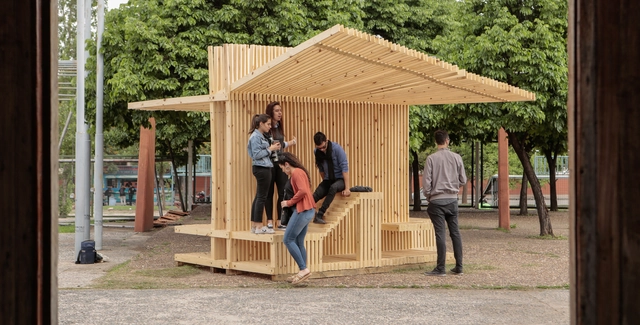
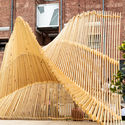
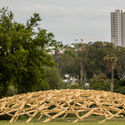
Jointly organized by the Cámara de la Madera, Mueble y Equipamiento de Córdoba (CAMMEC) and the Faculty of Architecture, Urbanism, and Design at the Universidad Nacional de Córdoba, the 'Toco Madera XL'workshop emerged within the framework of the Second Design Biennial in Córdoba, Argentina, with the primary goal of promoting the use of wood.
Nine teams made up of more than 200 students and 50 professors designed installations using this material exclusively, which were then placed in various public spaces across the city. The initiative sought to showcase and highlight the regional timber industry, positioning the city as a benchmark for local and international design.
Exploraciones Urbanas is a workshop that invites reflection on how to transform the contemporary city through dialogues between cities. The proposal aims to bring together faculty and students from various Argentine universities to share knowledge regarding common issues and challenges, while creating a space for reflection on approaches to urban intervention.
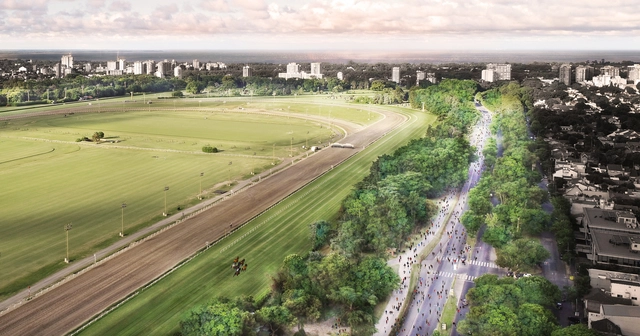
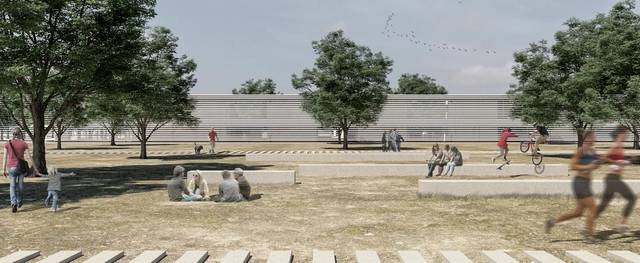
The project emerged as an opportunity to increase accessibility to Buenos Aires's Hipódromo de San Isidro—currently privately managed—through minimal interventions. By creating a linear park around the perimeter, the proposal makes this urban green lung more inclusive, transforming it into a social hub that enhances both the environment and quality of life.
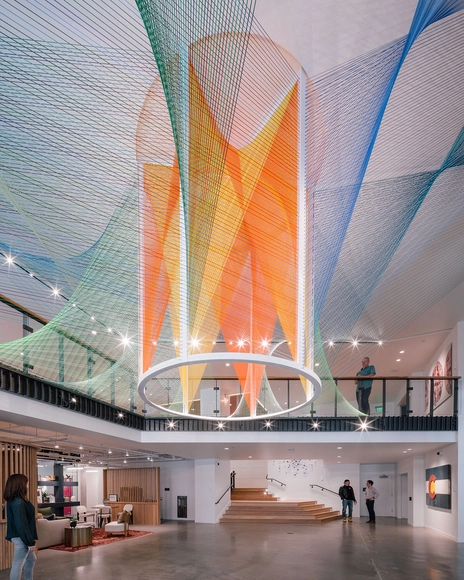
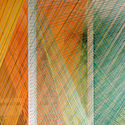
The artwork Corolla by artist Inés Esnal is inspired by the rich and vast natural landscape of Colorado, where it is currently on display at The Coloradan building in Denver. The installation interprets Colorado's state flower, “the blue columbine,” as a network of vibrantly colored cords, where warm central tones and cool hues at the outer edges evoke the flower’s pollen and petals. Viewers are invited to explore the piece through their own movement, which triggers and unfolds multiple perspectives and optical effects.
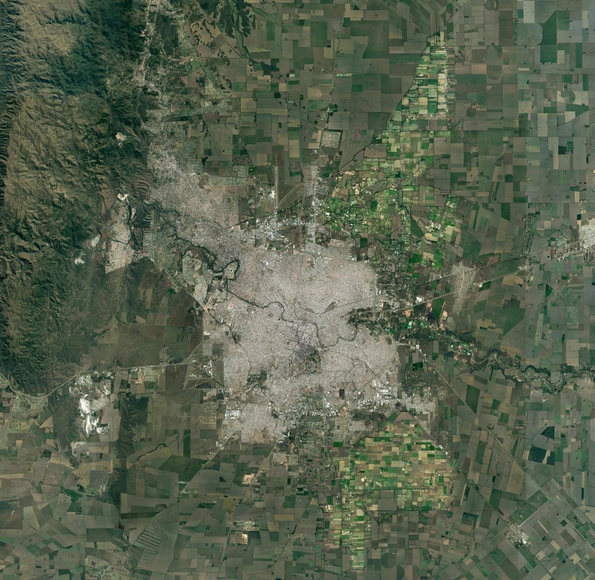
"The Metropolitan Rural Landscape" is a compendium that presents diverse, intentional perspectives on metropolitan rural territory. These viewpoints aim to highlight and open a discussion on the challenges and potential of these spaces. Below are some excerpts from the project:
Teatro del Libertador General San Martin. Image Cortesía de Natacha Escarguel
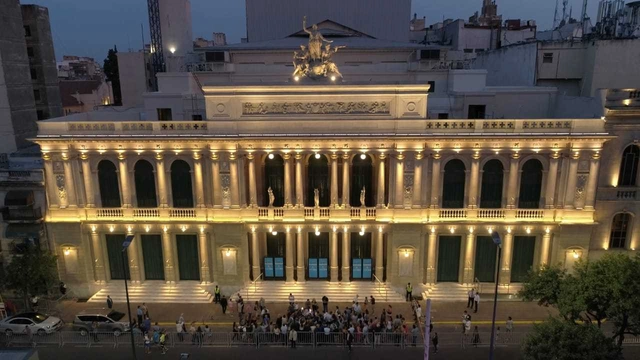
The construction of theaters in the Province of Córdoba, Argentina, was closely tied to the second wave of immigration that arrived between 1880 and 1930, alongside the expansion of the country's railway network. Today, the city boasts a large number of theaters, most of which date back to this period and form an integral part of Córdoba's cultural heritage, despite having suffered for many years from the neglect of successive governments.
Cortesía de Arq.Bravo Nieto Ralph Tomas y Godoy Richard Marcelo
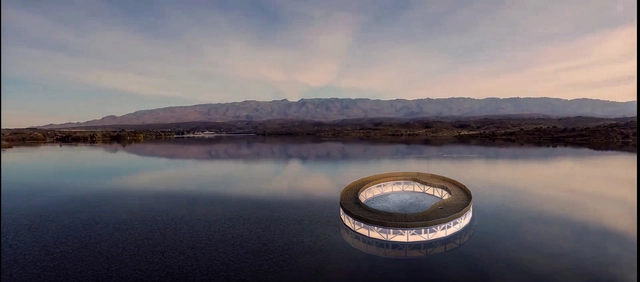
In December of last year, the provincial government of San Luis, Argentina, alongside San Luis Agua, launched the Portales de los Lagos Provincial Ideas Competition. The objective was to design an icon to identify and showcase a key local natural resource: water. Read on to discover the first-prize-winning project in the words of its authors:
How did a house designed by the world’s most renowned engineer—the Frenchman Gustave Eiffel, designer of the tower that bears his name in Paris—end up in Argentina?
How did this structure settle in one of Córdoba’s most culturally active neighborhoods, only to open its doors a century later as a cultural space thanks to the intervention of local residents?
Vista desde parque. Image Cortesía de Guillermo Canutti
On November 15 of last year, the national ideas and preliminary design competition for the Norpatagónico Hospital in Neuquén was launched. Organized by the provincial government through the Ministry of Health and the Ministry of Economy and Infrastructure, the competition was endorsed by the Argentine Federation of Architects (FADEA) and sponsored by the College of Architects of Neuquén Province.
The site—where the objective was to build a facility that provides high-complexity services while connecting with the natural environment—is located on the Neuquén plateau and spans an area of 32,700 square meters. First prize was awarded to La Plata-based architects Guillermo Ariel Canutti, Bernardo Luna, Clara Gallardo, Agustín Ichuribehere, and Fernando Sebastián Fariña. Read on to discover the project in detail below.
It seems almost impossible to imagine that a single public initiative could have spawned most of the national highways we have today in Argentina, established tourism as an economic driver for the country, consolidated the national oil company YPF against foreign competition, and driven a large part of the development of Argentine modern architecture.
Yet it is entirely plausible when we look at one of the largest territorial interventions in the country's history—a vanguard of modernity that established the automobile as a mass means of transportation in our region.
Perspectiva. Image Cortesía de Arquitectos Rodrigo Schiavoni y Adán Yenerich
Rodrigo Schiavoni and Adán Yenerich, founding partners of SY arquitectos, have won the open competition organized as part of the eighth International Congress of the Spanish Language, held in the city of Córdoba from March 27 to 30, 2019. This competition called for the design of an urban-scale commemorative landmark to serve as a civic symbol.
Organized by the Córdoba Province Chamber of Tourism and open to artists, designers, and architects, this interdisciplinary competition called for the creation of urban-scale pieces to intervene in the public space of a prominent sector of the city: a portion of the historic founding district located just steps from the Jesuit Block, a site designated as a World Heritage Site by UNESCO.
via Wikipedia user: Poiche Licensed under CC BY 2.0
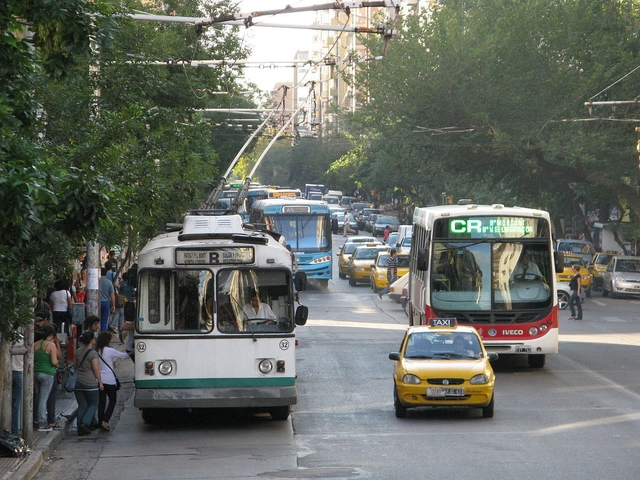
Since the mid-twentieth century, Latin American cities have undergone metropolization processes in which transportation has been heavily impacted by the exponential growth of private vehicle use. This is driven by rapid, unregulated urban sprawl that causes cities to spread extensively across the territory. This physical expansion is compounded by deficient public transit management and weak domestic socioeconomic conditions, both of which severely constrain the development of transportation systems.
Córdoba, Argentina's most populous city after Buenos Aires, is a prime example of this paradigm, featuring one of the largest urban footprints in the world at 576 square kilometers (excluding its metropolitan area). Its physical structure is radiocentric, with transport corridors converging in the city center, creating a dense core where services are concentrated and an ever-expanding periphery.
Due to both the growing tourist demand in the city of Salta and the population's need for equipped recreational open spaces, the Government of Salta—through the Salta Cable Car Complex and the Salta Architects' Association—will expand the cable car system to connect the summits of Cerro San Bernardo and Cerro Delta.
Today, when it comes to urban planning, the design and pursuit of inclusive cities is generally promoted. That is, fostering collective environments where all sectors of society can thrive.
How much easier would this task be if spaces were created where different segments of society could express their needs regarding how they live?
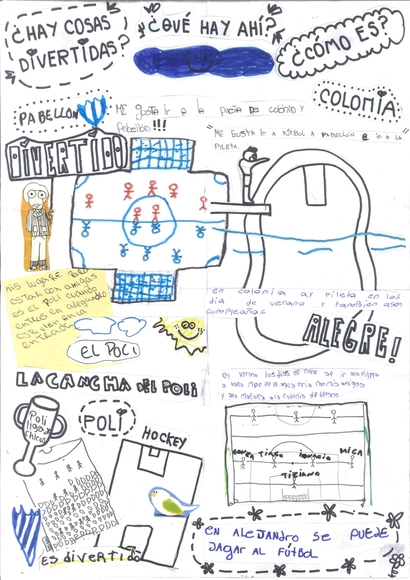
“Leo Leo! Que Ves? La ciudad contada por los niños y las niñas” is a project that originated in the city of Córdoba in 2017, within the framework of the artistic and cultural activities program of the Undersecretariat of Culture at the National University of Córdoba. It continues to develop activities such as “Ciudad niñez-ca,” led by Paola Antonietti and workshop facilitators Camila García Reyna, María Paz Pérez Roque, Rocío Maldonado, Gabriela Soto, and Matias Zanetti, alongside FAUD's Urbanism 1A department and the City and Territory Studies Workshop.
We explore this project through the words of its creators.

.jpg?1556581837)