Architect and Master`s Degree in Architectural Design. Interested in the history of architecture, education and design.
Twitter / Instagram: @j_garcialibrero
The Ministry of Public Works, through the Directorate General for Architecture, Housing, and Land, in collaboration with the Higher Council of Architects' Associations of Spain (CSCAE) and the Arquia Foundation, has announced the 14th Spanish Biennial of Architecture and Urbanism (XIV BEAU) for the 2016–2017 period. This edition is supported by the Santander City Council, the Botín Foundation, and the Official Association of Architects of Cantabria.
Under the theme More Inhabiting, More Humanizing, this 14th edition of the Spanish Biennial of Architecture and Urbanism aims to emphasize the concept of "inhabiting" as the foundation of architecture and the humanization of the city. This concept is defined not only by various functional programs but also by the quality and character of the spaces themselves.
https://www.archdaily.com/1094618/call-for-entries-open-for-the-14th-beau-the-spanish-biennial-of-architecture-and-urbanismJavier García Librero
Once again, the EUROPAN competition for urban and architectural ideas—which aims to deepen knowledge and research in the fields of habitat and urban planning—has highlighted the high caliber of Spanish architecture and its young architects. Through their hard work and dedication, these professionals deliver outstanding proposals with high levels of creativity, providing coherent and effective solutions to the contemporary challenges facing our cities.
Indeed, the jury for this latest edition of EUROPAN 14 awarded five first prizes, seven second prizes, and ten special mentions to projects by young architects under 40 submitted for the Spanish sites in this cycle: Alcoy, Barcelona, La Bazana, Madrid, Playa de Palma, and Torrelavega. A total of 165 teams submitted proposals in Spain.
https://www.archdaily.com/1114356/young-spanish-architecture-triumphs-at-europan-14Javier García Librero
The Metropolitan Housing Observatory of Barcelona, established to provide both the public and public administrations with the information and tools necessary to evaluate and design housing policies, has released the first results of its work conducted during 2017.
The report reveals concerning results, shedding light on the complex and problematic reality faced by many residents who find it difficult or simply impossible to afford the high rents currently being reached in Barcelona and virtually all other Spanish cities.
https://www.archdaily.com/1114352/barcelona-residents-spend-up-to-43-percent-of-their-income-on-rentJavier García Librero
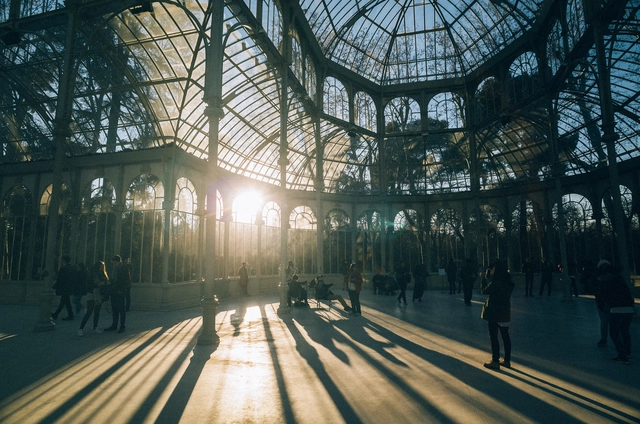
The Spanish Historical Heritage Council has approved the nomination of the Paseo del Prado and the Retiro for potential inclusion on the World Heritage List. This nomination will be officially submitted to UNESCO by Spain before February 1, 2019, and will be reviewed and evaluated by the World Heritage Committee in 2020.
The property proposed for inscription is located in the heart of Madrid and can be classified as a designed cultural landscape that has evolved over the centuries. Its origins lie in the explicit desire to provide the city with a place to enjoy nature without leaving the city—a vision later expanded to include a core Enlightenment goal: disseminating the Arts and Sciences for the education and instruction of the public, without class distinction.
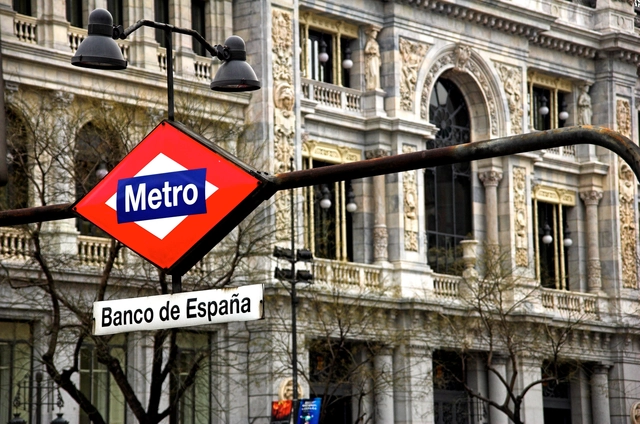
In 2019, Madrid Metro (Spain) will mark 100 years since the opening of its first line, which ran between Puerta del Sol station and the station located at the Cuatro Caminos depots. Designed by architect Antonio Palacios, the depots are currently at risk of demolition.
To commemorate this milestone, Madrid Metro launched a public call for ideas last November to design a logo that will serve as the corporate image for all centennial celebrations.
https://www.archdaily.com/1114309/architect-azucena-herranz-wins-the-competition-to-design-the-logo-for-the-100th-anniversary-of-the-madrid-metroJavier García Librero
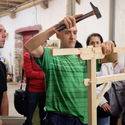
Last May, the Canary Islands International Environmental Film Festival (FICMEC) celebrated its twentieth edition in Garachico, a small coastal town in northern Tenerife. On this occasion, a group of students from the School of Architecture at the Universidad Europea de Canarias participated in the festival by designing and constructing a series of four ephemeral architectural installations that boldly colonized iconic spots along Garachico's waterfront promenade.
Through four interventions, the students transformed the promenade with the dual goal of raising visibility for the festival and increasing public awareness of the impact of our daily habits on the environment.
Explore the proposals below.
https://www.archdaily.com/1114321/four-ephemeral-installations-bring-visibility-to-ficmec-2018-in-tenerifeJavier García Librero
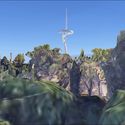
Coexist is the new work by Erik Harley, an audiovisual artist and urban studies expert from the University of Barcelona, created for Biel Blancafort, a Spanish music producer based in Barcelona.
The music video uses digital imagery from Google Earth paired with electronic music to explore the built condition of our globalized world and the way we understand the environment as we construct and digitize it. Theoretically grounded in the ideas of British geographer and social theorist David Harvey, the video critiques the continuous and unlimited growth of our cities, which leads to design solutions driven by financial arguments and executed rapidly while the next development is already being planned.
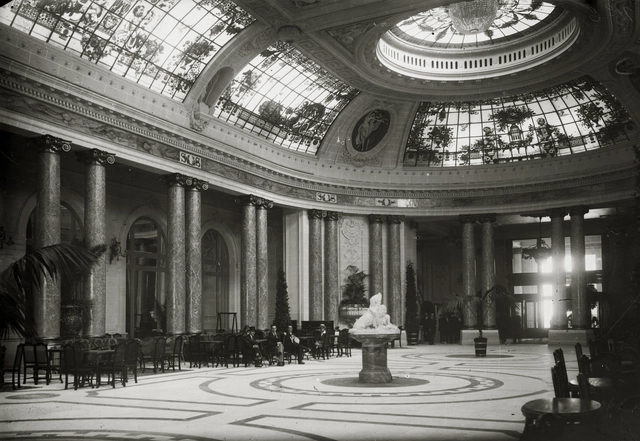
Interior de Kursaal. Image Cortesía de MUGAK Bienal de Arquitectura
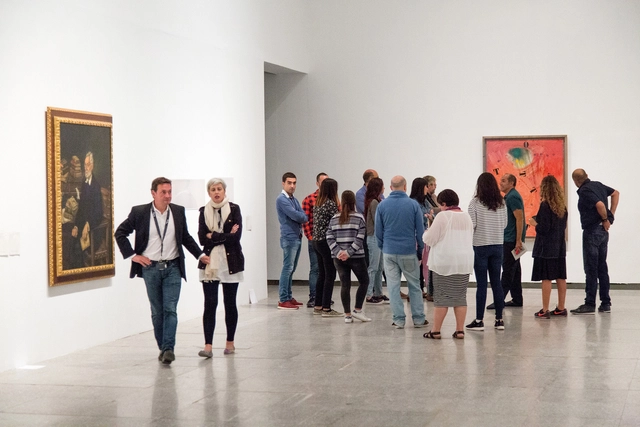
On Friday, December 22, 2017, the inaugural MUGAK Basque Country International Architecture Biennial opened the exhibition "The City We Lost: Urban Heritage Management in San Sebastián, 1950-2017" at the Santa Teresa Convent in San Sebastián, Spain. The exhibition showcases recognizable local buildings that have disappeared over the last few decades.
Curated by the Áncora association, the exhibition traverses San Sebastián's neighborhoods to examine a city that now exists only in collective memory—specifically, buildings lost over the past seven decades. Stretching from Martutene to Igeldo, and including Alza, Amara, El Antiguo, and Ibaeta, the survey goes beyond the city's iconic heritage, looking past San Sebastián's most prominent areas to highlight other architectural works.
From September 28 to October 7, Madrid will host the 15th Architecture Week, organized by the Official Association of Architects of Madrid (COAM) and the COAM Architecture Foundation, in collaboration with the Madrid City Council and the Embassy of Italy, with ArchDaily as a media partner. This year's edition will feature Milan as the guest city, following in the footsteps of Paris, New York, and Berlin in previous years.
With this new edition of Architecture Week, COAM's primary goal is to continue bringing architecture and urban development closer to society as a whole, while showcasing the valuable architectural heritage that makes Madrid one of the world's leading capitals for the discipline.
https://www.archdaily.com/1114180/milan-and-saenz-de-oiza-protagonists-of-the-15th-madrid-architecture-weekJavier García Librero
The es.BIM commission, responsible for implementing BIM methodology in Spain, has released the findings of the Fourth Report of the BIM Tender Observatory in Spain, following an analysis of public tender specifications that incorporate BIM requirements within their clauses to varying degrees.
On one hand, the report assesses the emergence of public tender documents with BIM requirements. On the other, it analyzes how BIM is integrated into these specifications through various indicators, such as the weighting of BIM in the evaluation criteria and the required levels of information.
https://www.archdaily.com/1114288/27-percent-of-public-tenders-require-bim-methodology-in-spain-according-to-the-eim-commissionJavier García Librero
Galardonados Premios Richard H. Driehaus Artes de la Construcción . Image Cortesía de Premios Richard H. Driehaus
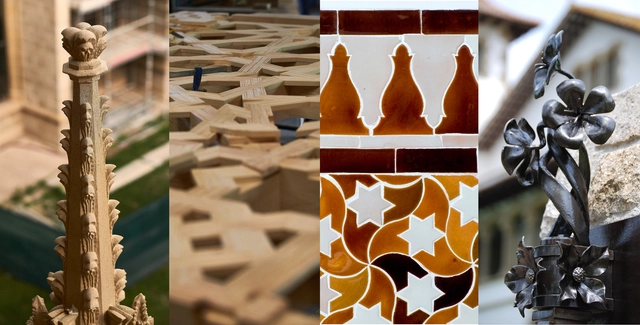
The winners of the second edition of the Richard H. Driehaus Building Arts Awards, which recognize leading masters in Spain's traditional building crafts, have recently been announced. With a total of 84 nominations received, the traditional building crafts were grouped into four categories, with each category presenting an annual award of €10,000 and a commemorative plaque.
The first category covers arches and vaults, vaulted staircases, stone carving, and other masonry and stone-cutting work. The jury selected Cantería Jaurrieta, from Olite (Navarra), run by Valeriano Jaurrieta and Agustina Rodríguez Orduña, to receive this award.
https://www.archdaily.com/1114268/the-ironwork-of-the-sagrada-familia-and-nasrid-tilework-among-the-winners-of-the-driehaus-building-arts-awardsJavier García Librero
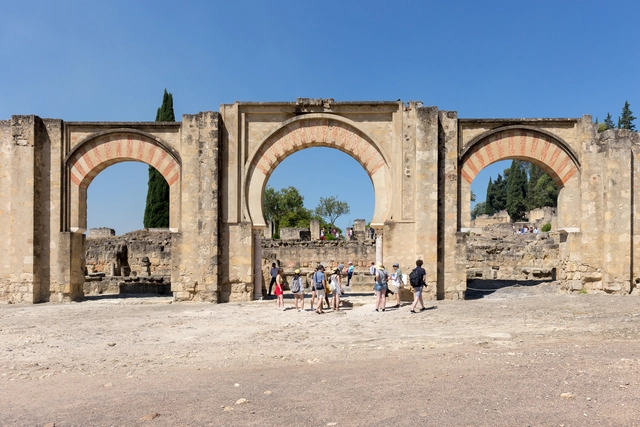
UNESCO has added 19 new sites to the World Heritage List, including the Caliphate City of Medina Azahara (Córdoba, Spain) during its recent 42nd session held in Manama, the capital of Bahrain.
The report prepared ahead of the session includes the evaluation and final conclusions of the International Council on Monuments and Sites (ICOMOS). Following a comparative analysis conducted both nationally and internationally, the council concluded that, alongside Medina Azahara, only Samarra (Iraq) stands as a well-preserved example of a caliphate city. Furthermore, among all caliphate cities, Medina Azahara is the only one that provides evidence of the culture and knowledge of the Islamic civilization that reached Europe.
https://www.archdaily.com/1113929/medina-azahara-of-cordoba-declared-a-world-heritage-site-by-unescoJavier García Librero
Adolf Loos, Joaquín Vaquero Palacios, Fernando Moreno Barberá, Norman Foster, and the bicentennial of the Museo del Prado are just some of the key names and milestones set to take over Spanish museums in 2018.
Here are 10 highly recommended architecture exhibitions for the new year that offer a rich and compelling cultural lineup. They span Spanish and international architects, iconic buildings from Spain's architectural history, and the profound impact of emerging technologies—such as artificial intelligence and virtual reality—on the field of architecture.
Dibujo en Torre de Donamaría. Image Cortesía de Premio Rafael Manzano
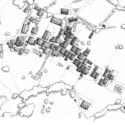
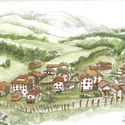
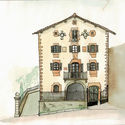
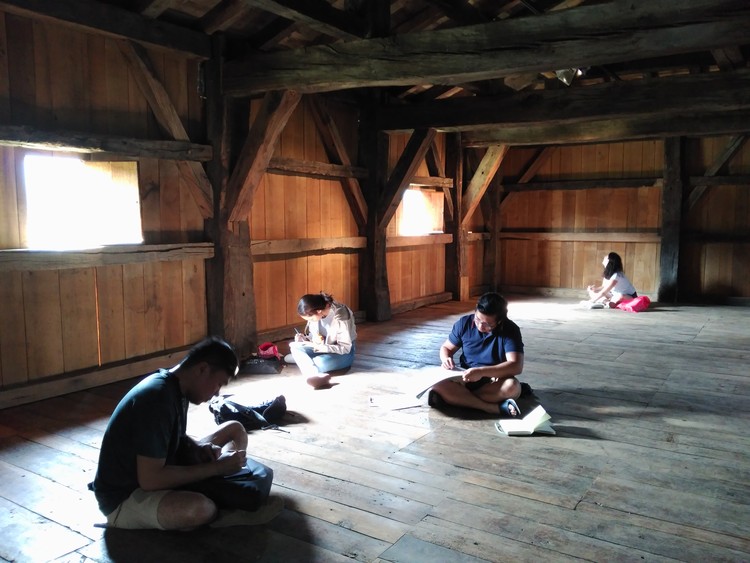
Organized by INTBAU and the Rafael Manzano Prize for New Traditional Architecture, the most recent edition of the Summer School of Traditional Architecture focused its work on the Baztan Valley (Navarre, Spain). The program studied traditional construction, architecture, and urban planning to produce a manual for conservation and new traditional construction in the area. In addition, hand drawing and building surveys were the primary activities carried out by the participating students.
Although the scope of work extended to the entire Baztan Valley, the bulk of the study was carried out in Amaiur, the town that hosted the group during those two weeks. Articulated around the branch of the Camino de Santiago that passes through it, the town's urban layout is structured almost as a linear development. Along this axis, the richness, diversity, and versatility of its architectural tradition unfold, presenting a showcase of solutions from different eras that have adapted to multiple trends and functions without ever losing their essence. Accordingly, the study examined the architecture of the town center in its entirety, from fine details to the broader urban structure.
Videos
Escala 1:5. Documental nueva Sala Beckett. Image Cortesía de Architecture Player
The Catalan architecture firm Flores & Prats Architects presents the launch of the documentary series ESCALA 1:5, which explores the design process of the international drama center at the new Sala Beckett in Barcelona. Produced by the independent production company 15-L, the documentary consists of five 10-minute episodes directed by Patricia Tamayo and Albert Badia.
Following its premiere on December 14, 2017, at the Girona Cinema in Barcelona before an enthusiastic crowd of about 200 spectators, the episodes are now available on demand on The Architecture Player channel on Vimeo.
https://www.archdaily.com/1114041/scale-1-5-the-new-documentary-on-the-sala-beckett-designed-by-flores-and-prats-architectsJavier García Librero
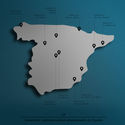
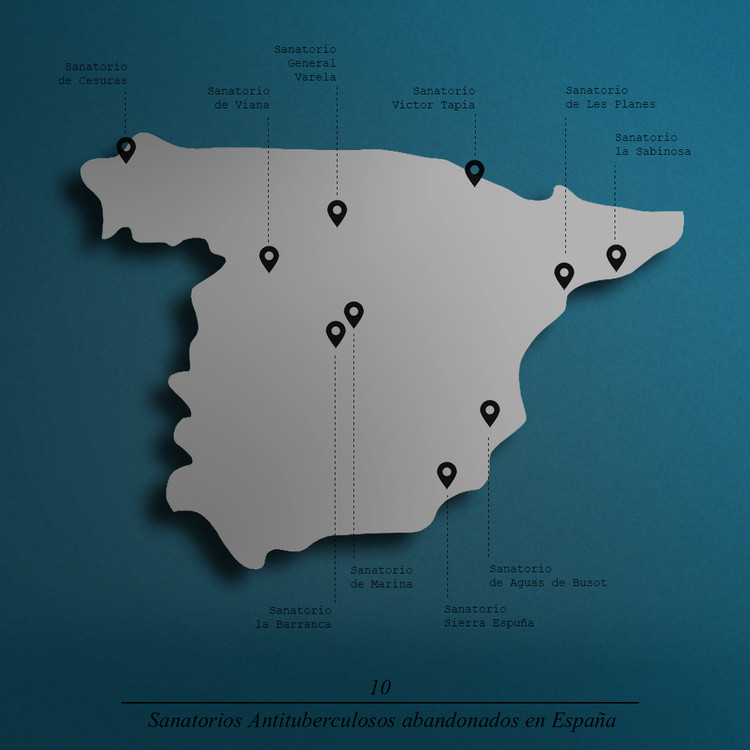
Ubicación de los 10 sanatorios en España. Image Cortesía de Javier García Librero
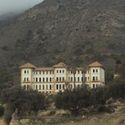
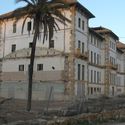
On December 13, 1943, a law established the regulatory framework for the National Antituberculosis Board (Patronato Nacional Antituberculoso), created to combat and help eradicate tuberculosis—one of the worst diseases afflicting Spanish and global populations during the 20th century. "The National Antituberculosis Board is dedicated to preventing the spread of a disease that represents the leading cause of mortality in Spain, as well as the most significant threat to the race," the text of the law began.
Following the end of the Civil War in 1939, the situation in Spain and for its population was precarious. This was reflected in the country falling behind other Western nations in its number of tuberculosis sanatoriums. Indeed, in 1934, with only 66 sanatoriums, Spain had the lowest ratio of facilities per capita in Europe—one for every 357,000 inhabitants.
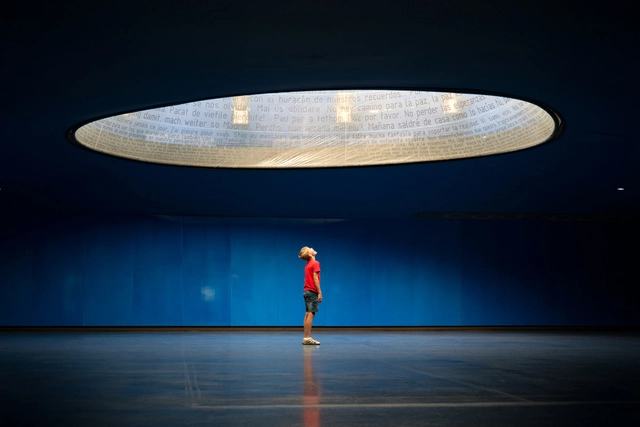
Eleven years after its inauguration, the Madrid City Council has announced a renovation and upgrade plan for the monument to the victims of the March 11 (11-M) terrorist attacks at Atocha Station in Madrid, Spain, as reported by the Spanish newspaper El País.
Designed by Estudio SIC, the monument to the victims of 11-M was inaugurated in 2007, three years after the attacks perpetrated by a terrorist cell on March 11, 2004. The attack consisted of the simultaneous explosion of 10 bombs on four commuter trains, claiming the lives of 193 people and leaving more than 2,000 injured, making it the worst terrorist attack in Spain's history.
https://www.archdaily.com/1114016/madrid-to-renovate-the-atocha-11-m-memorial-in-2019Javier García Librero
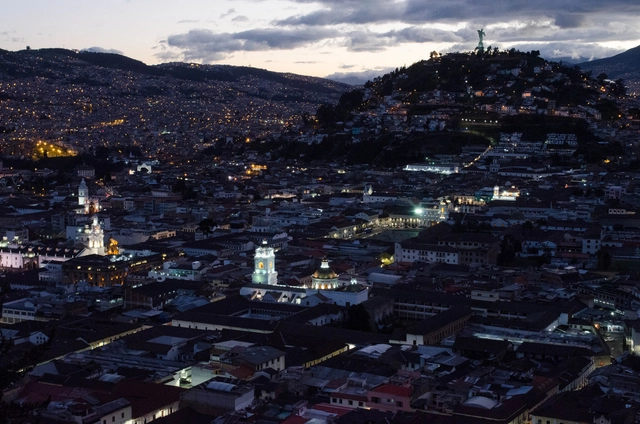
With one month to go before its opening, the details of the official program for the 21st Pan-American Architecture Biennial of Quito (BAQ2018) have been announced. Marking its 40th anniversary, the event will focus its dialogue and debate on architecture itself.
To be held from November 19 to 23 in the Ecuadorian capital, the event offers a prime opportunity to discuss and debate a discipline that, in recent years, has seen a decline in the spaces dedicated to fostering such encounters and dialogue.
https://www.archdaily.com/1114028/discover-the-details-of-the-program-for-the-2018-pan-american-architecture-biennial-of-quitoJavier García Librero



.jpg?1524419230 "El Retiro Park. Image © jninophotos [Flickr], licensed under CC BY 2.0")


.jpg?1532554816&format=webp&width=640&height=580)