
The Spanish Historical Heritage Council has approved the nomination of the Paseo del Prado and the Retiro for potential inclusion on the World Heritage List. This nomination will be officially submitted to UNESCO by Spain before February 1, 2019, and will be reviewed and evaluated by the World Heritage Committee in 2020.
The property proposed for inscription is located in the heart of Madrid and can be classified as a designed cultural landscape that has evolved over the centuries. Its origins lie in the explicit desire to provide the city with a place to enjoy nature without leaving the city—a vision later expanded to include a core Enlightenment goal: disseminating the Arts and Sciences for the education and instruction of the public, without class distinction.



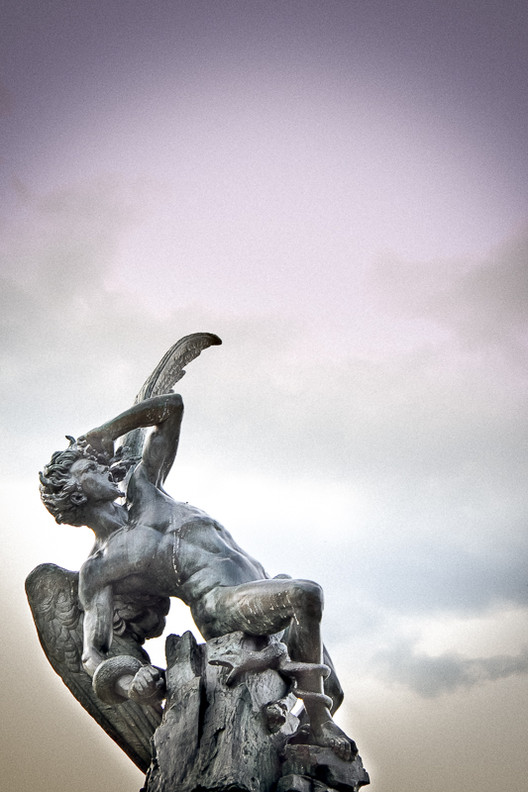
In statements made to the website of the Ministry of Education, Culture, and Sport, the Director General of Fine Arts and Heritage, Luis Lafuente, explained that "this is a difficult nomination, as UNESCO does not want European historic centers on the World Heritage List because they are overrepresented." In this regard, Spain has the third-highest number of listed sites (46), after Italy (53) and China (52).
Despite this challenge, the main argument supporting the nomination's outstanding universal value is the convergence of several factors: it is the first designed public space within a city created to provide green and recreational areas; it aimed to disseminate—and not just institutionalize—the Arts and Sciences; and it went on to influence the design of other urban spaces worldwide, which used it as a model.
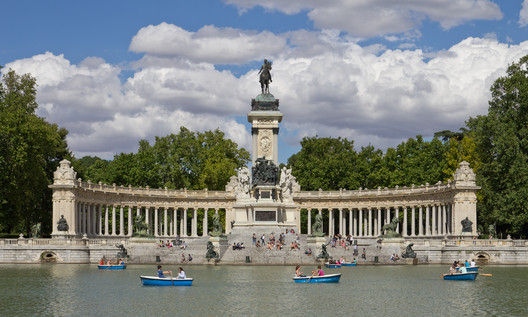
According to Lafuente, "the Retiro and Paseo del Prado ensemble is a part of the city that was born and has developed over more than five centuries for the enjoyment of nature, culture, and science, [and also] served as a model for other cities in the Americas, such as Havana, Mexico City, Veracruz, and Santiago."
These are also the key features of this property, which have not only been institutionally consolidated throughout history but also continuously reinforced by the public's appreciation and active use of the space. This has made it not just an urban, historical, and cultural landscape, but also a living, lived-in landscape, unparalleled internationally.
Additionally, the Historical Heritage Council has announced that the "Medina Azahara, Caliphate City" nomination will be evaluated this year for potential inclusion on the World Heritage List by the UNESCO World Heritage Committee, which will meet in Bahrain from June 24 to July 4.
Via Europa Press, El País.
This article was written by Javier García Librero. The translation is powered by AI.


