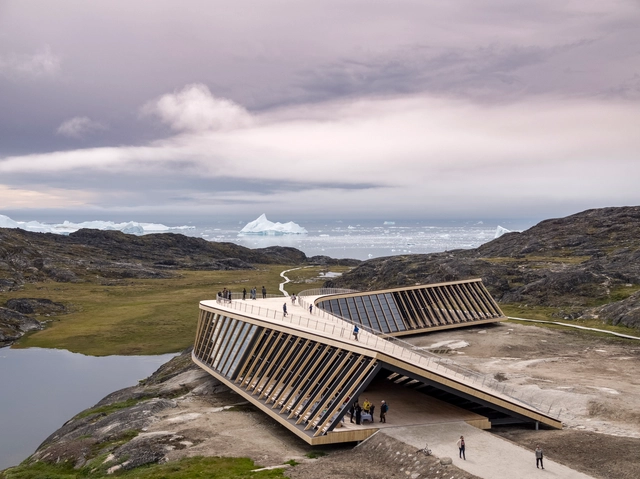
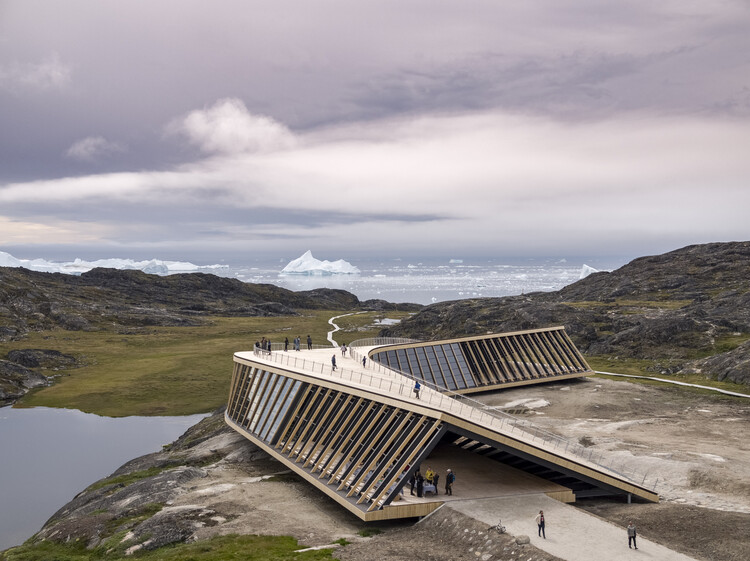
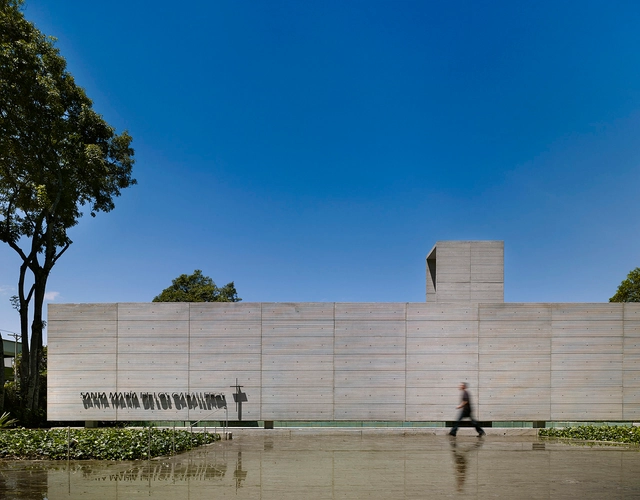
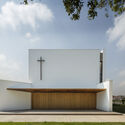
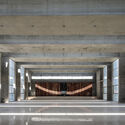
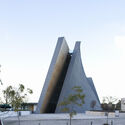
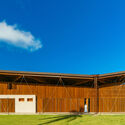
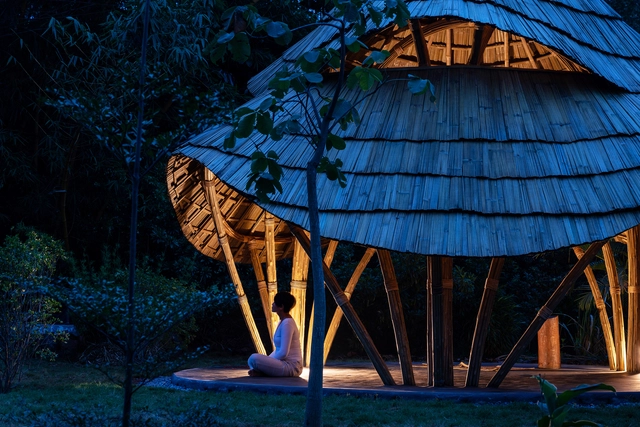
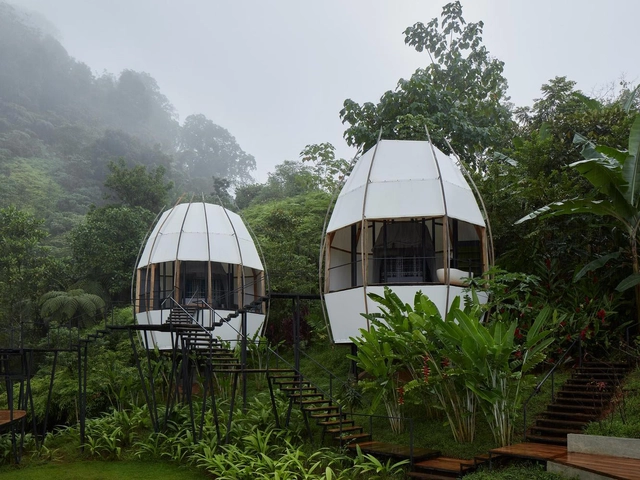
Destinations like ecological reserves, national parks, and historic sites rank among the most visited places worldwide. Motivated by different desires — from aesthetic appreciation to a longing for connection with nature — visitors are drawn to locations marked by historical importance, scenic beauty, or architectural significance. In this context, it becomes essential for the institutions responsible for preserving and managing these sites to adopt thoughtful mediation strategies — both in terms of communication and spatial design. One such strategy is the creation of visitor centers: architectural structures that not only receive guests but also educate and guide them. These buildings act as interfaces between the site and its audience, translating the ecological, historical, and cultural values of the place into architectural form.
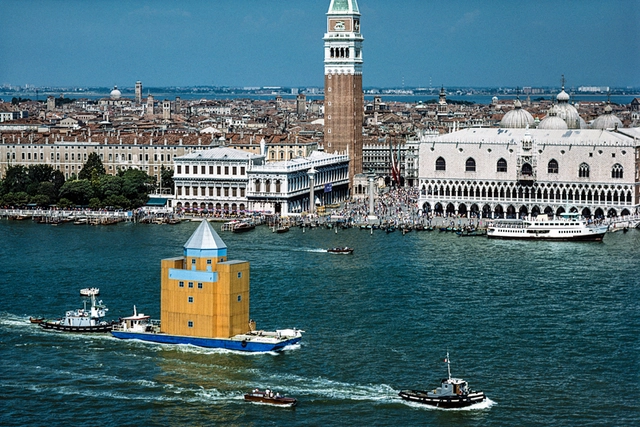
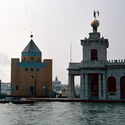
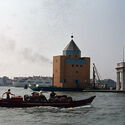
Teatro del Mondo, Venice 1979. Image by Antonio Martinelli
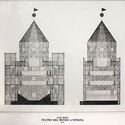
The first edition of the Venice Architecture Biennale took place in 1980, immediately revealing its role as a platform for images and ideas that would become essential references in contemporary architectural theory and practice. This disruptive character was embodied from the very beginning by the strangely familiar floating structure designed by Aldo Rossi, titled Teatro del Mondo. At once temporary and archetypal, the project introduced central themes that would shape Italian architectural discourse in the years that followed. To this day, it continues to inspire reflections on timelessness, imagination, and the memory embedded in cities.
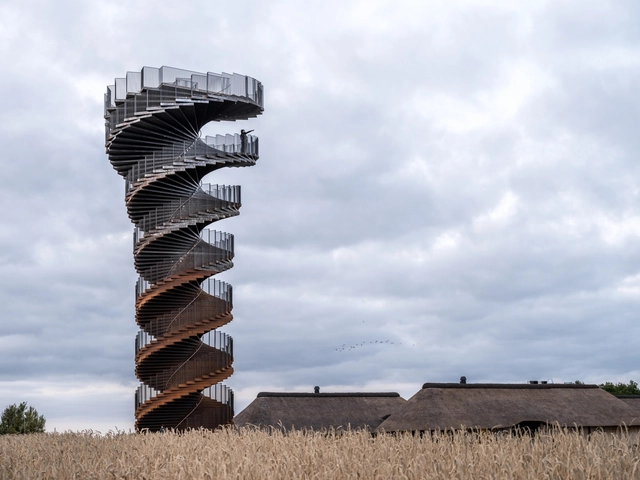
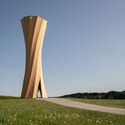
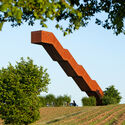
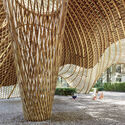
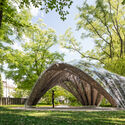
The desire to see the world from above transcends cultures and time — an almost instinctive impulse to seek new horizons, gain perspective, and momentarily step outside everyday life. Observation towers embody that desire: built in forests, mountains, urban parks, or coastal landscapes, they invite us to pause, look closely, and discover the surroundings in a quiet or playful way. These structures offer more than just views; they offer experiences. As we climb their steps or ramps, our bodies take part in a ritual of transition — from ground to sky.
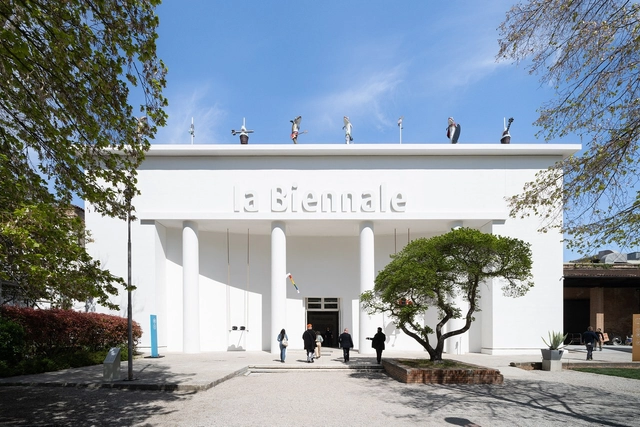
At the end of each edition of the Architecture Biennale, far from the public eye, tons of exhibition materials are transported across Venice in handcarts and boats. Only a small portion of these materials is reused. The main obstacles are the limited storage space in Venice and the high logistical costs—recurring challenges for circular architecture. As a result, most of the waste ends up in landfills or nearby recycling centers. But this scenario is beginning to change. In response to growing environmental concerns, architects are developing strategies to make reuse more viable. These efforts go beyond architectural and construction decisions—they also involve logistics and international trade.
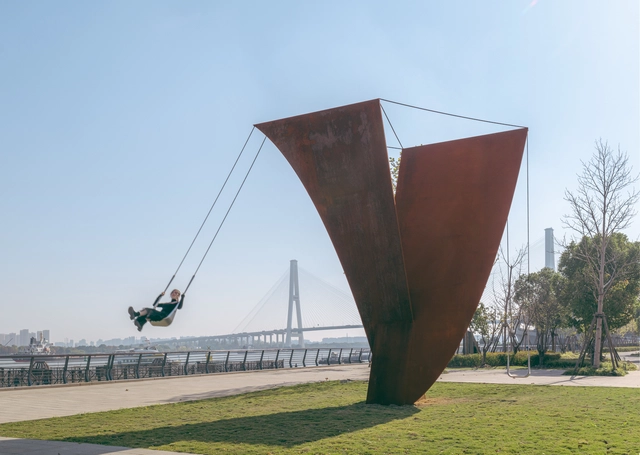
In the productivity-driven dynamics of contemporary cities, playful interventions in public spaces offer an innovative way to reclaim urban environments. These interventions encourage new ways of thinking and acting, temporarily breaking the monotony of everyday life and redefining the concept of play. Once confined to childhood and separate from daily activities, play has begun to intertwine with routine paths, becoming an integral part of urban life even outside traditional leisure times. In this way, reintroducing the swing—the most iconic children's toy—becomes particularly significant. As a symbol of childhood, pleasure, and joy, the swing contrasts sharply with the rigid appropriations of most public spaces, inviting a more relaxed and playful engagement with the urban environment. On June 11th, the UN International Day of Play reminds us of the benefits of incorporating diverse activities into urban spaces, for both children and adults, fostering community, creativity, and well-being.
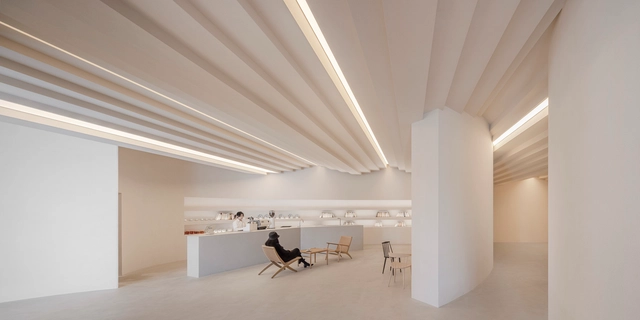
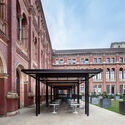
Cafés in museums and galleries do more than provide convenience — they have become an essential part of today’s cultural experience. As Claire Bishop explains in her idea of the “expanded aesthetic experience,” cultural spaces now include hybrid environments that encourage new ways of engaging, socializing, and reflecting. In this context, cafés are not just places to rest; they extend the visit on both sensory and symbolic levels, offering moments of interaction and contemplation in carefully designed settings. By blending architecture, art, and hospitality, they help create immersive and welcoming atmospheres — a concept already hinted at by Brian O’Doherty, who viewed exhibition spaces as an integral part of the artwork itself.
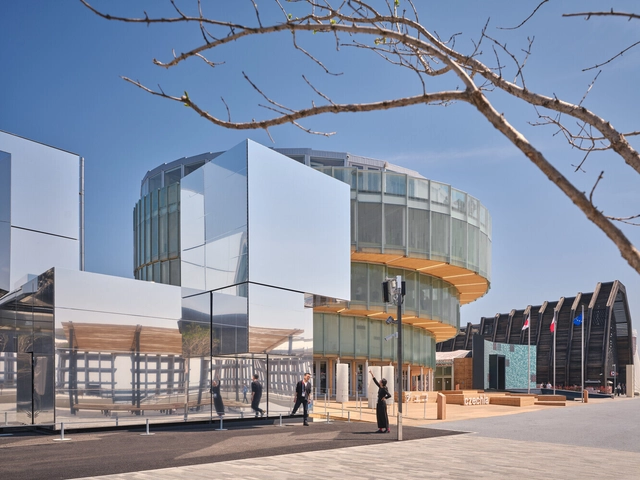
What can a pavilion’s architecture reveal about its country? At major World Expos, national pavilions are designed to answer this question, transforming into spaces laden with symbolism. Though temporary, these structures are rich in meaning, functioning as architectural expressions of political identity. Their forms and materials encapsulate national ambitions. Expo Osaka 2025, the latest chapter in this ongoing narrative, showcases how nations increasingly use built space to construct global images of themselves—sustainable, technological, culturally distinct, and geopolitically relevant.
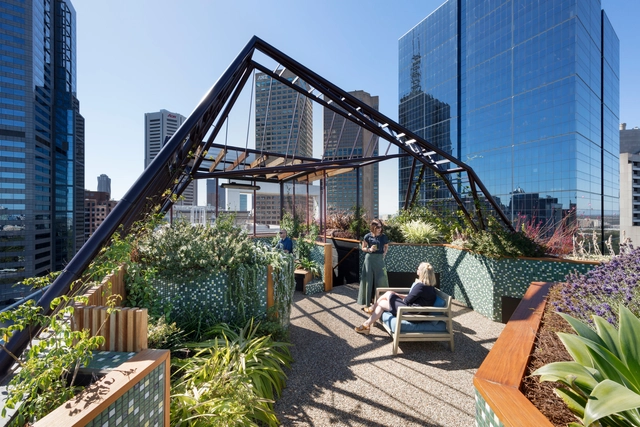
In today’s dense, vertical cities, terraces—often overlooked as mere technical rooftops—are emerging as key spaces for reconnecting with nature, expanding residential functions, and offering moments of collective relief. Particularly in single-family homes located in compact urban areas, these elevated surfaces represent valuable opportunities to increase usable living space without occupying more land. By lifting daily life above street level, terraces open new ways of inhabiting the city, enabling a range of uses from leisure and contemplation to food production and social gathering. In contexts marked by limited green space and strained infrastructure, they hold the potential to generate what landscape architect Catherine Mosbach calls "additional layers of urbanity." Whether imagined as hanging gardens, gathering spots, edible landscapes, or wellness zones, terraces challenge the idea that the city ends at the top floor—inviting us to see the roof as a new kind of ground.
Artificial intelligence (AI) is no longer a futuristic idea in architecture — it is a concrete reality that is reshaping how we design. In seconds, computational systems can process and evaluate a wide range of variables — formal, programmatic, contextual, and regulatory — guiding architects toward highly optimized solutions. But as we embrace this algorithmic revolution, a critical question arises: can architectural intelligence be reduced to data-driven logic? In response, alternative approaches are gaining momentum — ones that value ways of building grounded in sensory experience, adaptation to place, and the intergenerational transmission of knowledge. In the exchange between artificial and ancestral forms of intelligence, a deeper understanding begins to take shape. Intelligence does not reside in the tools themselves, but in the intention and sensitivity with which we use them to navigate complex realities.
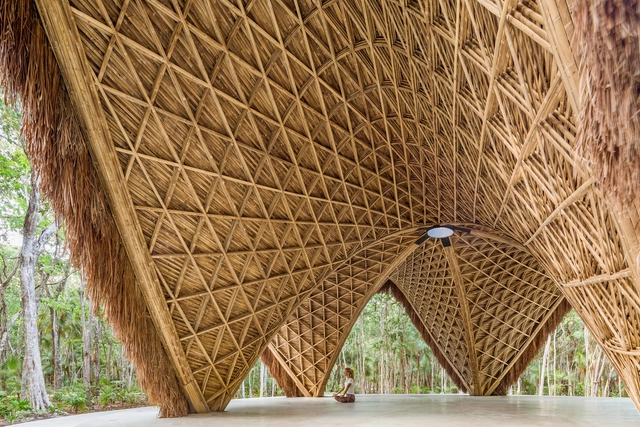
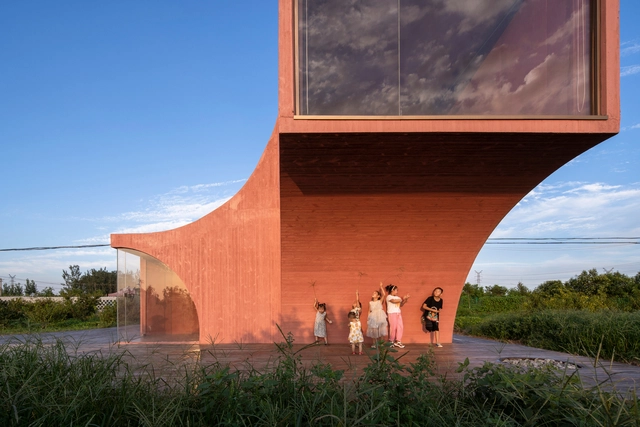
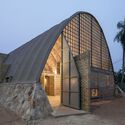
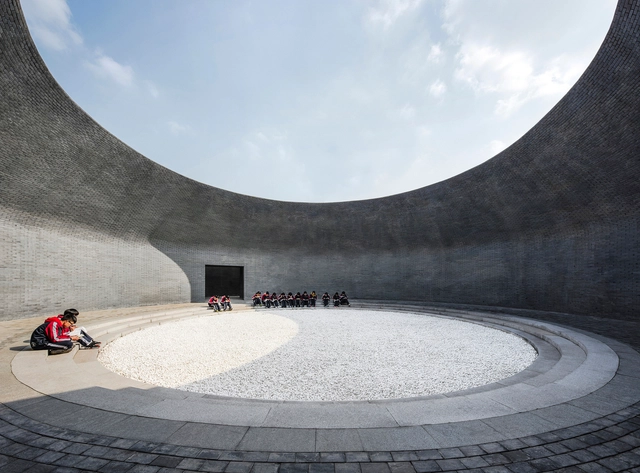
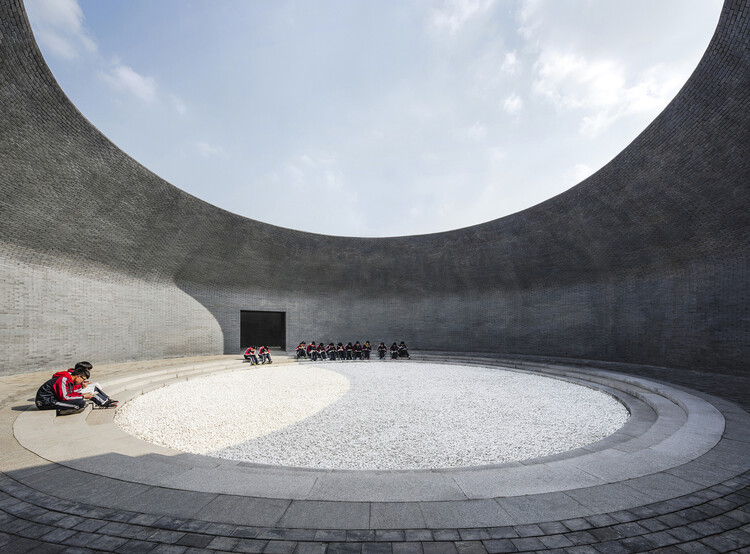
The architecture of cultural and community centers in rural areas around the world has become a rich field for experimentation, where tradition and innovation intersect. Rather than replicating standardized urban models, these projects embrace contemporary approaches tailored to local realities, blending bold design, sustainable technologies, and collaborative processes. Often developed in close partnership with local communities, they draw on regional materials and cultural symbols to create spaces that do more than host activities: they express a collective identity and a profound sense of belonging. By reimagining vernacular knowledge through a modern lens, these buildings support and inspire new ways of living in the countryside.
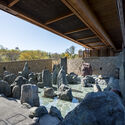
Around the world, different cultures have developed unique ways of understanding and experiencing healing. Far from being merely a physical process, healing encompasses emotional, spiritual, social, and architectural dimensions. Healing spaces—whether physical, symbolic, or natural—reflect each culture's values, beliefs, and ways of life. Exploring these cultural approaches not only broadens our perspective on health but also encourages us to reconsider how we design environments that nurture care and well-being.
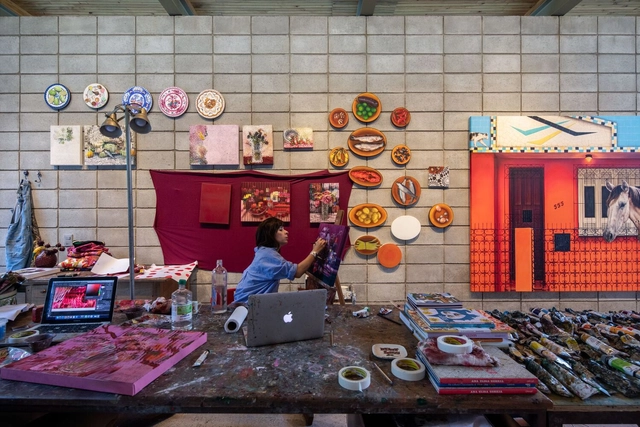
The spaces where artists create their work reveal a great deal about their creative journey—their techniques, themes, and inspirations. These places hold memories, intimacy, and emotional connections. For some artists, the studio is a secluded space, free from distractions. For others, it is a place for openness and freedom. Often, the studio becomes the home—or the home becomes the studio—blending function, desire, and necessity. Positioned at the crossroads of living and creating, leisure and work, these spaces fascinate art lovers. Many are later recreated in galleries or transformed into museums. Regardless of the artist’s fame, these spaces offer a unique look into the creative process, the artwork, and the artist's identity.
Between silence and chaos, we shape our world. Every space we inhabit tells a story, evokes emotions, and influences our thoughts. Minimalism, with its lightness and purpose, invites serenity. Maximalism, exuberant and vibrant, celebrates personality in every detail. But how do these philosophies affect our minds? Understanding their psychological impact can be key to creating environments that enhance well-being and bring harmony to life.
The way we perceive and experience spaces extends beyond aesthetics—they directly influence our emotions, thoughts, and even creativity. Spacious environments with high ceilings often evoke a sense of freedom and inspiration, while smaller, enclosed spaces encourage focus and introspection. This is not merely a subjective impression but a scientifically studied phenomenon. In the 1960s, anthropologist Edward T. Hall introduced the term "Cathedral Effect" to describe how ceiling height impacts cognition and behavior. More recent research has expanded on this idea, demonstrating how architecture shapes decision-making and emotional states in various contexts.
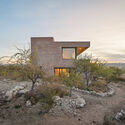
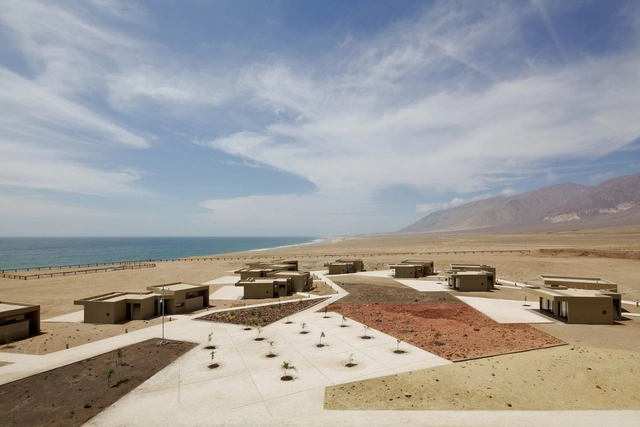
The desert is a landscape in constant transformation. Shaped by the wind, its dunes, ridges, and fissures emerge and fade in an ever-shifting expanse, as if the scenery itself were alive. It is a land of stark contrasts, where the scorching heat of the day gives way to the crisp coolness of the night, revealing nature in its most primal form. In such a dynamic and untamed environment, how can architecture not only integrate but also respect and engage with its surroundings? This is the challenge faced by hotels built within Latin America’s vast desert landscapes.