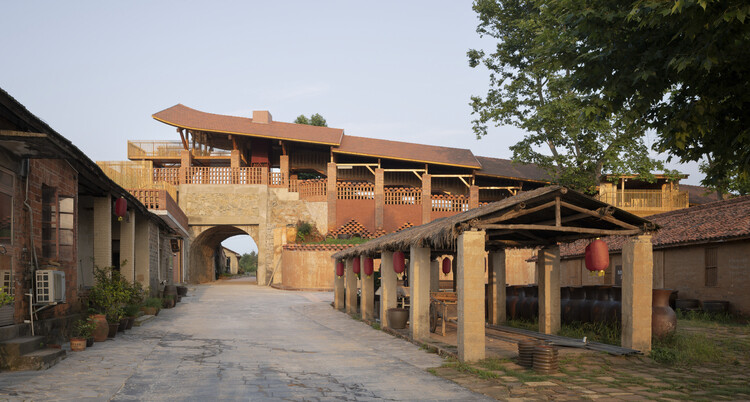
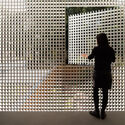
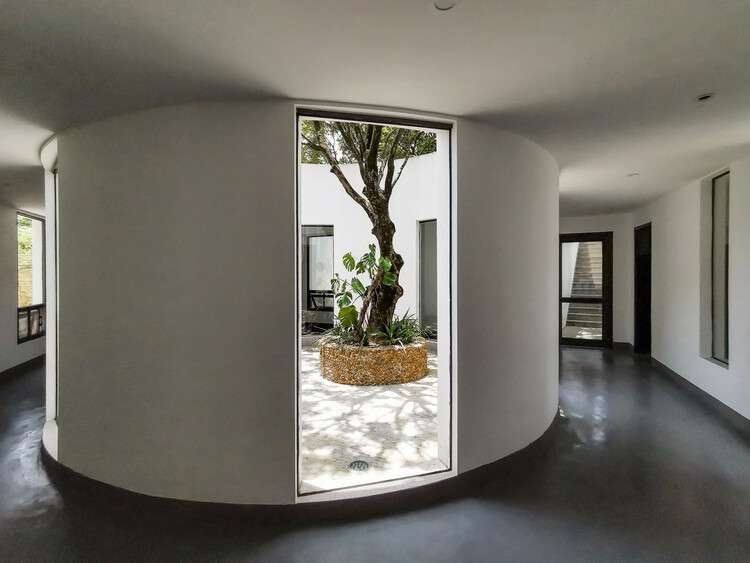
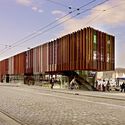
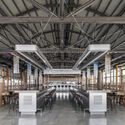
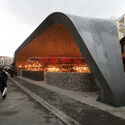
There is an ancestral gesture in shaping earth. Long before architecture was established as a discipline, clay was already being molded by hand and transformed by fire, turning raw matter into domestic utensils and cultural objects. Within the history of this craft, ceramic factories mark the transition from manual knowledge to serial production, expanding its scale without entirely severing its material origins. Scattered across different territories, these structures record the relationship between technique, landscape, and time. Over the decades, however, many of them lost their original function, replaced by more technological processes or absorbed by the urban development around them, entering an intermediate state between permanence and obsolescence.
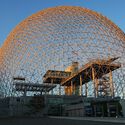
In 1962, the architect Buckminster Fuller envisioned a floating city that would free humanity from its dependence on the Earth. The speculative project consisted of enormous geodesic spheres that would naturally levitate in air warmed by the sun and be anchored to mountaintops. Designed to house thousands of people, Fuller’s Cloud Nine aimed to ease land ownership pressures, address housing shortages, and contribute to environmental preservation.
More than half a century later, we remain far from realizing Fuller’s vision. Creating a truly floating structure on the Earth’s surface is still, for now, an unattainable ideal. While supports continue to be necessary, we manipulate their position, intensity, and number, developing structural “acrobatics” to at least approach the idea of overcoming gravity — a desire that has long fascinated humanity.
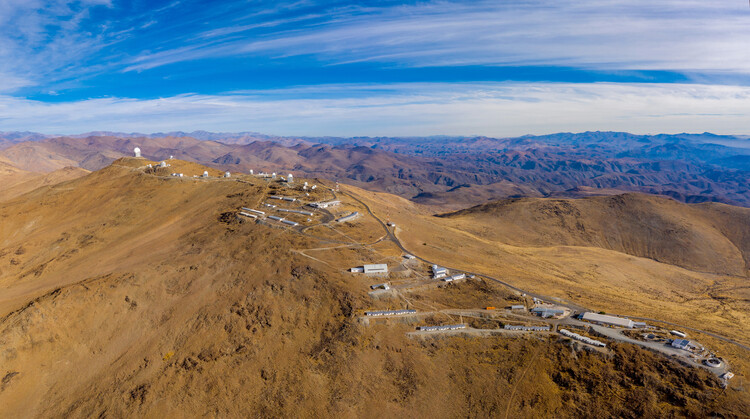
Chilean Atacama Desert. Image by European Southern Observatory with known IDsCC-BY-4.0European Southern Observatory Images ESO files uploaded by OptimusPrimeBot licensed under the Creative Commons Attribution 4.0 International license
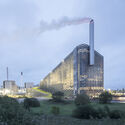
Architecture can no longer be conceived as an isolated object, detached from the technical networks that sustain contemporary life — a condition that calls for new readings and approaches. It is within this context that, in March, ArchDaily’s monthly theme focused on The Technosphere, a topic both broad and inherently complex. Drawing on the concept of the technosphere, coined by geoscientist Peter Haff to describe the totality of human-made artifacts, a landscape emerges in which contemporary life is deeply intertwined with machines, data, and energy networks.
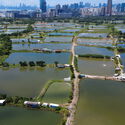
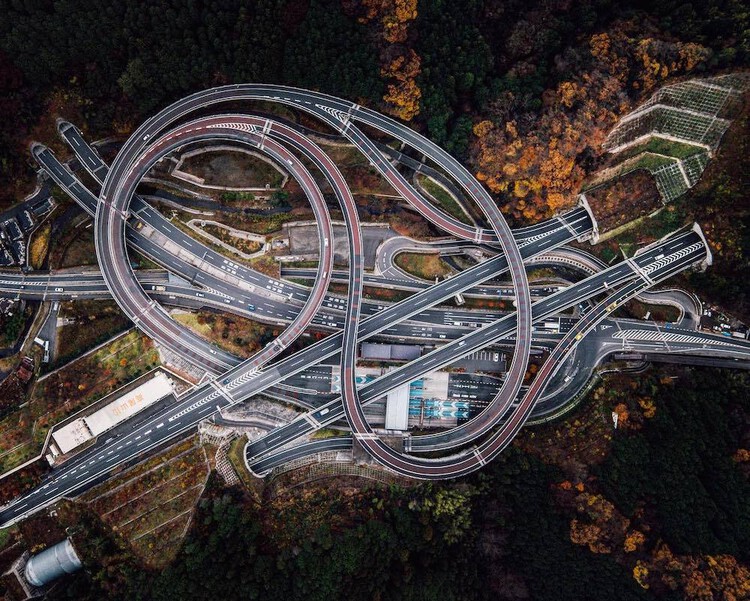
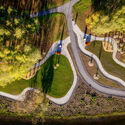
Sagamihara, Japan. Drone photo by Rob Antill (@digitalanthill) and Ben Steensls (@randomoperator)
At a time when satellites orbit the planet, submarine cables sustain the global flow of data, and algorithms organize everyday life, a question emerges within architecture: at what scale are we actually designing today?
While design was once primarily shaped by local or regional conditions, it is now entangled in chains that begin with resource extraction, pass through industrial systems, and extend across planetary infrastructures that are often invisible, yet operate continuously and interdependently.
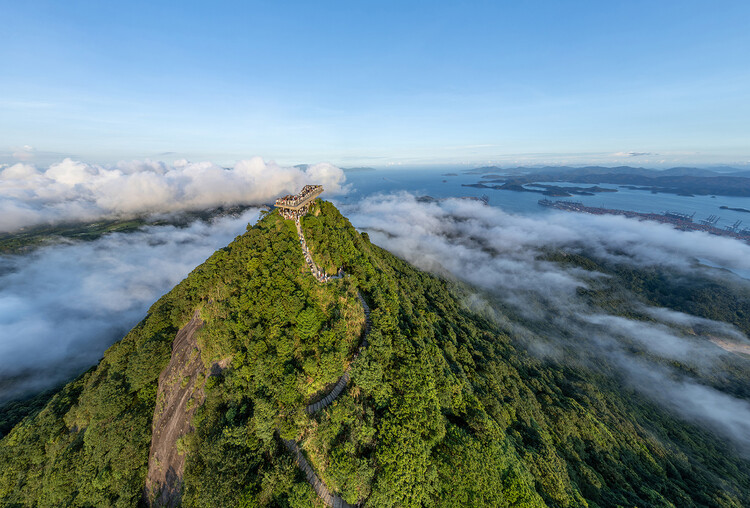
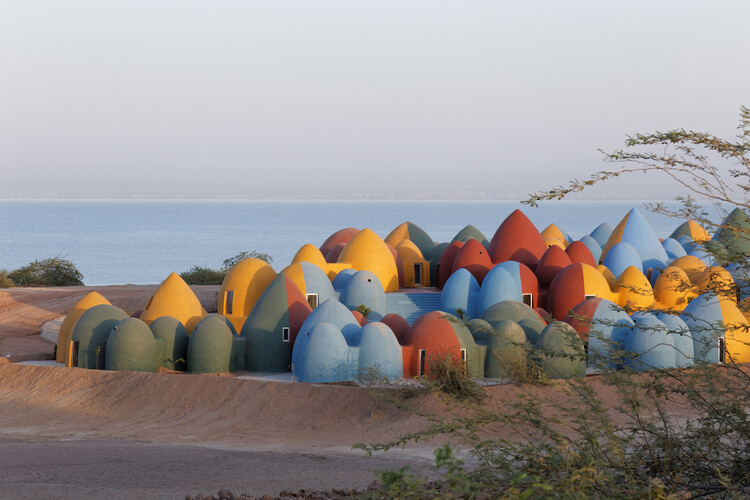
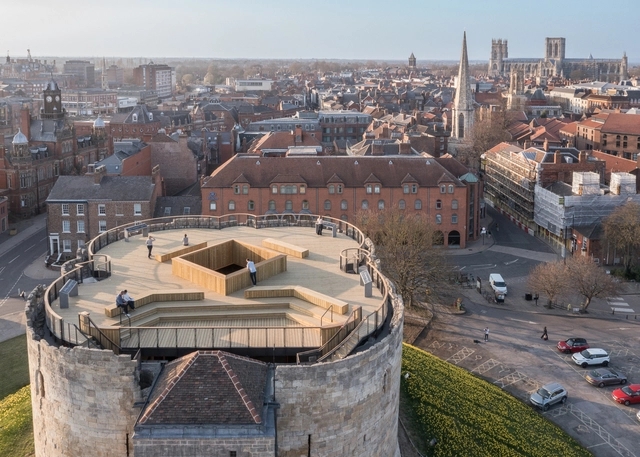
Viewpoints are structures designed for observing the landscape from elevated positions. Set within natural settings or urban environments, they act as devices that organize the gaze and establish a direct relationship between the body and the territory. At this threshold between observer and landscape, viewpoints can take on a wide range of configurations, from subtle gestures to monumental structures, always responding to their specific context. Regardless of scale, they are — to some extent — attempts to domesticate vastness: precise framings that make legible what, without mediation, might otherwise appear as excess.
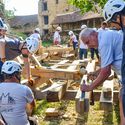
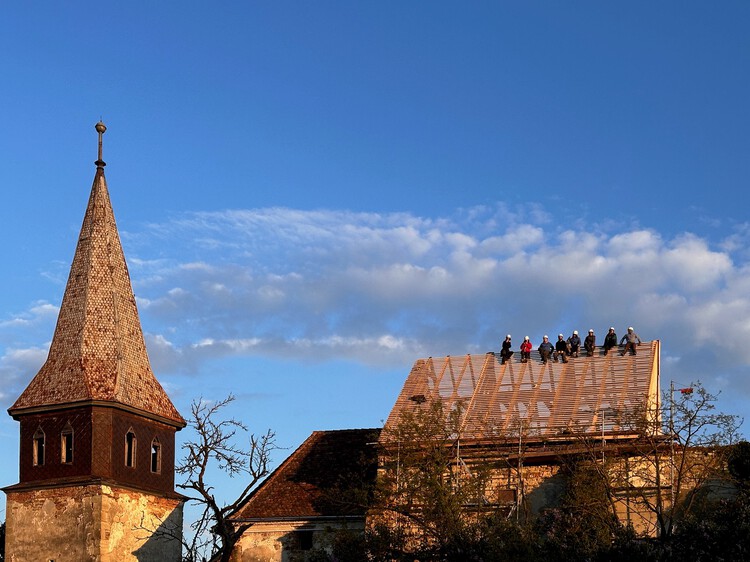
Ambulance for Monuments is a first-aid initiative dedicated to safeguarding Romania's endangered built heritage, operating in a race against time to prevent collapse and irreversible loss. The project responds to the growing vulnerability of historic structures, from Saxon fortified churches and manor houses to wooden churches and rural landmarks, many of which no longer benefit from the community networks that once sustained them. In a country deeply affected by emigration since 1990, where nearly half the population still lives in rural areas, entire villages have lost the people, skills, and everyday care that once kept these monuments standing.
Built around a mobile intervention unit, an "Ambulance" equipped with tools, scaffolding, and on-site equipment, the initiative delivers urgent stabilization works that buy time for endangered buildings. Rather than replacing full restoration, these strategic interventions preserve historic fabric, ensure structural safety, and keep long-term conservation and adaptive reuse possible.
Symbols of technological development and urban density, tall buildings as we know them today emerged in the late nineteenth century, particularly in the United States, as a response to the rapid expansion of urban commerce and the need to grow cities without occupying additional land. The term skyscraper, for instance, was coined in the 1880s and originally referred to buildings with around 10 to 20 stories—an impressive height for the time.
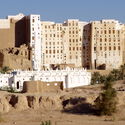
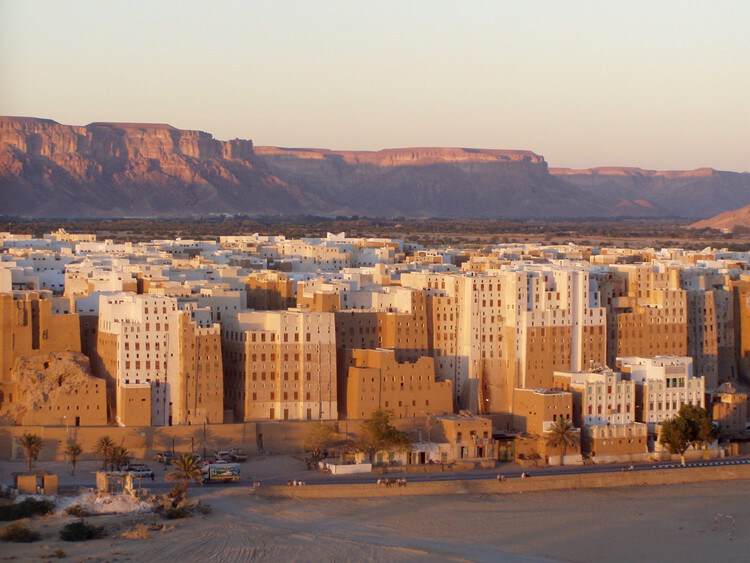
However, the idea of building vertically is much older than the steel-and-glass skyscrapers of modern cities might suggest. Long before the Industrial Revolution, some societies were already experimenting with forms of vertical urbanization as a response to limited space, territorial defense, or environmental adaptation.
In most cases, the power of decision lies with specialized professionals—historians, museologists, architects, geographers. But on what basis are these decisions made? Can the complexity of history be reduced to a checklist? Or, more fundamentally, which version of history underlies these choices?
A visual hierarchy is therefore established, guiding the eye and determining what should be seen, in what way, and with what emotional intensity, defining how the user interprets the surroundings. In this context, design strategy goes beyond aesthetic choice and begins to operate as a construction of the phenomenological experience of space. By selecting a specific fragment of the horizon through a controlled opening, or by dissolving the limits between inside and outside with large glazed planes, architecture begins to act as a lens. It can emphasize the smallness of the human scale in relation to the vastness of the territory or, conversely, domesticate nature, incorporating it into everyday life.
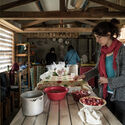
Can architecture be built from food? Between the fire that warms, the smells that spread, and the bodies that gather around the table, the apparent banality of cooking and eating reveals itself as a choreographed dance of spatial appropriation and belonging. These gestures organize routines, produce bonds, and transform the built environment into lived place. The kitchen—domestic, communal, or urban—thus ceases to be merely a functional space and affirms itself as a territory of encounter.
"Feeling at home" is more than just an expression—it is the sense of warmth and comfort that transforms a space into a true refuge. To achieve this, elements like color, texture, lighting, and materials play a crucial role in shaping an environment that fosters relaxation and well-being. Backed by research in environmental psychology and neuroscience, the connection between physical spaces and human behavior highlights how architecture can directly influence the atmosphere, turning chaos into tranquility.
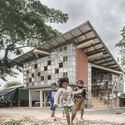
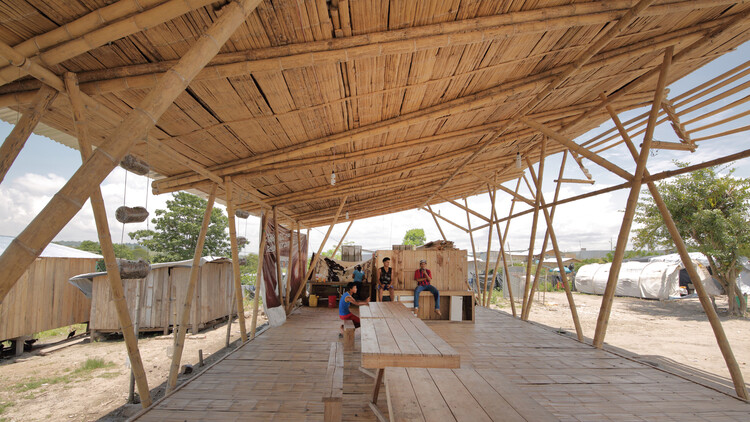
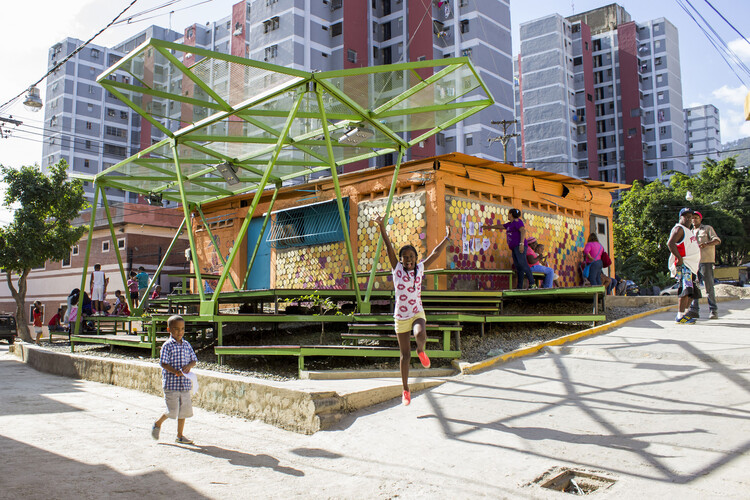
How the "Espacios de Paz" project is transforming community spaces in Venezuela. Pinto Salinas -- Oficina Lúdica + PKMN. Image Courtesy of PICO Estudio.
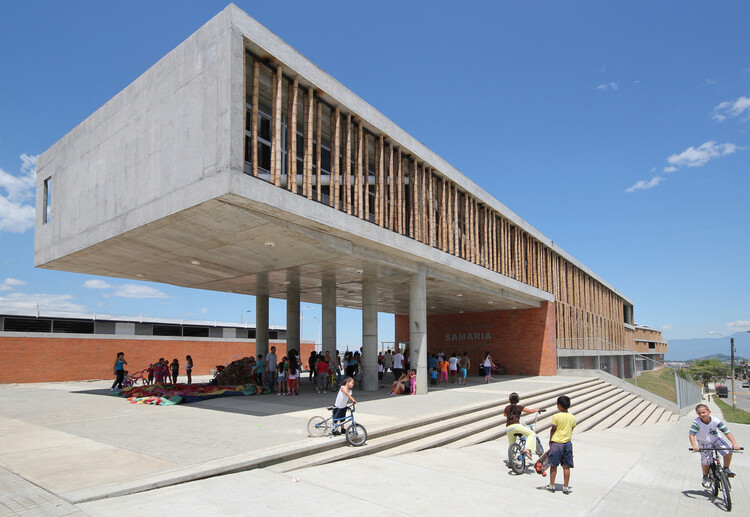
In Latin America, encounters do not necessarily arise from grand architectural gestures or monumental urban plans. They emerge from the in-between, from intermediate spaces: the courtyard, the veranda, the sidewalk, the shared corridor. These areas, often considered residual or informal by the traditional architectural discipline, are precisely where everyday life builds bonds.
From this Latin American culture comes a spatial logic in which daily life is organized in a relational and expansive way. Practices such as sitting at the front door, occupying the sidewalk, and playing in the street produce a lived city that extends beyond the formal limits of design.
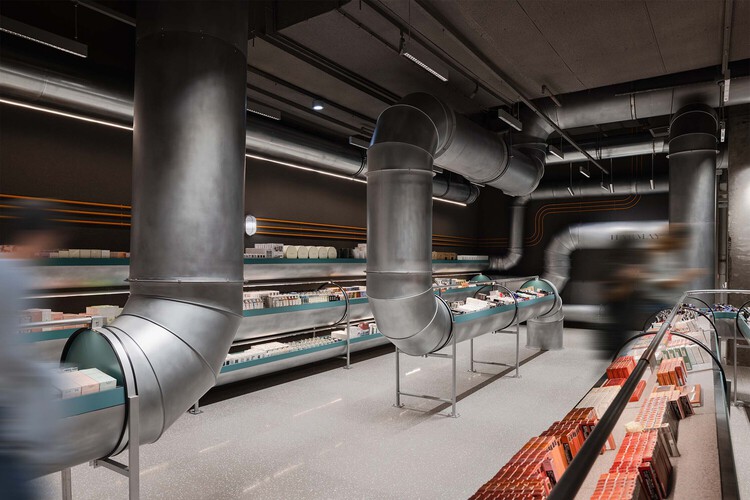
How did a material conceived for bridges, factories, and large-scale structures make its way to the living room bench, the apartment bookshelf, the café table? For centuries, metal was associated with labor, machinery, and monumentality—from the exposed structures of 19th-century World’s Fairs to the productive logic of modern industry. Its presence in domestic interiors is not self-evident but rather a cultural achievement: the transformation of an industrial material into an element of everyday, intimate use, in close proximity to the body.
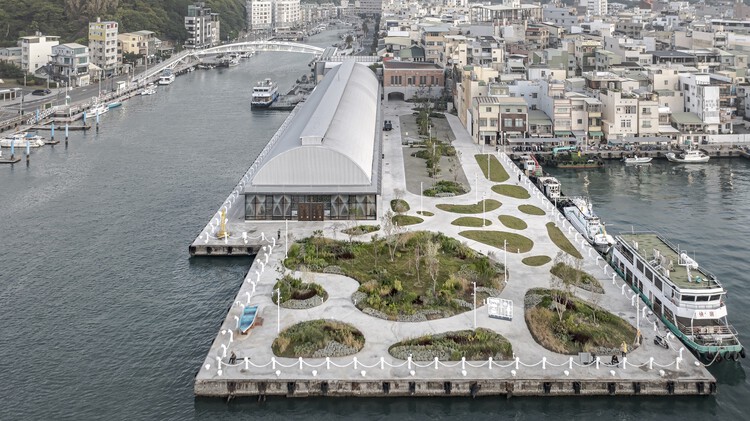
Throughout history, fish markets have played a singular role in mediating the relationship between city and sea. From the port agoras of antiquity, through medieval markets established along docks and estuaries, to the large covered structures of the 19th century, these spaces have been instrumental in shaping coastal cities. More than simple infrastructures for food supply, fish markets express cultural practices and modes of occupation rooted in proximity to water, consolidating themselves as intense and highly social public spaces. Within them, architecture, landscape, and social dynamics intertwine directly, revealing how the built environment can translate maritime traditions and reinforce the identity of coastal and port communities.
Every architectural project is the result of deliberate choices. Beyond form and function, buildings embody technical, political, and cultural decisions that shape their relationship with both their surroundings and the people who inhabit them. ArchDaily’s AD Narratives series explores these processes by bringing together accounts that trace projects from initial conception to built realization. In parallel, the AD Classics series turns to works of historical significance, presenting not only the stories behind these buildings but also technical drawings that allow for a deeper, more informed reading of their architecture.
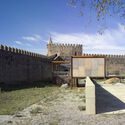
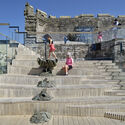
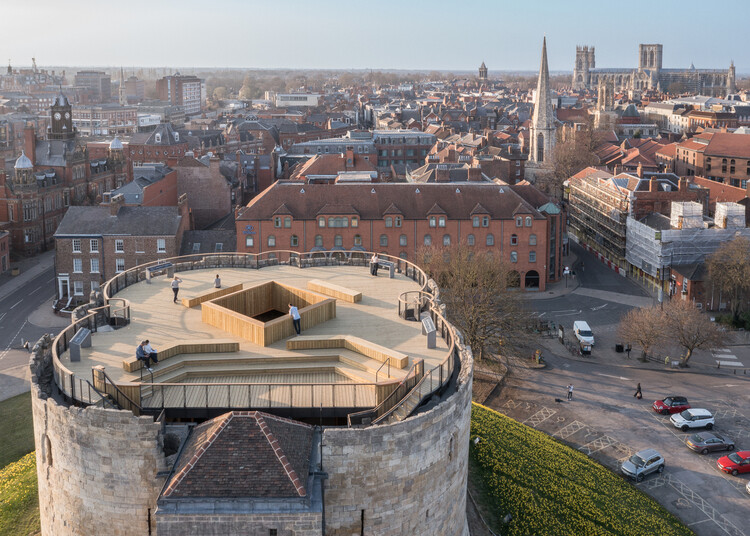
Castles and fortresses often rise from strategic, commanding positions when standing alone or integrated into urban and rural landscapes. From above, they overlook the city, bearing in their imposing structures the weight of history. With their original functions now limited to contemplation, these spaces have been undergoing revaluation and reintegration into everyday urban life. Once symbols of military or political power, they are now taking on new roles through contemporary interventions that engage with their heritage without erasing their past.