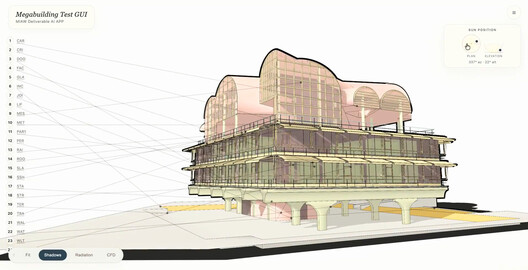
AI has become a consumer product faster than it has become a discipline. Each week brings new models and more information than anyone can absorb, and the easy response is uncritical consumption. Architecture needs a different strategy, built on criticism and method. AI is now acquiring spatial intelligence, the capacity to understand how physical space behaves, and architects can test a project against its environment while they design it. Used with judgment, AI can bring architects closer to nature and its complexity, and make them better builders. We simulate the world to learn how to inhabit it.
Tool as designer of human
How many times will the present generation have to revolutionize their daily way of being? Historically humanity has experienced drastic reprogramming of a lifestyle once every few centuries. With the industrial revolution it dropped down to once every few generations. AI has compressed this interval in ways we're still bound to find out.
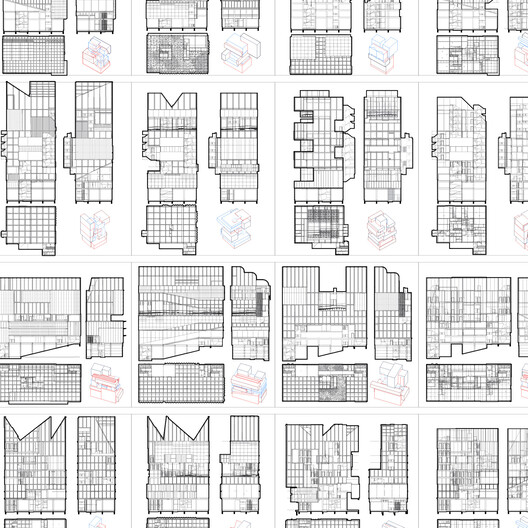
As Jean-François Lyotard wrote, "technology wasn't invented by us humans. Rather the other way around." In a time when humans are being designed by their tools faster than ever, how are we supposed to program our own evolution in order to reach a symbiosis between natural intelligence and the artificial? What are the means of acquiring the necessary skills to allow AI to shape us for the better?
Artificial intelligence is an opportunity to enhance once again the possibilities at hand of every individual. From the first books that allowed broad education, to accessibility to infinite information through the internet, to access to navigation and creation through AI.
Language models to World models
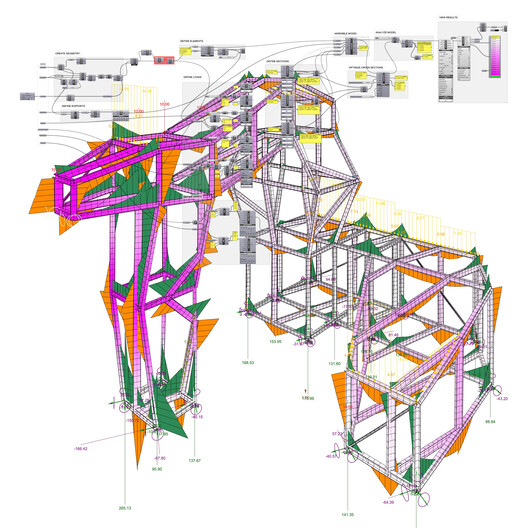
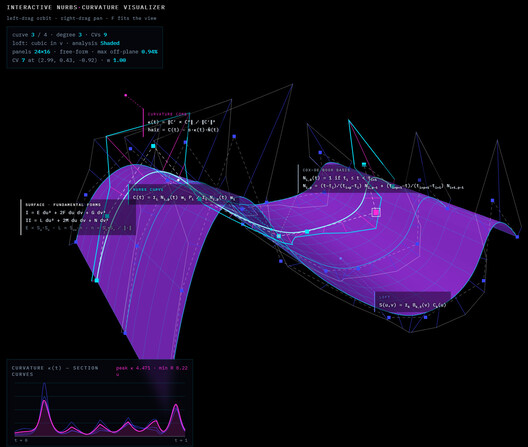
Large language models learned the world through its descriptions. They merely predict text from statistical regularities. They mimic human speech and thought based on large databases and simple probability. World models, on the other hand, are systems that learn how an environment behaves, its physical rules, spatial dynamics, causal states and functional structures, so that they can predict new behaviors. Fei-Fei Li calls current LLMs "wordsmiths in the dark", eloquent about a three-dimensional world they have never had to move through, and argues that spatial intelligence is the field's next frontier. For architecture the difference is decisive. A model of text cannot anticipate how physical and social reality responds to a project, while a model of space enables simulating scenarios, testing how a project responds to gravity, wind, sunlight, wear and human use. Thermal diffusion, moisture absorption, pollutant dispersion and the flow of people become feedback the project responds to, and design proceeds through interaction with these dynamics instead of imposing a form on them.
Simulation can inform a decision. It cannot take over the responsibility of making it. We need now more than ever professionals with criteria, who use AI responsibly as an analytical tool, rather than a mere burst of productivity. The architect becomes less an author of forms and more a designer of knowledge systems, measured by the capacity to anticipate consequences in a dense and often uncertain reality. What remains human is the process.
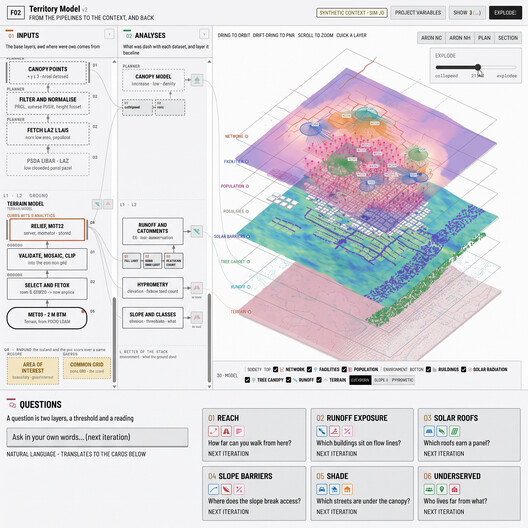
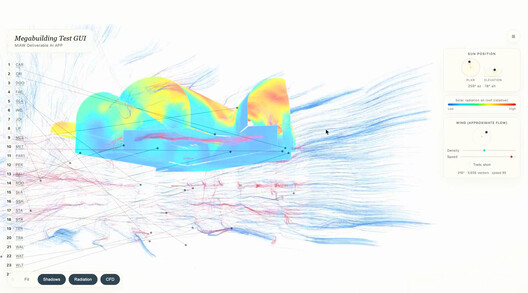
Mindhub for Intelligent Artificial Worlds
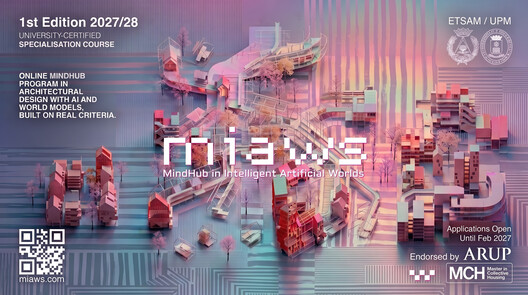
Spatial AI is a call for hybrid profiles that cross design with computational engineering and materials science. The Mindhub for Intelligent Artificial Worlds (MIAWS), at ETSAM, Universidad Politécnica de Madrid, is a digital hub for the whole AEC sector built around that change. It combines original research with a worldwide network of practitioners and institutions, and its Foundations program runs online across ten modules that carry one project from AI modeling and simulation to data visualization and integration. The aim is to keep pace with the technology without handing over judgment. We invite you to get to know the program and take part in the change.