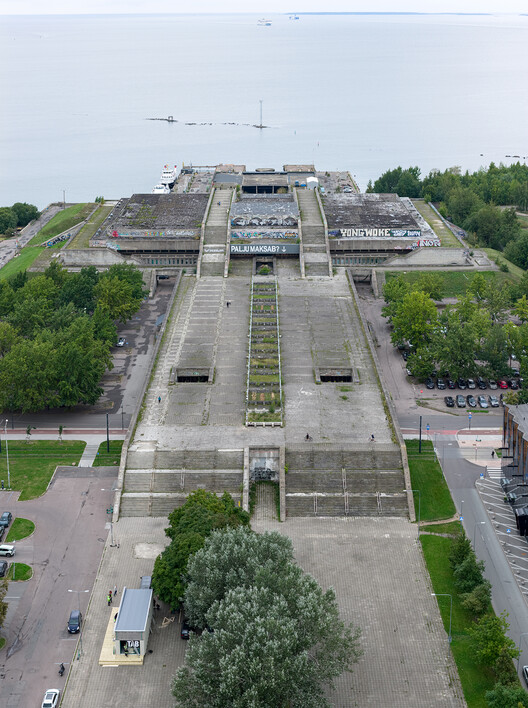
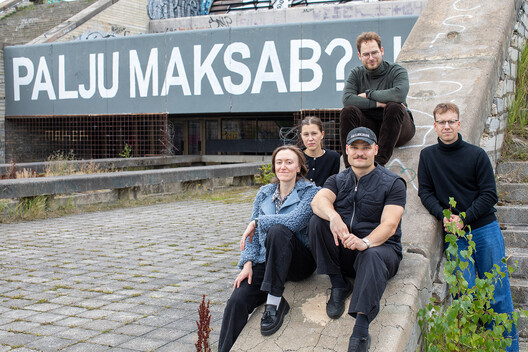
The 8th Tallinn Architecture Biennale (TAB 2026) brings the question "How Much?" to the centre of its programme, examining how cost, scarcity, and constraint shape architectural production. Curated by Kertu Johanna Jõeste, Siim Tanel Tõnisson and Ra Martin Puhkan of Stuudio TÄNA, together with Mark Aleksander Fischer and Mira Samonig, the biennale takes place across Tallinn until November 30, 2026. Its main exhibition is housed within Linnahall, the monumental seaside complex built for the 1980 Summer Olympics, while exhibitions, installations, discussions, and other events extend to venues including the Estonian Museum of Architecture, the Estonian Academy of Arts, and EKKM.
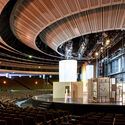
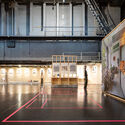
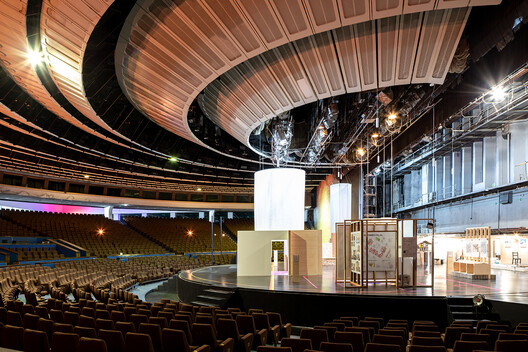
At the centre of TAB 2026 is a reconsideration of what it means for architecture to be "cheap." While low cost is often treated as a measure of efficiency, the curatorial framework points to the costs that remain outside an initial construction budget: the resources consumed, labour involved, environmental consequences, maintenance requirements, and social effects that continue over time. The question "How Much?" therefore moves beyond the price of building towards a broader consideration of value, affordability, and responsibility.
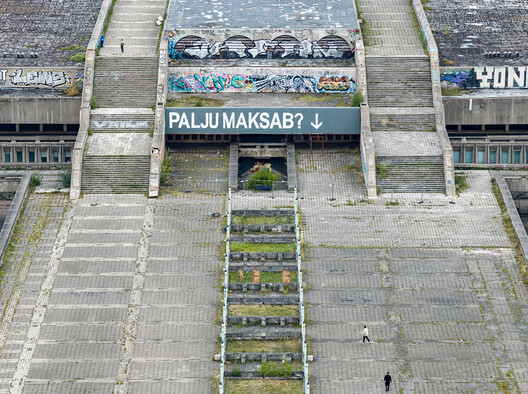
This question becomes particularly tangible in Linnahall itself. Located on Tallinn's waterfront, the building has remained largely unused for decades while its future has been repeatedly debated. Its current condition places the contradiction identified by the biennale directly in front of the visitor: reconstruction requires significant investment, demolition also carries a cost, while leaving the building unresolved allows another kind of cost to accumulate over time. Rather than treating Linnahall simply as a container for the Curatorial Exhibition, TAB 2026 uses the building as part of the argument, making its physical condition inseparable from the question of value.
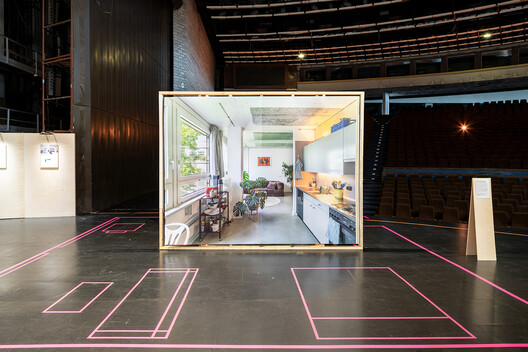
Entering the exhibition, this relationship between architecture and its wider costs is developed through projects by architects and interdisciplinary practitioners from Estonia and abroad. The Curatorial Exhibition brings together practices including asphalt / Kollektiv für Architektur, Avarrus Arkkitehdit, baubüro in situ, HouseEurope!, KAVAKAVA, Mantas Peteraitis Architecture Studio, Studio TAKK, O–P, SALTO Architects, and VARES, among others. Their contributions address subjects ranging from reuse and adaptation to resource-conscious construction, alternative development models, and the financial structures that influence architectural decision-making.
Rather than presenting "cheapness" as an architectural aesthetic, the exhibition considers constraint as a condition that can produce different forms of practice. Some projects focus on making use of what already exists, while others examine how limited material, financial, or spatial resources can alter the way architecture is conceived and constructed. An Estonian Collective Exhibit further grounds the discussion in local practice, bringing together projects that emerged from budgetary limitations but developed architectural or structural qualities beyond their initial constraints.
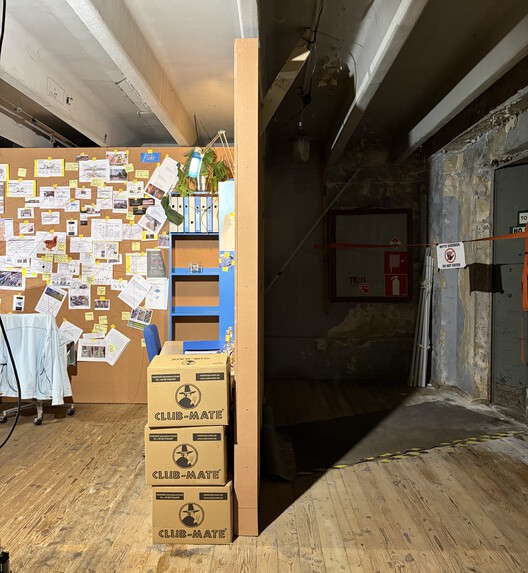
The choice of Linnahall adds another layer to this reading. Its vast concrete interiors, traces of previous use, and unfinished condition contrast with the temporary nature of many of the exhibition installations. At the same time, the building makes the question of maintenance, reuse, and adaptation difficult to abstract. The exhibition's discussion of long-term value is not only presented through models and installations but encountered through a building whose future remains unresolved.
TAB 2026 extends this inquiry beyond the Curatorial Exhibition through a programme of exhibitions, competitions, and discussions. The "Sounds Expensive" symposium, held at the Estonian Academy of Arts during the opening week, brought together architects, researchers, critics, and curators to examine the assumptions surrounding affordability, efficiency, and scarcity. Keynote speakers include writer and curator Phineas Harper, University of Toronto professor Claire Zimmerman, and architects and researchers Thomas Flores and Mathias Palazzi.
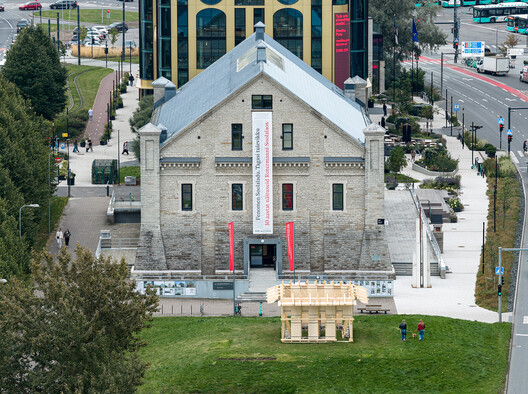
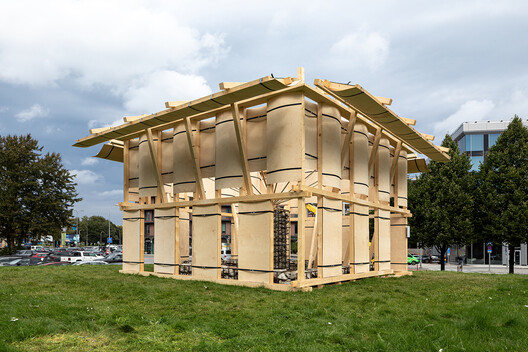
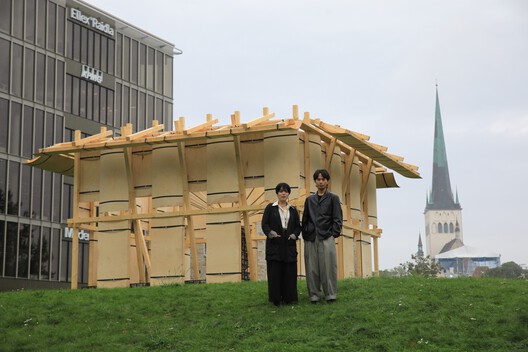
At the Estonian Museum of Architecture, the "Budget Bougie" Installation Programme approaches the subject from another direction, asking whether a sense of spatial richness or luxury can be achieved without corresponding expense. The winning project, "Resonance" by Aru Ma- Architects, uses rebar, rope, limestone, and plywood to create a temporary pavilion organised around a central stone core. Its material palette and construction approach turn the limitations of the competition brief into the basis for the installation's spatial and acoustic qualities. The museum also hosts "Capital-A Affordable Architecture," an international architecture schools' exhibition developed around the question of what affordability means in contemporary architecture. Students and tutors from institutions including the University of Applied Arts Vienna, UMPRUM Prague, the Royal College of Art, Kharkiv School of Architecture, and the Estonian Academy of Arts respond to a shared brief through different local and cultural perspectives.
Later in the biennale, the "From Void to Value: Revisioning Tallinn's Old Town" exhibition will present the results of TAB 2026's Vision Competition at Tammsaare Park. The proposals address an unresolved urban site at the southern edge of Tallinn's historic centre, considering how an existing urban void might acquire new physical, social, and economic value. The winning proposal, "A Place Reclaimed," was developed by Valerii Krinberg, Martin Sepp, Kaari Maria Tirmaste, Mikael Ristmets, and Patrick Liik.
Across these different formats, TAB 2026 keeps returning to the same deceptively simple question. "How Much?" is not limited to asking how much a building costs to construct; it also asks what is spent, saved, discarded, maintained, reused, or deferred in the process of making architecture. In Tallinn, where Linnahall provides both the setting and a real-world example of these tensions, the biennale places the economic question of architecture within a longer and more complicated framework of spatial, environmental, social, and cultural value.
Looking ahead, the 2026 Oslo Architecture Triennale will run from September 17 to October 1 under the theme "What if Nature Comes First?", while the Buenos Aires International Architecture Biennial will celebrate its 40th anniversary with its 20th edition from September 22 through October under the theme "HABITAR (INHABIT)." Meanwhile, the 15th São Paulo International Architecture Biennial, scheduled for September–October 2027, has appointed Gabriela de Matos and Pedro Rossi as chief curators for its "Architecture, Culture, and Sovereignty" edition.