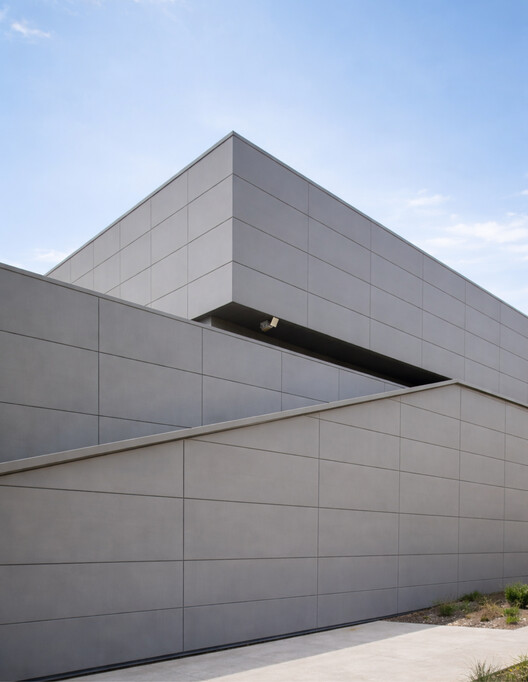
Seamless surfaces and minimal joints have become a defining signature of contemporary architecture, prized for the clean lines, and uniformity they bring to a building's envelope. Yet in façade engineering, this pursuit is rarely just about appearance. Regardless of the material used, increasing panel dimensions can influence durability, material recyclability, performance against external factors, and other considerations such as impact resistance and long-term maintenance. By combining ease of installation and transportation efficiency with design flexibility, monomaterial façade systems use large-format panels while addressing practical challenges related to flatness, thermal movement, and structural support. Yet, what other material-related considerations behind large-format panels can make a difference in building envelope construction today?
Balancing aesthetics, performance, and installation efficiency, contemporary architectural façades shape building envelopes that, depending on their scale and program, respond to outdoor conditions through different operational strategies and performance characteristics. The pursuit of a clean, large-format aesthetic creates an opportunity to achieve more than just a refined appearance. Depending on the material composition and installation requirements, some design decisions can reduce a building's environmental impact in ways that may not be immediately visible to users.
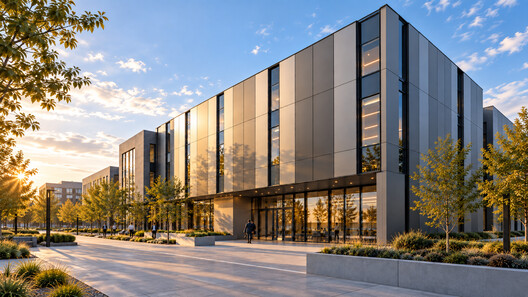
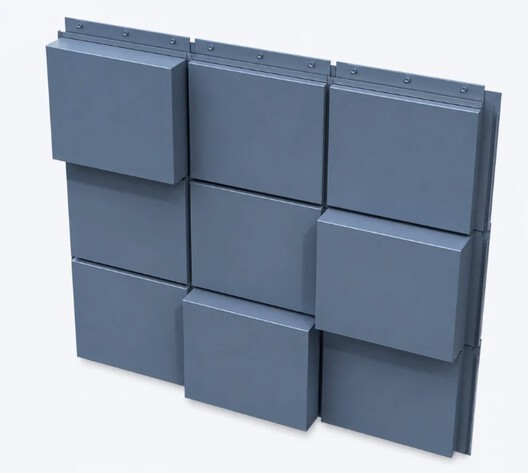
Dri-Design's MA-X system is a modular, drained and back-ventilated rainscreen façade system designed for large-format panels and available in painted or anodized finishes. Available in sizes up to 4' × 12' in either vertical or horizontal orientations, these single-layer aluminum panels can accommodate different depths, supporting a wide range of architectural expressions and geometries.
The Challenge Behind Single-Skin, Large-Format Panels
A single sheet of aluminum, stretched across a large surface, is inherently prone to oil canning—a visible waviness that occurs when a thin, flat material lacks the rigidity to resist minor stresses from handling, thermal movement, or wind load. The larger the panel, the more pronounced this risk becomes. The building industry's conventional answer to this problem has been aluminum composite material (ACM): a sandwich panel in which two thin aluminum skins are bonded to a plastic core. That core adds the stiffness a single sheet lacks, allowing for larger, flatter panels. The trade-off, however, is durability and end-of-life performance, and the plastic core introduces a risk of delamination over time and makes the panel far more difficult, if not impossible, to fully recycle.
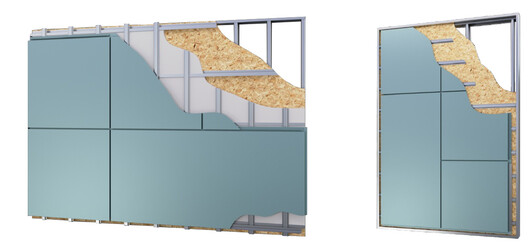
Dri-Design's MA-X system addresses this differently, and instead of a composite core, the panels use structural stiffeners integrated directly into the single aluminum sheet, with aluminum thicknesses ranging from 0.063" to 0.080". This provides the mechanical stiffness needed to resist oil canning at large formats without introducing a second material, keeping the panel 100% aluminum from face to core.
When Design Guides More Than Performance
Engineered to withstand high wind loads of up to 130 PSF, comply with HVHZ (High Velocity Hurricane Zone) large-missile impact requirements, and provide long-term durability, the panels are designed to simplify construction through sequential installation. This approach reduces field complexity and the number of installation steps while supporting faster, more predictable project delivery. The modular installation methodology improves on-site efficiency and coordination, helping teams execute projects more quickly while staying within established schedules and budgets.
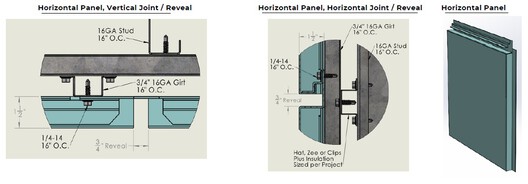
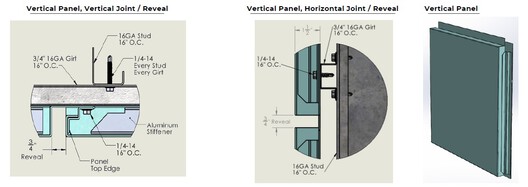
Each panel consists of a single metal sheet with an integrated interlocking gutter and drainage system, as well as a single attachment point designed for dry-joint, ventilated façade installation. Panels are installed using a progressive interlocking method, engaging the bottom of each panel with the top of the preceding one and progressing from bottom to top and left to right. This method accommodates the system's various orientations, dimensions, and placement requirements. The system also requires secure anchorage designed to accommodate thermal and structural movement. Installation incorporates components ranging from weather-tight seals to custom flashings and finishing profiles. Whether concealed or exposed, fasteners must ensure that all connections and joints remain watertight and weather resistant.
How Material Recyclability Influences the Building's Lifecycle
Selecting material finishes and installation systems that minimize ongoing maintenance and permanent reworks throughout a project's lifecycle can support consistent performance not only in design and construction, but also in terms of environmental impact. Because the MA-X system achieves rigidity through integrated stiffeners rather than a composite core, it eliminates the plastic layer found in aluminum composite material (ACM) altogether—offering the potential for high recycled content and full recyclability while supporting sustainable design goals and reducing lifecycle impacts. Made of 100% aluminum, the panels also eliminate the risk of delamination and long-term material failure, demonstrating that high durability can be achieved without overlooking the environmental impact of material choices.
Dri-Design is part of Kingspan, whose Planet Passionate program focuses on three major global issues: climate change, circularity, and protecting the natural world. In fact, the 2025 Planet Passionate report highlights progress toward its 2030 targets, including a 70% reduction in Scope 1 and 2 emissions compared with 2020, 63% renewable energy use, and 1.05 million metric tons of recycled and renewable raw materials.
Concealed fastening systems, combined with large-format panels and enhanced structural capabilities, can streamline façade design while contributing to the long-term performance of building envelopes. The MA-X system applies this approach through a reduced number of components, efficient installation, and a durable finish, demonstrating how monomaterial façades can balance distinctive architectural expression with lasting performance.


