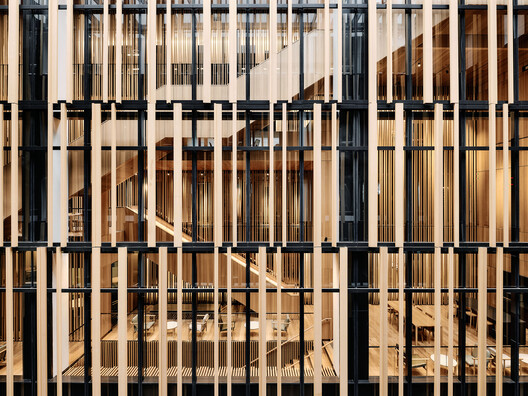
The relationship between humans and wood has endured since the Greco-Roman era, when a variety of techniques were developed to maximize its unique properties and characteristics. Beyond its warmth, texture, and natural appeal, wood has proven its ability to meet a wide range of technical requirements while adapting to diverse environmental and geographic conditions, maintenance demands, and fire-resistance standards. In response to the evolving needs of the built environment, interior and exterior finish materials that replicate the appearance of wood have emerged as viable alternatives. Among them, Wood Finish Aluminum offers a durable, high-performance solution for long-lasting projects, providing a textured wood-look appearance while maintaining minimal environmental impact.
Working with solid wood at both small and large scales presents challenges related to high humidity, coastal environments, wildfire-prone regions, heavily trafficked public spaces, and maintenance requirements, all of which can limit its suitability for certain applications. To preserve the visual qualities of wood while meeting these demands, architects specify materials such as Sculptform's Wood Finish Aluminum, which provides the appearance of wood while addressing project-specific performance, durability, and environmental requirements.
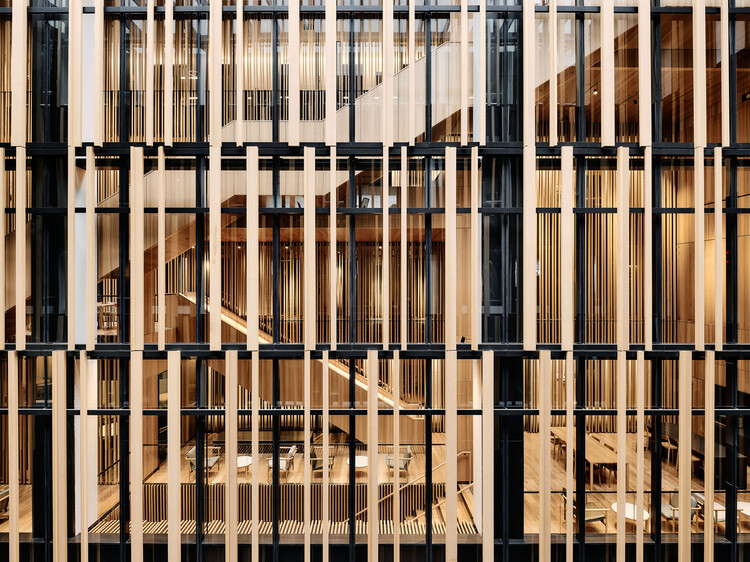
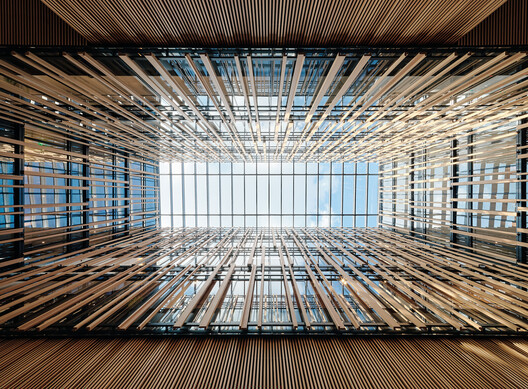
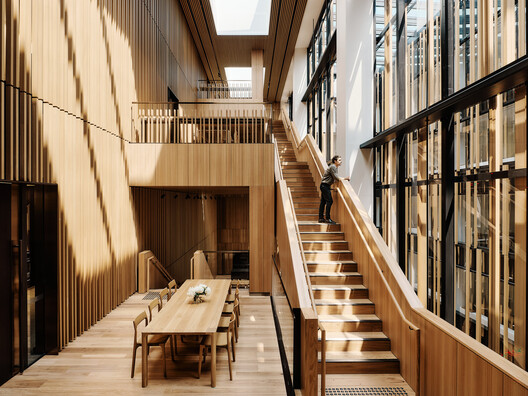
As an example, the Daldy Street Workplace Development uses wood-look Aluminum Click-on Battens to create a cohesive architectural language throughout the atrium and interior fit-outs. The scale of the project required a system capable of maintaining consistency without compromising construction efficiency. By aligning multiple stakeholders, the processes of system design, documentation, manufacturing, and delivery were coordinated to support the project's execution. The result was a workplace that demonstrates how design intent can be realized through thoughtful system selection and precise coordination.
Building a Dialogue With the Outdoors
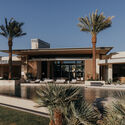
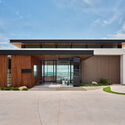
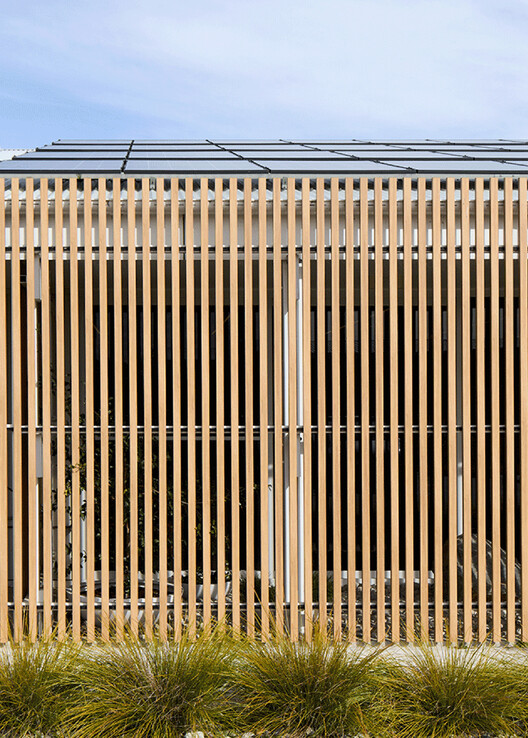
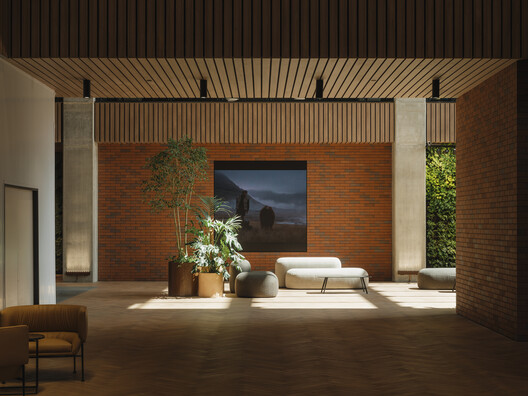
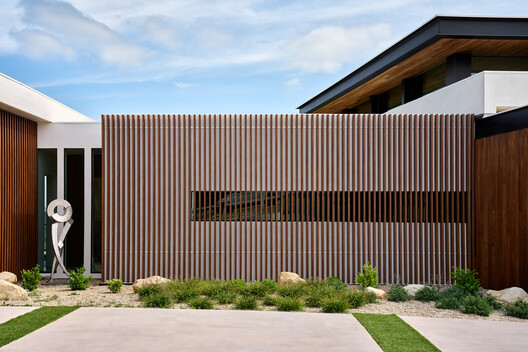
However, every project presents its own unique design challenges and opportunities. Designed by Nomad Design and built by McClure Homes Design Build (MHDB), Desert Temple House embraces a warm, natural wood aesthetic that blends with its surroundings while delivering the durability and low maintenance essential for Southern California's climate. Its American Oak Wood Finish Aluminum Screens were selected to harmonize with the desert landscape, echoing its sandy tones and organic forms while extending seamlessly into the interior.
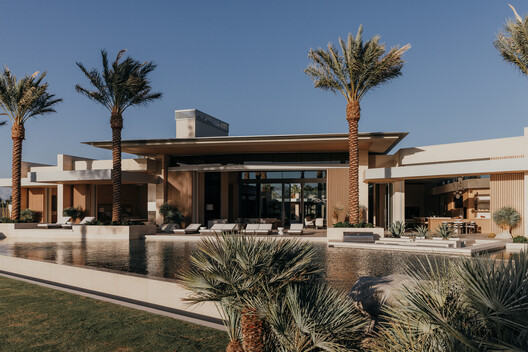
The project sought to balance resident privacy with a stronger connection between indoor and outdoor environments, creating a visual dialogue with the surrounding landscape. To support this design intent, the Click-on Screens system was developed to provide greater design flexibility and a consistent aesthetic. Panels were installed using both back- and end-mount methods, allowing for a seamless integration across the façade. In addition, the system's modular design simplified installation, while factory-spaced clips ensured precise alignment and consistency throughout the exterior envelope.
"The aluminum Click-on Screens, particularly the wood textures, are unparalleled on the market. The ability to use natural timber and aluminum battens interchangeably, with a near-perfect match in wood species and grain, provides a level of design flexibility and aesthetic cohesion that we have not found elsewhere." —Andrew McClure, Nomad Design
Compared to other wood-look alternatives, such as powder-coated finishes, wrapped aluminum offers superior resistance to UV-related fading while providing a textured finish and maintaining a low environmental impact. To demonstrate this performance, Sculptform conducted a series of weathering tests that compared the color stability of its Wood Finish Aluminum with other wood-effect products. Color fading was measured after accelerated weather testing, evaluating changes in both the wrapped wood-grain finish and a comparable powder-coated wood-effect product. Demonstrating durability and long-term stability under demanding conditions, the wood-finish coating has been tested against key performance criteria aligned with AAMA 2605 standards, which evaluate how surfaces perform under accelerated environmental exposure. These tests assess resistance to UV radiation, moisture, salt spray, chemicals, and abrasion, helping ensure long-term performance in challenging climates. In addition to outstanding color retention and fade resistance, the finish provides enhanced protection against surface degradation and environmental wear.
From decorative interior and exterior wall and ceiling cladding to projects requiring a fire rating, this Wood Finish Aluminum achieves its weather and abrasion resistance through the application of a specialized cross-linked topcoat. The polyolefin film is manufactured in Japan using electron beam curing technology and bonded to the aluminum panels through a wrapping process. A reactive polyurethane (PUR) hot-melt adhesive provides enhanced resistance to moisture and temperature fluctuations. Furthermore, Hoffman scratch test results indicate that the exterior polyolefin film exhibits little to no visible marking after rigorous testing, outperforming other olefin-based films.
The finishes are free of PVC, toluene, and xylene, and their manufacturing and packaging processes produce low volatile organic compound (VOC) emissions. The wood-look finish complies with the California Department of Public Health's Standard Method for the Testing and Evaluation of Volatile Organic Chemical Emissions from Indoor Sources Using Environmental Chambers, Version 1.2 (2017).
Creating a Design Language Based on Technique
Wood Finish Aluminum addresses challenges associated with fire code compliance and long-term maintenance while preserving the visual appeal of wood. Easy to install through a Click-on System and available in a variety of finishes, the aluminum substrate used in the battens satisfies the non-combustibility requirements of AS 1530.1, ASTM E136, and ISO 1182 (the international standard for non-combustibility testing of homogeneous materials). The applied wood-look finish is separately assessed to Group 1 in Australia, per NCC 2022 Volume One Specification 7 Clause S7C4 (determined in accordance with AS 5637.1:2015 and full-scale room testing to AS ISO 9705:2003), and Group Number 1-S in New Zealand, per NZBC Verification Method C/VM2 Appendix A (based on ISO 9705:1993 full-scale testing, supported by small-scale cone calorimeter screening to ISO 5660/AS 3837). The finish also carries a Class A rating under ASTM E84, together meeting fire safety requirements for most exterior applications. Although fire-resistance classifications vary by region, evaluating factors such as flame spread, flammability, and heat and smoke release remains an important consideration when specifying materials in architectural design. These performance criteria add another layer of complexity to the selection process, helping ensure that materials meet both aesthetic and safety requirements.
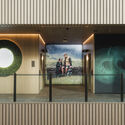
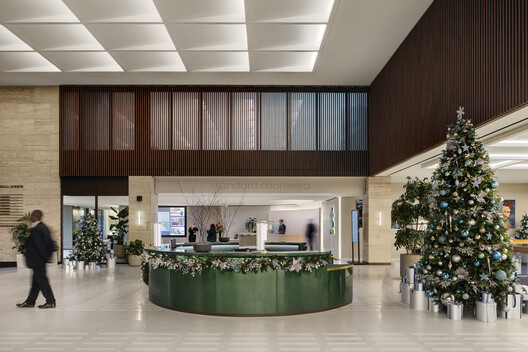
Designed by Bates Smart in collaboration with local firm KCCT, the Australian Embassy in Washington, D.C., demonstrates a contemporary approach by replicating the appearance of blackbutt wood while satisfying Class A fire safety requirements. The building features a large glass atrium and expansive public gathering space, where acoustic performance was a key design consideration to reduce sound transmission between the embassy's meeting rooms. To meet these requirements, L-shaped Click-on Battens were fabricated from aluminum with an acoustic backing and finished with a wood veneer. The veneer was custom-produced with microperforations across its surface to act like a sponge, enhancing sound absorption. In fact, each batten required a carefully calibrated pattern of perforations to achieve optimal acoustic performance.
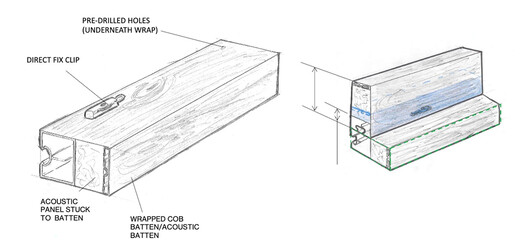
From its visual appeal to long-term cost savings and design flexibility, Wood Finish Aluminum is engineered to maintain its appearance and performance over time reproducing the character, texture, and look of natural wood through a warm, tactile wood-grain embossing. Although the finish incorporates a repeating pattern, it is designed to minimize noticeable repetition and distinctive grain characteristics. This effect is further reduced through an installation method that mixes and randomizes roll positions, creating a more varied and natural appearance across the surface.
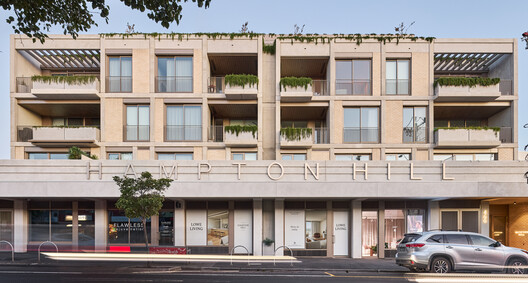
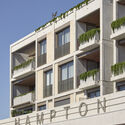
In terms of maintenance, surface dirt, dust, stains, and other debris can affect the appearance of the battens, making periodic inspections and cleaning recommended. In coastal environments, for example, routine maintenance helps remove salt buildup and other visible deposits, preserving the finish over time. Designed by Woods Bagot for Lowe Living, Hampton Hill is a residential development that introduces the warmth of wood to reinforce its coastal identity. Rather than using traditional wood soffits, the project uses Sculptform's Click-on Cladding in a Gray Eucalyptus Wood Finish with a Shadowline profile. This solution delivers the visual texture of wood while meeting the site's performance requirements, including exposure to wind, rain, and coastal conditions. Wood Finish soffits soften the building's architectural language and visually connect with the landscaping spilling over the balconies.
When defining a project's material palette, cladding plays a vital role in shaping its architectural language. Regardless of the design aesthetic or style, material choices can strengthen a building's relationship with its surroundings, create seamless transitions between indoor and outdoor spaces, and integrate technical solutions tailored to the specific needs of each project. Through careful coordination of materials, building systems, and trades, thoughtfully designed products such as Sculptform's Wood Finish Aluminum cladding offer architects new possibilities for creating enduring designs without sacrificing the warmth and natural beauty of wood.


