
London is one of the world's great metropolises and faces a challenge common to urban centers: air pollution caused by fossil fuel vehicles. To combat this issue, the city established Low Emission Zones in 2008, fining large vehicles operating with pollutant emissions above established limits.

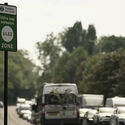
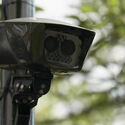
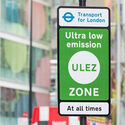


In 2019, the initiative was expanded to fine any vehicle failing to meet standards and polluting the air in designated areas of the city, establishing London's Ultra Low Emission Zone (ULEZ). This system levies a daily charge of £12.50 on the highest-polluting vehicles operating within these boundaries. These zones were expanded in 2021 and have now been extended to cover the entire city.

“This is a landmark moment for our city, which will lead to a greener and healthier London for everyone,” said Mayor Sadiq Khan. With this decision, London becomes the largest Ultra Low Emission Zone on the planet. The initiative is expected to help five million residents breathe cleaner air while reducing carbon emissions by approximately 30,000 tons in outer boroughs.
Revenue generated from ULEZ charges will be reinvested into public transport, including the expansion of bus services in outer London. “The decision to expand the ULEZ London-wide was a difficult one, but necessary to save lives, protect children’s lungs, and help prevent asthma, dementia, and other health issues,” the mayor added.
The ULEZ is the core strategy Khan is employing to reduce air pollution in London. Additional measures include expanding the zero-emission bus fleet and adding electric vehicle charging stations to the city's network.

The decision will not affect the majority of Londoners, as many do not own a car, and among those who do, around 90% of vehicles already meet the emissions standards. This high compliance rate is supported by a municipal scrappage scheme that helps take older, more polluting vehicles off the road while helping residents transition to newer, cleaner cars.

A total of £160 million has been invested in the program. Under the scrappage scheme, residents scrapping an older car can receive up to £2,000, while those scrapping old motorcycles can receive £1,000. Charities and small businesses are also eligible for larger grant payments. In addition, exemptions have been established for wheelchair-accessible vehicles and disabled drivers until October 2027.
Positive Results
Since 2019, the ULEZ has prevented more than 880,000 tons of carbon dioxide emissions, equivalent to 1.1 million flights between London and New York. It has also helped reduce childhood asthma hospitalizations due to air pollution by one-third.

Air pollution in central London has been cut by nearly half thanks to the ULEZ, while pollution in inner London has dropped by one-fifth. A recent report, published prior to the city-wide expansion, highlights key data justifying the decision:
Dr. Gary Fuller, an expert in urban air pollution at Imperial College London, reviewed the report and noted that London's initiative could serve as inspiration for other cities. “Many cities in the UK and worldwide are looking to follow London's lead. I hope the evidence presented here will improve the design of similar schemes more broadly.”

Via CicloVivo.
This article was written by Natasha Olsen. The translation is powered by AI.



