
The Global Designing Cities Initiative (GDCI) released its Global Street Design Guide to help urban planners with the challenging task of including all users of urban spaces in their designs. The publication became a benchmark and has now inspired a dedicated companion guide focused on children. The guide Designing Streets for Kids (translated into Portuguese as Desenhando Ruas para Córiaças) is already available in several languages, including Portuguese.

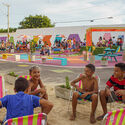


The publication puts people first, focusing specifically on the unique needs of babies, children, and their caregivers as pedestrians, cyclists, and public transit users on urban streets worldwide.

“If you design a street that works for kids, you design a street that works for everyone,” said Janette Sadik-Khan, Chair of the GDCI and Principal at Bloomberg Associates. “Designing Streets for Kids shows how cities can lead with design to improve the quality of life for people everywhere.”
A Necessary Change
Most streets were not built with children in mind, and in many places, current street conditions are hostile and unsafe for them. Traffic crashes kill 1.35 million people each year and are the leading cause of death for young people aged 5 to 29. Vehicle congestion and vehicle design also contribute to dangerously high levels of air pollution, which claims the lives of 127,000 children under the age of five every year.

Many of these fatalities are preventable, and these numbers can be substantially reduced through child-friendly street design.
Poor street design also carries negative consequences for children's physical and mental health. Streets that are noisy and hostile to pedestrians and public transit users tend to discourage physical activity, depriving children of independent mobility and opportunities to exercise and play.
To help address these challenges, the guide offers detailed diagrams and comprehensive graphics, documenting best practices, strategies, programs, and policies used in cities worldwide. Special attention is paid to redesigning streets in key areas for children, such as school zones, residential streets, and high-traffic areas, including commercial corridors and intersections.

With a chapter dedicated to “How to Make Change Happen,” the guide also demonstrates how to implement and scale up street redesign plans. It highlights tactics for engaging children throughout the planning process — an often-overlooked approach that can significantly transform how streets are designed and used.
“Reliable mobility options and access to safe, healthy streets is a human right, and the Designing Streets for Kids guide provides actionable strategies to ensure equitable access to these essential public spaces,” said Skye Duncan, Executive Director of the GDCI.
“With the translation of this award-winning publication, millions of people worldwide can access this information in their native language, helping to ensure that more children survive and thrive on their neighborhood streets,” Skye added.

Streets for Children in Brazil
For the mayor of Fortaleza, José Sarto, the Portuguese translation of the guide will be essential for allowing more city planners to access urban design best practices and prioritize children on the streets.
“Placing children at the center of street design is essential to ensuring we build more inclusive, pleasant, and accessible streets for everyone,” said the mayor.

According to João Campos, mayor of Recife, the guide reinforces the need to make traffic spaces increasingly safe and inclusive, “especially when we talk about children, who are the most vulnerable links in the chain.” “In Recife, we have a very clear directive to invert traffic priorities: more space for pedestrians, greater road safety, and encouraging active mobility, particularly through cycling,” Campos concluded.

The guide Designing Streets for Kids can be viewed and downloaded for free at GlobalDesigningCities.org.
Via CicloVivo.
This article was written by CicloVivo. The translation is powered by AI.



