
On this day 117 years ago, Juan O'Gorman—the first Mexican functionalist architect—was born, whose work marked a turning point in the architectural production of his era. He trained at what was then the National School of Architecture, where he completed and integrated his studies in architecture and engineering. Considered the father of modern architecture in Mexico, O'Gorman trained in the style of Le Corbusier and the stripped purism of Villagrán, eventually evolving toward the "New Mexican Baroque" movement. His works were characterized primarily by the use of reinforced concrete, asymmetric exteriors, and a constant search for air and light.

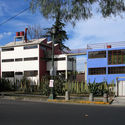



Due to his significant contribution, Juan O'Gorman's work continues to be studied not only in architecture but also in art, as he was a pioneer in combining muralism with architectural construction. Today, thanks to the initiative of various organizations and professionals with a keen interest in understanding, reclaiming, and reinterpreting certain principles, it is possible to connect with his legacy in new ways. Therefore, we present a compilation of articles and works offering different perspectives to continue exploring the work of one of the most prominent architects of the Modern Movement in Mexico.
Contemporary Perspectives
Download the Free Coloring Book "Arquitectura para colorear" by Carmelina&Aurelio

Architects and Artists Pay Tribute to the Legacy of Mexican Architect Juan O'Gorman

What Would Happen If the Works of Luis Barragán and Juan O'Gorman Came Into Direct Contact With the City?

Architecture or Revolution: Frida Kahlo's Houses and 90 Years of the Functionalist Movement

AD Classics
Central Library / Juan O'Gorman

O'Gorman House / Juan O'Gorman
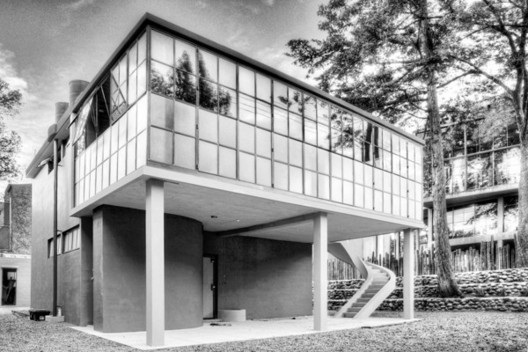
Diego Rivera and Frida Kahlo House Studio Museum / Juan O'Gorman
This article was written by Mónica Arellano. The translation is powered by AI.


