
The Museum of the Portuguese Language will reopen on July 31, rebuilt after the fire that struck it in December 2015. One of the first museums entirely dedicated to a language, located in the historic Luz Station in the city with the largest Portuguese-speaking population in the world, the museum celebrates the language as a founding element of Brazilian culture. Through interactive experiences, audiovisual content, and immersive environments, visitors are taken on a journey into the history and diversity of the language spoken by 261 million people worldwide. The official opening ceremony on July 31 will be streamed live on the museum's social media channels.
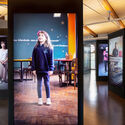
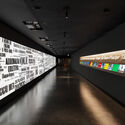
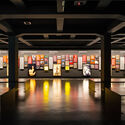

The subsequent public opening will follow health guidelines and restrictions to combat COVID-19. Tickets must be purchased exclusively online for specific timeslots, with capacity limited to 40 visitors every 45 minutes. Visitors will also receive touchscreen stylus keychains to avoid directly touching the interactive displays.

New Terrace and Reinforced Fire Safety
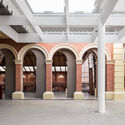
One of São Paulo's main historical landmarks, Luz Station holds a unique symbolic importance: it was a primary gateway for thousands of immigrants arriving in Brazil. It was there, after disembarking from ships in Santos, that they had their first contact with the Portuguese language.
Following a comprehensive architectural restoration and interior spatial reorganization, the museum has maintained the core concepts of the original 2006 intervention by architect Paulo Mendes da Rocha and his son, Pedro, while incorporating key upgrades. On the ground floor, the museum opens up to the station, reinforcing its connection to the city. On the upper floors, spaces have been optimized, new materials introduced, and additional galleries created for exhibits. The third floor now features a terrace overlooking Jardim da Luz and the clock tower, honoring Paulo Mendes da Rocha, who passed away earlier this year.
The new version was conceived by Pedro Mendes da Rocha and developed through the schematic and construction design phases by Metrópole Arquitetura, coordinated by Ana Paula Pontes and Anna Helena Villela.

The reconstruction also incorporates infrastructure and safety upgrades that exceed local fire department standards. Key improvements include the installation of fire sprinklers to reinforce safety systems. Although not legally mandated for the museum, the sprinkler system was recommended by the fire department and adopted by the design team.
Every phase of the project was approved and closely monitored by three heritage preservation agencies: the National Institute of Historic and Artistic Heritage (IPHAN); the Council for the Defense of Historical, Archaeological, Artistic, and Touristic Heritage (CONDEPHAAT) at the state level; and the Municipal Council for the Preservation of Historical, Cultural, and Environmental Heritage of the City of São Paulo (CONPRESP).

Sustainability: LEED Certification and Reclaimed Wood
The museum will also reopen with environmental certification. Sustainability guidelines guided the entire construction process, earning the museum LEED (Leadership in Energy and Environmental Design) Silver certification—one of the world's most prominent green building standards. Measures implemented include energy-efficiency strategies for building operations (lighting energy consumption alone will drop by 35%); water conservation, with an estimated 52% reduction in usage compared to the museum's previous fixtures; construction waste management; and the use of certified and reclaimed wood throughout the project.
Approximately 85% of the wood needed to restore the window frames and doors was salvaged from existing material in the building, reusing timber from the original 1946 roof structure. For the construction of the new roof, 89 metric tons (67 m³) of certified timber from the Amazon were used.

More than 300 window frames and doors were restored or remade, breathing new life into wood dating back to 1946. In a temporary workshop set up on the building's first floor, partially charred timber (pink and yellow peroba do campo) was restored and integrated back into the construction. The challenge lay in restoring the building using modern conservation techniques while fully preserving its historical features.
The reconstruction of the Museum of the Portuguese Language cost R$ 85.8 million, with the majority of the funding coming from private-sector partnerships via the federal cultural incentive law, as well as the fire insurance payout.
Revised and Expanded Content
Among the museum's new exhibitions are "Languages of the World," which highlights 23 of the more than 7,000 languages spoken globally today; "Falares" (Ways of Speaking), which explores the various accents and expressions of the language across Brazil; and "Nós da Língua Portuguese" (We of the Portuguese Language), which presents the Portuguese language worldwide, highlighting the connections, complexities, and cultural diversity of the Community of Portuguese Language Countries (CPLP).
Key experiences from the original museum remain in the collection, such as "Palavras Cruzadas" (Crosswords), which showcases the languages that influenced Brazilian Portuguese, and the "Praça da Língua" (Language Square), a kind of "language planetarium" that pays tribute to written, spoken, and sung Portuguese in an immersive light and sound show.


Curated by Isa Grinspum Ferraz and Hugo Barreto, the content was developed in collaboration with writers, linguists, researchers, artists, filmmakers, screenwriters, and graphic designers from various Portuguese-speaking nations. Contributors include musician José Miguel Wisnik; writers José Eduardo Agualusa, Mia Couto, Marcelino Freire, and Antônio Risério; slam poet Roberta Estrela d’Alva; and documentarian Carlos Nader. Featured artists in the exhibition design include Arnaldo Antunes, Augusto de Campos, Laerte, Guto Lacaz, and Mana Bernardes, among others.
This article was written by Romullo Baratto. The translation is powered by AI.


