
Centro Tierra is a multidisciplinary research group at the Pontificia Universidad Católica del Perú dedicated to the research, implementation, and dissemination of knowledge related to earth architecture and the use of local materials. Based on research centered on earth as the primary building material, the team engages with local cultures in Peru and the Altiplano through their distinct, diverse building techniques. Within this framework, they design sustainable construction proposals focused on rural habitats and built cultural heritage, emphasizing conservation, optimization, and revitalization. In turn, findings from research on bioclimatic and seismic-resistant design are put into practice through participatory processes. These initiatives foster knowledge exchange, weaving together local building heritage with academic technological innovation.

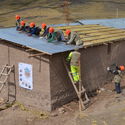
_19.15.24.jpg?1631809254 "Proceso constructivo. Image Cortesía de Centro Tierra, PUCP")
_19.18.39.jpg?1631809302 "Levantamiento de muro prehispánico PUCP Gino Fernández, Alexander Wiegering, Daisuke Izumi Estudiantes ciclo 2012-2. Image Cortesía de Centro Tierra, PUCP")

The teaching team and members of the UNESCO Chair “Earthen Architecture, Building Cultures and Sustainable Development” includes architect Sofía Rodríguez-Larraín, coordinator and head of academic training at Centro Tierra; engineer Julio Vargas Neumann, professor of the UNESCO Chair; architects Giusi Meli and Teresa Montoya, heads of the publishing department; and architect Silvia Onnis, head of the experimental laboratory. In this interview, they share the responsibility they face in integrating the work and ancestral techniques of local communities with new proposals developed alongside students, in an effort to promote and sustain interest in sustainable conservation and earthen architecture.


_19.16.49.jpg?1631809311 "Grupo Centro Tierra: “With simple bioclimatic strategies, dignified, comfortable, and earthquake-safe rural housing can be achieved”")

