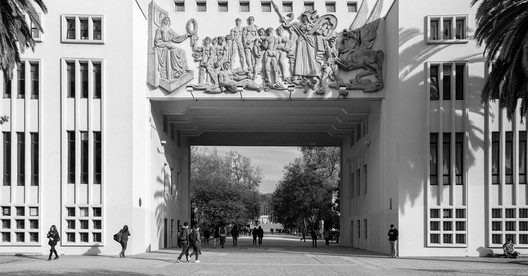
The “Concepción Modern Architecture Guide-Map”—created by Dr. Verónica Esparza, PhD in Theory and History of Architecture from Universidad San Sebastián, alongside Universidad del Bío-Bío architects Patricio Escobar (graphic designer of the Guide-Map) and Cristóbal Caro (photographer)—was made possible with the support of the Municipality of Concepción through the 2017 Municipal Cultural Initiatives Fund (FAICC). It features a selection of 30 works, aiming to recognize and highlight iconic examples of local Modern Architecture. The initiative raises awareness about the importance of preserving this living heritage, which is often undervalued due to its relative recency. This Guide-Map is designed as an educational tool to foster recognition of a heritage deeply embedded in the daily lives of the city's residents.
Description by architect Verónica Esparza: Modern architecture—referring to buildings constructed primarily between the 1930s and 1970s—is a living, active heritage. Over the past few decades, its recognition and appreciation have grown significantly thanks to the efforts of professionals, academics, researchers, and institutions dedicated to its preservation. Modern architecture in Chile features outstanding examples that took on diverse, multifaceted expressions in their respective locations, yielding highly original, unprecedented solutions that remain defined by their relationship with the city and their historical context. This architecture reflects economic, technical, material, and social development. Valuing and preserving this architectural legacy for future generations is essential, as is granting it visibility, legal protection, and educating the public about its role as an essential part of our cultural heritage.
Concepción, much like other cities in the region, has undergone constant architectural and urban renewal following major seismic events. Today, this ongoing reconstruction has left a legacy of valuable architecture—visible in residential, educational, and commercial buildings, housing complexes, and neighborhoods—all stemming from the rebuilding efforts after the devastating earthquakes of 1939 and 1960, consolidating an architectural heritage that has proven resilient over time.






.jpg?1522567262 "Modern Architecture Guide to Concepción: 30 Projects You Must Know")
.jpg?1522567248 "Modern Architecture Guide to Concepción: 30 Projects You Must Know")