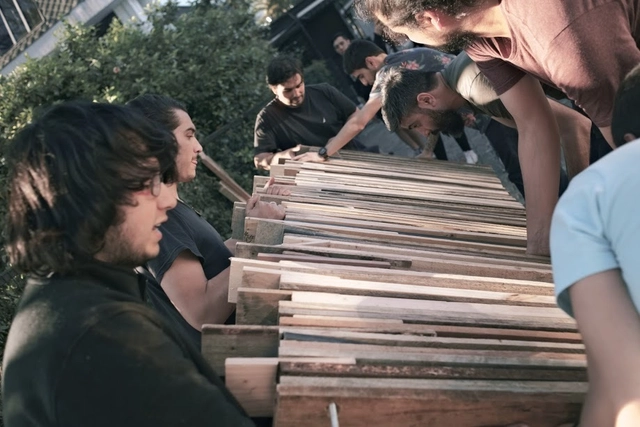
The Faculty of Architecture and Art at Universidad del Desarrollo held activities as part of the Detonating Experience II 'Contact with Matter,' which takes place three times during the program and aims to introduce future architects to each curricular cycle. Each exercise brought students closer to the construction and design of full-scale objects. The "Table" Workshop was led by the prominent firm Grupo Talca, featuring architects Rodrigo Sheward and Martín del Solar, while the EDII "Mast" was directed by professors Yanko Bugueño and Diego Martínez along with teaching assistant Magdalena Gallegos.
On December 20, the final curatorial review of the first National Essay and Research Competition, Written Architecture 2017, took place at the national headquarters of the Colegio de Arquitectos de Chile.
Organized by Grupo Arquitectura Caliente and co-organized by Ediciones ARQ, the competition awarded the 20 best articles out of 87 submissions in the undergraduate and graduate categories, representing 18 architecture schools across 9 different Chilean cities.
The competition was directed by Gabriela García de Cortázar and featured a jury of 30 prominent academics and professionals on the Evaluation Committee.
Below is the article by Universidad de Chile student Pablo Schmidt, winner of the Graduate Category.
As we previously reported, the firm Estudio Victoria—led by muralist Dasic Fernández, gallerist Esteban Barrera, and architect Juan Carlos López—was responsible for managing and designing the colorful, 400-linear-meter 'Paseo Bandera.' Inaugurated on December 20, it has transformed an iconic street in downtown Santiago into a bustling pedestrian promenade.
The ArchDaily team spoke with Dasic Fernández, whose work has taken over Santiago's main walls and who is now leaving the gray of Bandera Street behind through tactical urbanism. The interview explores in detail how this unprecedented intervention in Latin America was managed and designed, allowing pedestrians in the capital's downtown to reclaim urban space.
On this occasion, architect Rodrigo Rieiro Díaz, from the ARKRIT Collective, presents an article that explores how certain contemporary architects have refused to hide building scars resulting from material processes in rehabilitation projects, in a bid to emphasize the pre-existing structure as an aesthetic asset.
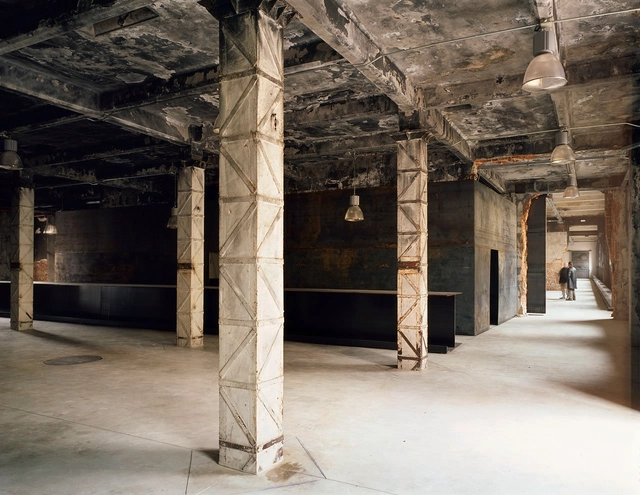
While it is true that not painting—or covering with joint covers—the marks of material processes during building adaptive reuse projects represents a financial saving, there seems to be a desire among certain contemporary architects that goes far beyond simply cutting a line item from the budget.
Indeed, there is a contemporary tradition—the reuse of industrial buildings as art spaces—where this practice is common. This model of an exhibition space, halfway between a gallery and an artist's studio and geared toward a young, urban audience, already has a history of at least forty years. Yet there is a certain consecration of the method in its adoption by the city councils of major European cities for their cultural institutions, and in the highly favorable reception of these interventions in academic and professional circles.
Pabellón Amanita Plaza Escuelas Trevijano. Image Cortesía de Concéntrico 04
The Architecture and Design Festival "Concéntrico 04" is preparing for its fourth edition, taking place from April 27 to May 1, 2018. This public event invites residents and visitors to discover and rediscover key sites in the historic center of Logroño, Spain, through temporary urban installations.
Vista general del memorial sobre el cementerio . Image Cortesía de Fabián Leiva
The "Floating Cemetery of Alto Biobío" project, developed by Universidad de Chile architect Fabián Leiva, proposes a memorial for the Quepuca cemetery—one of 14 flooded following the construction of the Ralco hydroelectric plant. The design features a monomaterial concrete volume positioned over the flooded cemetery to establish a vertical communication between the living and the dead, creating a point of connection between them.
The website Enterreno is building the first “collaborative time machine” using historical images, allowing thousands of people to travel through time via their mobile devices from anywhere in the country or the world. The platform features over 45,000 photographs revealing what Chile was like in both the distant and recent past, shared by everyday people from their family archives and other sources.
Alcalá Street was filled with light last Christmas thanks to the installation designed by the architecture studio Brut Deluxe and led by Ben Busche, commissioned by the City of Madrid.
The 'Concéntrico 04' Architecture and Design Festival is preparing for the opening of its fourth edition. This event, open to all citizens and visitors, invites people to discover and rediscover sites of interest within the historic center of Logroño, Spain, through ephemeral urban installations.
A century has passed since the birth of Jørn Utzon (1918-2008), the Danish visionary who was only 38 years old when he won the competition to build the Sydney Opera House. AV/Arquitectura Viva marks the occasion by covering his legacy in a monograph that presents six canonical works, illustrated with original photographs and plans, alongside six articles by prominent international critics.
To begin, Richard Weston, author of the most comprehensive book on Utzon’s work, reflects on the sources of inspiration behind his creative process. Marja-Riitta Norri, director of the Museum of Finnish Architecture from 1988 to 2002, provides a Nordic perspective on his courtyard houses. In a letter format, Françoise Fromonot recalls the research conducted for her monograph on the Sydney Opera House, published in 1998.
Unbuilt projects are covered in an essay by Enrique Sobejano, an expert on the Danish architect's work. Kenneth Frampton—author of the essay that accompanied the announcement of Utzon’s Pritzker Prize in 2003—focuses on the Bagsværd Church, highlighting its tectonic character. Finally, Rafael Moneo, who worked with Utzon in 1961, writes about the two Mallorcan houses.
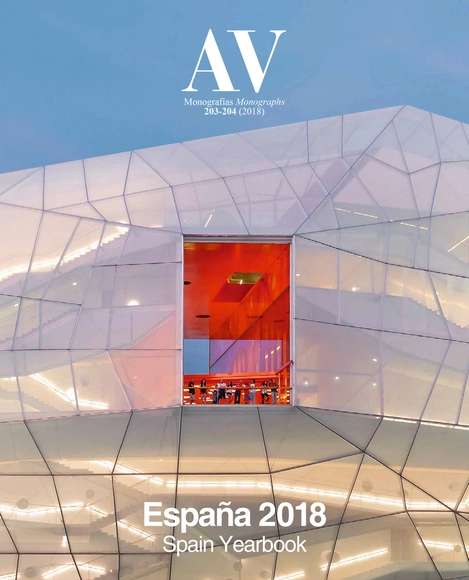
Cover. SelgasCano, Congress Palace, Plasencia (Cáceres). Image
The publisher Arquitectura Viva recently released the monograph 'España 2018'. As it has every year since 1993, the AV Monographs Yearbook brings together, in a double volume, the best buildings completed in Spain over the past twelve months: a selection of 24 projects that provide an overview of the country's most recent architecture, taking stock of its characteristically high quality despite the crisis still affecting the sector.
Renzo Piano, Building Workshop Centro Botín, Santander. Image
As it does every year, Arquitectura Viva has dedicated its AV Monografías yearbook 'Spain 2018' to the finest buildings completed over the last twelve months: a selection of 24 works offering an overview of the country's most recent architecture, showcasing its characteristic high quality despite the crisis that still affects the sector.
This double issue opens with a compelling essay by Luis Fernández-Galiano, who reviews the major milestones in the world of architecture over the past year. Amid a backdrop of natural disasters and political upheavals that marked a year in which Spain celebrated a Pritzker, a work by Piano, and the arrival of the Foster Foundation, Fernández-Galiano invites us to reflect on territories of risk:
Trump and the 'Silence Breakers' made the cover, fires like those in Portugal and floods like those in Houston showed us our fragility, and Catalonia was struck by terrorism and conflict.
Licensed Under CC0 Public Domain. Image via Pxhere
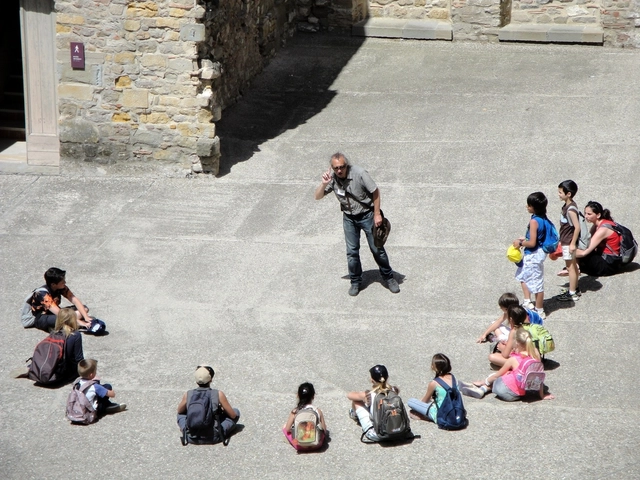
From the Fundación Arquia Blog, architect Virginia Navarro brings us an article reflecting on the reasons for and importance of bringing architecture closer to children.
Recent years have seen a notable increase in the number of architects who, occasionally or continuously, have dedicated part of their practice to conducting architecture workshops for children. Their objectives have been both educational (developing critical thinking about the built environment, understanding cultural and urban heritage, and fostering spatial intelligence and creativity...) and informative: gathering data on children's needs within larger, typically social or participatory, projects.
Licensed Under CC0 Public Domain. Image via Pxhere
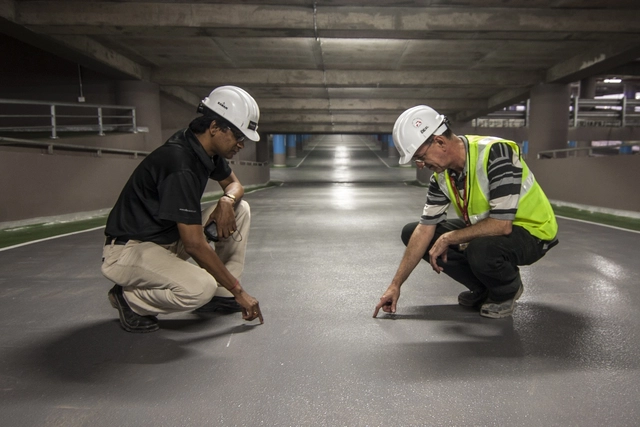
Have you ever wondered what an ITO is or what they do? Broadly speaking, the Technical Works Inspector (ITO) is the professional responsible for overseeing quality and correct execution in a construction project, as well as managing its document and financial control. As a result, this is a crucial field for the successful completion of a project, and one in which many architects can build a career. Yet, it is often an overlooked professional field with limited available information. For this reason, we outline its functions below and examine how current market demands have pushed the role toward a more comprehensive approach, as seen in the case of the firm Cero3.
The “Concepción Modern Architecture Guide-Map”—created by Dr. Verónica Esparza, PhD in Theory and History of Architecture from Universidad San Sebastián, alongside Universidad del Bío-Bío architects Patricio Escobar (graphic designer of the Guide-Map) and Cristóbal Caro (photographer)—was made possible with the support of the Municipality of Concepción through the 2017 Municipal Cultural Initiatives Fund (FAICC). It features a selection of 30 works, aiming to recognize and highlight iconic examples of local Modern Architecture. The initiative raises awareness about the importance of preserving this living heritage, which is often undervalued due to its relative recency. This Guide-Map is designed as an educational tool to foster recognition of a heritage deeply embedded in the daily lives of the city's residents.
We are pleased to announce a strategic partnership between the ARKRIT Collective and ArchDaily en Español to regularly publish critical essays that foster debate, rigorous argumentation, and discussion around architecture.
ARKRIT is a research group within the Department of Architectural Design at ETSAM in Madrid. Over more than a decade, it has established itself as a hub for reflection and knowledge production by and for architectural criticism. Founded by Professor of Architectural Design Dr. Antonio Miranda Regojo-Borges, its members include PhDs and university academics working across various European and Latin American research centers.
Videos
Cortesía de Escuela de Arquitectura, Universidad Iberoamericana UNIBE
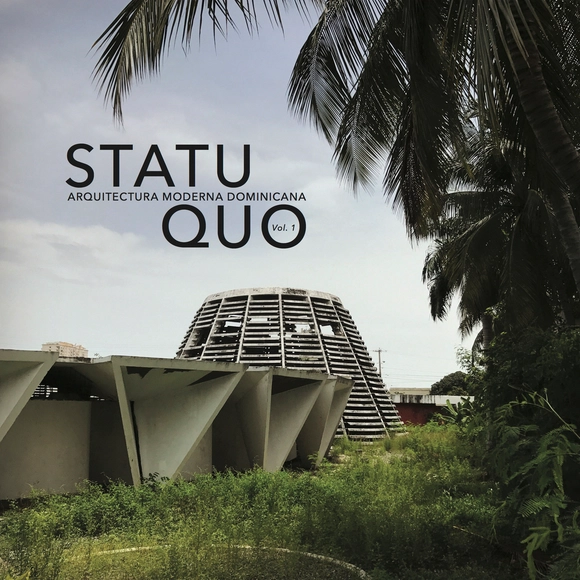
Since 2014, the School of Architecture at the Universidad Iberoamericana (UNIBE) in the Dominican Republic has developed several editorial projects. For this fourth initiative, students, alongside professor and architect Alex Martínez, have produced the inaugural edition of 'Statu Quo,' a publication examining the advanced deterioration of the country's modern heritage buildings.
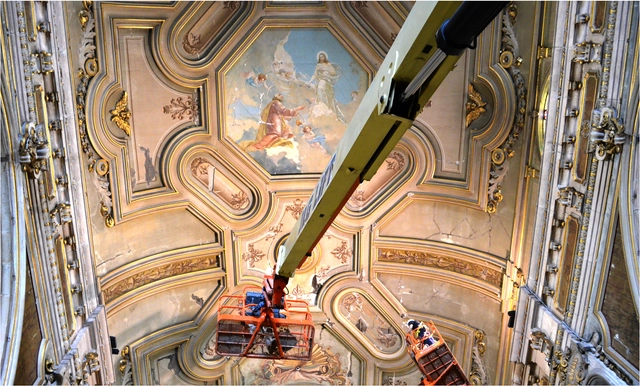
On the occasion of Pope Francis's visit to Chile, the Metropolitan Cathedral Chapter requested conservation work on the Cathedral's vaulted ceiling to improve safety and the condition of the ornamentation after recent earthquakes, aiming to safeguard the many faithful who visit the Cathedral daily.