
Year after year, natural disasters leave thousands of people homeless, forcing them to seek shelter as their only option. In many cases, cities are unable to address these crises due to a lack of resources. Furthermore, providing aid while preserving human dignity has become increasingly complex, rendering traditional solutions completely unviable.
In these moments, innovation and creativity in hands-on construction play a vital role, ultimately yielding faster, more efficient architectural models that can be rapidly replicated following natural disasters.
When designing semi-permanent architecture, certain principles must be followed. Below, we have compiled a set of tips and examples to guide this process.
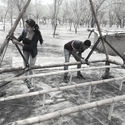

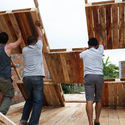


Select Readily Available Materials to Speed Up Construction

When building semi-permanent structures, selecting accessible and economical materials is crucial. Understanding the local context where the emergency shelter will be built is therefore essential, as it allows for the use of local resources and vernacular construction techniques.
Moreover, prioritizing materials with a low environmental impact helps reduce the ecological footprint of the construction process—a critical consideration, as the end of a structure's life cycle is often overlooked.
Design for Easy Assembly and Disassembly Without Specialized Skills

Recognizing the value of self-built structures fosters community engagement. In emergencies, involving the community in both design and construction makes the assembly and disassembly of prototypes faster and more straightforward.
A Structure Built to Last
Even for a semi-permanent building, one must anticipate the possibility of it becoming permanent. Because the structure's lifespan may be extended, understanding the local climate and weather patterns is essential. 2014 Pritzker Prize laureate Shigeru Ban designed a temporary partition system for flood victims in Japan, a project now considered a milestone in evolutionary design.
Maximize Comfort with Minimal Energy Consumption

Implementing bioclimatic and sustainable strategies significantly improves indoor living conditions. Optimizing building orientation to maximize solar gain enhances interior comfort, while incorporating thermal mass—such as compressed earth walls—provides superior insulation. Additionally, pitched roofs can be integrated to harvest rainwater for domestic use.
For those seeking examples of semi-permanent architecture, we have highlighted four projects below.
Transitional Architecture: A Shelter for Piura, Peru

Bio-Reconstruct Mexico: Architecture for Life After the September Earthquakes

Chacras Project / Natura Futura Arquitectura + Colectivo Cronopios

Post-Earthquake Reconstruction Project in Guangming Village / The Chinese University of Hong Kong & Kunming University of Science and Technology

This article was written by Yamid Rivera. The translation is powered by AI.


