
Yesterday, June 13, marked the opening of the 5th International Congress of Architecture and Society, an event presided over by King Felipe VI for the second consecutive edition. The President of the Government of Navarra, Uxue Barkos, and the Minister of Development, José Luis Ábalos, also participated in the official opening.
Architect Francisco Mangado was responsible for opening the event, which in its fifth edition will focus on cities and the challenges architecture faces in addressing urban demands. The architect from Navarra stated that “Architecture is not an isolated event of personal preferences; it is a profoundly cultural and social act, linked to the city as a reality that belongs to the common good,” adding that “the quality of architecture and the city is not a luxury, it is a right for all citizens.”
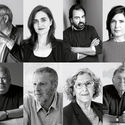

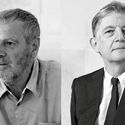


Among the challenges cities currently face, Mangado listed “problems that are older than they are new, yet persist—often with greater intensity,” such as unbridled suburban sprawl, a lack of infrastructure, insecurity, mobility, and a more recent one: environmental degradation.

Referring to the congress slogan, “Less Architecture, More City”—which marks a new phase focused on urban areas—he called it “a bit of a trap,” asserting that “the better the architecture, the better the city.”
Meanwhile, the President of the Government of Navarra, Uxue Barkos, acknowledged that the slogan was “thought-provoking,” stating that “when we reflect on what we want cities to be, we are actually reflecting on what we want to be ourselves.”
She also advocated for an inclusive, open, vibrant, and proud city model, championing “compact and socially cohesive” cities. “We believe in a new, more social urbanism,” she concluded.
Finally, the president of the Architecture and Society Foundation, Carlos Solchaga, questioned what the role of architecture will be in future cities, noting that it “must be subordinated to the needs of the city.”
The City Makes Us Free
The first session of the event, titled The City Makes Us Free, featured Barcelona writer Eduardo Mendoza, winner of the 2016 Cervantes Prize, and Cuban author Leonardo Padura, winner of the 2015 Princess of Asturias Award for Literature.
Padura, who like Mendoza has made his city a character in his novels, stated that “we writers also build cities,” adding that “Havana was built with stones, but also with words.”
“Words allow us to touch a very important element of the city—its soul, which is made up not only of buildings, but above all of the people who inhabit it,” he concluded.
Mendoza, meanwhile, pointed out that “we have inherited the two classic conceptions of cities: the diabolical and the celestial. And that is why we are a bit confused, because at this point in time, they are already a mixture of both.”
He added that “the city is like another character, naive and ignorant, but also a repository of history that has now become a tourist attraction and a business”—the latter in reference to his native Barcelona.
Political Ecology and Urban Futures

Today, the second and final day of the congress will take place. It will open with architects Farshid Moussavi and Belinda Tato, who are internationally recognized for sustainable and innovative urban development projects, and will continue with Salvador Rueda and Dejan Sudjic, who will address the architecture of urbanity and the political ecology of cities.

The international event will conclude with a debate between two iconic figures in sustainable urban mobility: Danish architect Jan Gehl and Brazilian Jaime Lerner, who will discuss the urban and human future of cities.

The second day of the congress can be followed via livestream at the following link.
For more information about the congress, click here.
This article was written by Javier García Librero. The translation is powered by AI.
